Don’t Wait for a Letter from the Tax Authority: Criteria for Determining Whether a Hong Kong Company Has ”Operational Audits” and How to Respond
Published: August 11, 2026
“My Hong Kong company just holds a stake in a South African company; it doesn’t engage in trade and has no cash flow, so it shouldn’t need an audit, right?”
This is a common misconception among many sellers who use the “Hong Kong holding company + South African operations” structure. The reality is that the Hong Kong Inland Revenue Department (IRD) defines the threshold for “carrying out business operations” much more broadly than simply “engaging in business transactions.” Having transaction records in a bank account, holding equity in a subsidiary, or having signed a contract—any one of these could trigger an audit obligation for carrying out business operations.
This article distinguishes between four scenarios and breaks down, one by one, the criteria for determining whether an operational audit is required, the differences in audit requirements, and compliance strategies for each.
💡 Not sure which category your Hong Kong company falls under? AddWeChat: qcygscszk or call 18676749275, text “Hong Kong Audit” to receive a free audit status assessment.
I. The Scope of Determination for Operational Audits: It Is Not About “Whether There Is Business,” but “Whether There Is Activity”
Hong Kong’s Companies Ordinance requires all registered companies to prepare and audit financial statements annually. In practice, however, “dormant companies” may apply for an audit exemption (Dormant Status) and simply file a zero return. “Active companies,” on the other hand, must submit audited financial statements and a profits tax return.
Key Question: What does “operational” mean?
The Hong Kong Inland Revenue Department’s criteria for determining whether a company is “in operation” are not limited to “generating sales revenue.” A company is deemed to be “in operation” if it engages in any one of the following activities:
Any deposits or withdrawals recorded in the bank account
Holding equity interests in other companies (regardless of whether dividends are received)
Has signed a commercial contract/agreement
Hiring Employees or Leasing Office Space in Hong Kong
Have applied for Hong Kong government grants or subsidies
Holds intangible assets such as trademarks and patents
In other words, a pure holding company is considered an operating company as long as it has a bank account and holds equity in subsidiaries.
II. Audit Requirements for the Four Scenarios
Situation
hallmark
Audit requirements
Do I need to file a tax return?
Scenario 1: Purely Controlling Interest with No Transaction History
Holds only equity in a subsidiary; has no bank accounts and no transaction history whatsoever.
An audit is required, but a “clean” abbreviated report may be issued.
You are required to file a tax return; you may apply for a tax exemption on offshore income.
Scenario 2: Controlling Interest + Transaction History
Holding equity in a subsidiary, with transactions in the bank account (such as capital contributions, dividend payments, and audit fee payments)
Audit required; full disclosure of bank statements and changes in equity ownership is required.
Taxes must be filed; dividend income is eligible for offshore tax exemption.
Has an office, employees, and actual business operations in Hong Kong
Audit required; full disclosure of all business activities required
Taxes must be filed; all profits derived from Hong Kong are subject to a 16.51% tax rate.
III. Typical Scenarios for Cross-Border E-Commerce Sellers: Scenario 2
Most sellers who use the “Hong Kong holding company + South African operations” structure fall under Scenario 2.
Typical activities that trigger an operational audit:
Opening a Hong Kong Commercial Bank Account (for Receiving Dividends Remitted from a South African Company)
Paying for overseas services (such as design outsourcing and software subscriptions) in the name of a Hong Kong company
Holding equity in a South African company (which is central to the holding structure)
Submission of Annual Returns to the Hong Kong Companies Registry
Even if the Hong Kong company did not generate a profit that year (the South African company was just starting out and had not distributed dividends), the aforementioned activities triggered an obligation to conduct an operational audit.
Compliance Requirements:
A statutory audit is conducted annually, and an audit report is issued by a Hong Kong Certified Public Accountant (CPA).
The audit report and the profits tax return are submitted together to the Hong Kong Inland Revenue Department.
Even if there is no actual profit, you must still file a tax return (you may report a zero profit, but you cannot file a zero return).
IV. The Consequences of Not Getting an Audit: It’s Not Just About Fines
Consequence 1: The tax authority initiates a proactive review of the company's records
Each year, the Hong Kong Inland Revenue Department cross-checks data from the Companies Registry against tax filing records. Companies that have consistently failed to file tax returns or undergo audits will be placed on the proactive audit list. Upon receiving an inquiry letter from the Inland Revenue Department, companies are typically required to submit audit reports covering the past seven years.
Consequence 2: Bank Account Frozen
Banks in Hong Kong regularly review the audit reports and tax filing records of their corporate clients each year. If a company is unable to provide an audit report, the bank will freeze or even close its account. For sellers who use Hong Kong companies to consolidate funds, an account freeze means a breakdown in their cash flow.
Consequence 3: Individual Joint and Several Liability of Directors
Under Hong Kong law, if a company fails to fulfill its audit and tax filing obligations, the directors may face personal legal liability. In severe cases, they may be subject to entry restrictions or be placed on a list of dishonest persons.
V. Response Strategy: Turning Audits into Tools for Architectural Optimization
Strategy 1: The audit report itself serves as proof of qualification
A comprehensive Hong Kong company audit report is not merely a passive requirement for tax compliance; it is also:
Proof of Eligibility to Open and Maintain a Bank Account
Prerequisites for Applying for Hong Kong Government Funding (such as the BUD Special Fund)
A Foundation for Due Diligence When Bringing in Investors or Selling the Company in the Future
Strategy 2: Reduce the Tax Burden by Taking Advantage of the “Tax-Exempt Offshore Income” System
Hong Kong follows the territorial source principle of taxation and taxes only profits “derived from Hong Kong.” If a holding company’s dividend income is derived from a subsidiary in South Africa (offshore), it may apply to the Inland Revenue Department for an exemption on offshore income. Although the profits are reported in the audit report, they are marked as “offshore income” on the tax return, thereby effectively exempting them from taxation.
Strategy 3: Audit fees are part of the cost of maintaining compliance with the framework, not an additional expense
The annual review and audit fees for a Hong Kong company range from approximately 8,000 to 15,000 HKD per year. Compared to the costs of business disruption resulting from bank account freezes or investigations by the tax authorities, these audit fees represent a reasonable investment in compliance.
📞 Would you like to conduct a comprehensive assessment of your Hong Kong company’s audit status?AddWeChat: qcygscszk or call 18676749275(math.) genus, text “Hong Kong Audit” to receive a personalized plan.
What can we do for you?
✔️ Hong Kong Company Annual Review + Audit: Statutory audit report issued by a licensed CPA
✔️ Operational audit assessment and consultation: Determine which category your Hong Kong company falls under and what type of audit is required
✔️ Application for Tax Exemption on Offshore Income: Apply to the Hong Kong Inland Revenue Department for tax exemption on dividend income and overseas profits
✔️ Filing income tax returns: Complete a full tax return in accordance with the audit report
✔️ Historical Financial Record Cleanup: Organizing historical financial records and conducting back-dated audits for Hong Kong companies that have not been audited for a long time
Why choose Enterprise Caiying
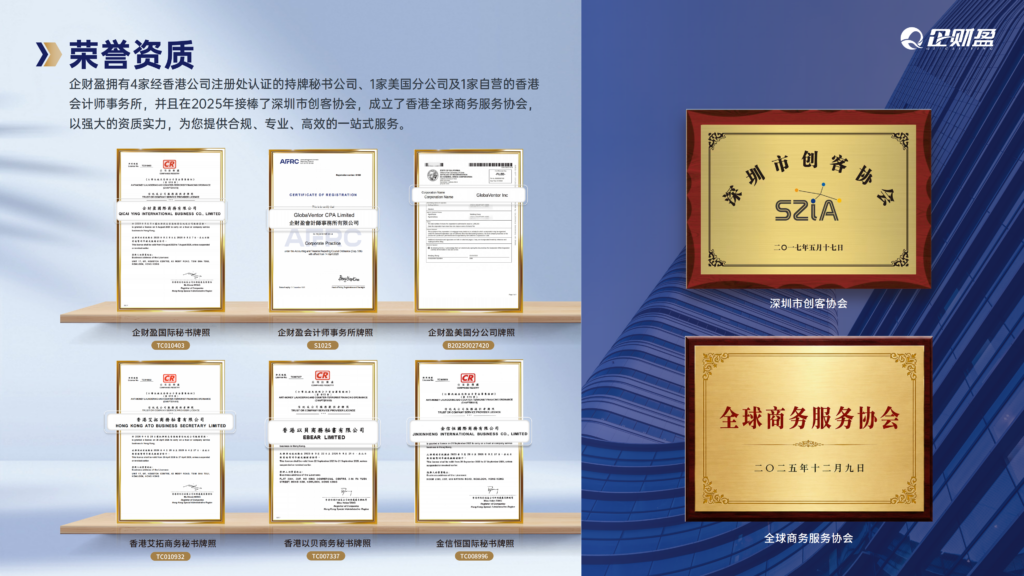
■ Licensed corporate secretarial firm in Hong Kong, qualified to provide statutory annual review and tax filing services
■ In collaboration with a team of Hong Kong Certified Public Accountants (CPAs), we ensure that audit reports are professional and compliant.
■ Has experience operating a Hong Kong-based company and possesses practical understanding of auditing and tax handling within a holding company structure
■ We have provided annual review, audit, and tax filing services to more than 300 Hong Kong companies operating as cross-border sellers
■ Full-service support in Chinese, ensuring a seamless transition from audit preparation to tax filing
Free Assessment · One-on-One Consultation
If your Hong Kong company has not yet undergone an audit, or if you are unsure whether you need an “operational audit”:
💬 Send a private message with the text “Hong Kong Audit”, and get a free audit status assessment.
Tags:
Hong Kong companies undergo operational audits
Hong Kong Company Tax Compliance
Hong Kong Company Audit
Hong Kong company
Recommended
Cross-border e-commerce B2B must see! Registered Hong Kong company stationed in the Ali International Station, really fragrant!
In today's globalized business environment, the cross-border e-commerce B2B model is rapidly emerging with its unique advantages. For many enterprises engaged in cross-border trade, choosing a suitable platform and registering an advantageous company are undoubtedly the key keys to open the door to the international market.
2024 Hong Kong Company Account Opening Tips! How to choose the right Hong Kong bank account?
Global anti-money laundering regulations are becoming more and more stringent, the banks to maintain an account of the sunk cost is getting higher and higher, not moving hundreds of millions of dollars in fines, so that the major banks to open an account threshold as well as the audit process high up, already have a Hong Kong company bosses, how to choose the Hong Kong bank to open a public account? How much does it cost and how to operate? Today to give you a detailed introduction to the Hong Kong company account how to choose, as well as the approximate costs required and other content.
Hong Kong company registration advantages + registration conditions + registration process to share!
If you want to start a business and develop overseas markets, registering a Hong Kong company is undoubtedly a very forward-looking choice. With its unique geographical location, sound legal system, low tax rate and open business environment, Hong Kong company has become a "sharp weapon" for many business owners to open up overseas markets. Why is it so important to register a Hong Kong company in 2024?