Attention Meike Duo Sellers: If you apply for a Mexican tax ID after the 20th, you won’t be able to lower your tax rate!
Published: July 24, 2026
Sellers on Meike Duo have probably all noticed this news recently.
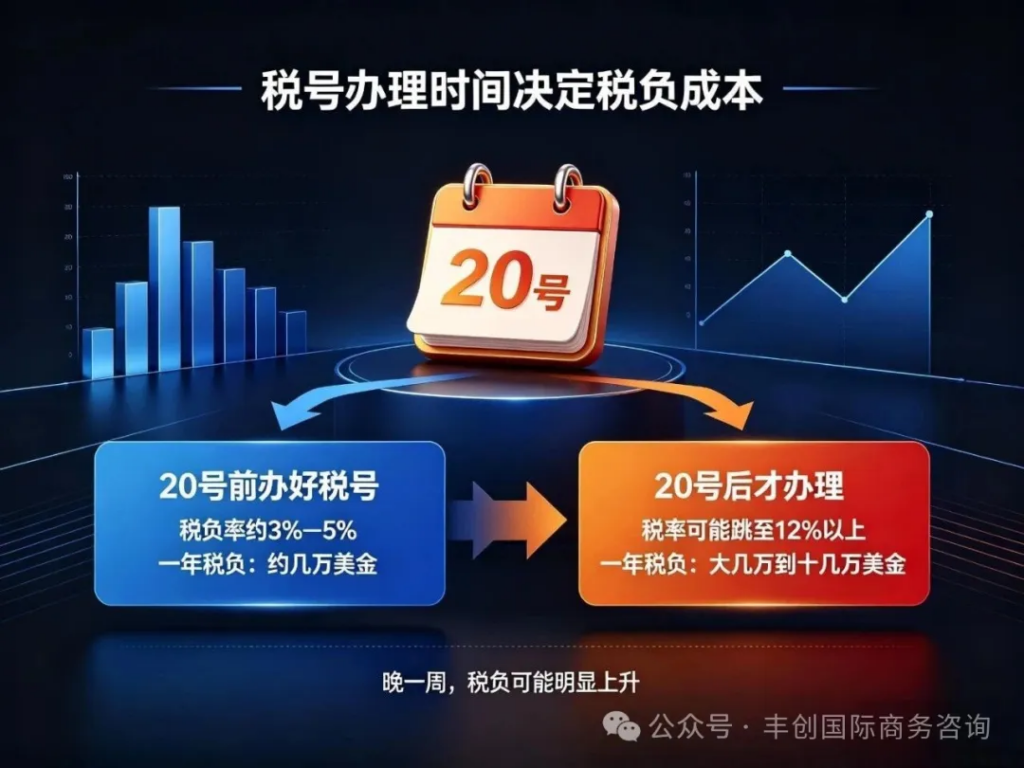
The Mexican tax authority and the platform have jointly issued an adjustment, the essence of which can be summed up in one sentence:The 20th is the deadline for applying for a Mexican tax ID number and qualifying for the lower tax rate. If you apply after the 20th, you’ll still receive the tax ID number, but you won’t be eligible for the lower tax rate.
How significant is this issue? Today, I’ll explain the whole story from start to finish.
I. First, let’s discuss the background: Why can a tax ID number lower the tax rate?
In the Mexican market, the tax rate withheld by the platform varies significantly depending on whether sellers have registered for an RFC tax ID.
In a nutshell:
Sellers without a tax ID,The platform withholds and remits taxes at the full rate, which is generally between 16% and 20% of sales revenue, depending on the product category. This rate significantly erodes profits, and many sellers find that after fulfilling an order, they make virtually no profit.
Sellers with a tax ID,The platform can withhold taxes at a lower rate, or sellers can file their own tax returns. The actual tax burden can be reduced by a few percentage points—it makes a world of difference.
So over the past two years, experienced sellers have been rushing to obtain tax ID numbers in order to lower their tax rates.
II. What Exactly Has Changed with This Adjustment?
In the past, no matter when you applied for a tax ID, once you had it, you could enjoy a lower tax rate. Many sellers weren’t in a hurry, figuring they could apply later—after all, they’d be able to use it sooner or later.
The key to this adjustment is to block that path.
The platform has set a deadline: the 20th.
Those who obtained their tax ID number before the 20th will continue to enjoy the lower tax rate as usual and will not be affected.The
Even if it was registered after the 20th, the tax ID is still valid, and there are no issues with operating in compliance.TheHowever, the tax rate you’ll be subject to will no longer be based on the standard for those with a tax ID number; instead, it will be calculated using a higher rate. The platform will announce the specific figures at a later date, but one thing is certain: it will no longer be the low tax rate you were expecting.
In other words, if we wait until the 21st to handle it,With the same business scale and the same profit level, you’ll end up paying significantly more in taxes.The
III. How Much Does the Cost Differ If It’s Done a Few Days Later?
Let's do a rough calculation.
Suppose a seller has monthly sales of $100,000, for an annual total of $1.2 million.
If you obtain a tax ID number before the 20th, you’ll be eligible for a lower tax rate. Assuming the effective tax rate ranges from 3% to 5%,The annual tax payment is approximately tens of thousands of U.S. dollars.
If you don’t complete the process until after the 20th—even if it’s just a week late—the tax rate may jump to 12% or higher, or even approach the withholding rate for those without a tax ID.In a single year, your tax bill can easily increase by anywhere from several tens of thousands to over a hundred thousand U.S. dollars.
That’s no small amount of money. For many small and medium-sized sellers, this extra amount could represent their entire year’s net profit.
Moreover, the problem is that this discrepancy isn’t a one-time occurrence. Once the tax rate is set, the process for applying to have it lowered is even more complicated and takes much longer.
IV. What Can Be Done Now?
If you’ve already obtained a tax ID number, this doesn’t concern you—just continue operating as usual.
If you're still in the process and have already submitted your documents, all you need to do now isKeep an eye on the progress. Check with your agency to see if you can get the tax ID receipt by the 20th. Even if you only receive a preliminary acceptance notice, the platform may still accept it before the deadline; you can contact the platform’s customer service for confirmation.
If you haven’t started the process yet, time is definitely running out. Completing the entire registration process before the 20th is virtually impossible for most channels. At this point, you need to make a decision: either continue operating at a higher tax rate, or pause your investment in the Mexican marketplace and wait until you receive your tax ID. (If you need help expediting the process, contact us at +csdrcc12345.)
No matter which option you choose, we recommend getting your documents ready first. Even if you miss this deadline, you’ll still need to apply for a tax ID number—operating in compliance with the law is always the bottom line. Plus, there’s a chance that future policies may change, so it’s better to get it done early than to keep putting it off.
V. A Few Closing Remarks
In recent years, the Mexican market has consistently been one of the fastest-growing regions for e-commerce in Latin America, as evidenced by Mercado Libre’s traffic and buyer base. When it comes to obtaining a tax ID, the question isn’t whether to do it, but when.
In the past, we could take a wait-and-see approach and wait, but now that the rules are clear, there is a cost to delaying—and that cost can be calculated.
The 20th is a turning point.A few days earlier or a few days later—that’s not just a small difference.The
If you still have questions about this policy or are unsure how to proceed in your specific situation, please contact us at +csdrcc12345. We’ll help you assess your current situation and provide a solution tailored to your needs.
Tags:
Meike Duo RFC Certification
Mexican Tax ID Number
RFC Mexico
México Mercado
Recommended
Cross-border e-commerce B2B must see! Registered Hong Kong company stationed in the Ali International Station, really fragrant!
In today's globalized business environment, the cross-border e-commerce B2B model is rapidly emerging with its unique advantages. For many enterprises engaged in cross-border trade, choosing a suitable platform and registering an advantageous company are undoubtedly the key keys to open the door to the international market.
2024 Hong Kong Company Account Opening Tips! How to choose the right Hong Kong bank account?
Global anti-money laundering regulations are becoming more and more stringent, the banks to maintain an account of the sunk cost is getting higher and higher, not moving hundreds of millions of dollars in fines, so that the major banks to open an account threshold as well as the audit process high up, already have a Hong Kong company bosses, how to choose the Hong Kong bank to open a public account? How much does it cost and how to operate? Today to give you a detailed introduction to the Hong Kong company account how to choose, as well as the approximate costs required and other content.
Hong Kong company registration advantages + registration conditions + registration process to share!
If you want to start a business and develop overseas markets, registering a Hong Kong company is undoubtedly a very forward-looking choice. With its unique geographical location, sound legal system, low tax rate and open business environment, Hong Kong company has become a "sharp weapon" for many business owners to open up overseas markets. Why is it so important to register a Hong Kong company in 2024?