The countdown to the new U.S. IOR regulations has passed! Double clearing package tax completely ended, sellers should next how to layout?
Published: 2026-03-26
March 20 has become a watershed in history, shell importers are written off in bulk, customs clearance firms have been shut down one after another - 2026 U.S. line compliance era officially opened, are you ready?
"What happens to my shipment after March 20?"
This has been the most asked phrase in the past week in the American Line Sellers group.
Today, that date is history, and on March 16, U.S. Customs and Border Protection (CBP) issued an emergency notice that, as of March 20, 2026, the bulk "Importer of Record" (IOR) number is officially repealed, and that all new import declarations must be filed with a true, verifiable IOR number.
The new regulations have come into force. Those sellers who rely on "double clearing and tax package", share IOR and false subjects are facing the risk of goods detention, return, fines and even criminal prosecution. And those sellers who layout the U.S. entity in advance and register their own head, are seizing a new round of compliance dividends.
Today an article to give you a thorough: after the new rules, the United States line of trade in the underlying logic of what fundamental changes? How should sellers lay out their business and what are the new opportunities for U.S. company registration in 2026?
I. What Fundamental Changes Have Occurred in U.S.-Line Trade Since March 20?
Change 1: Double clearing and tax package model completely ended
Shared IOR, virtual importer, bulk customs clearance and other gray plays are directly blocked. In the past, many freight forwarders borrowed and forged IOR numbers to complete customs clearance for sellers with their own qualifications, and commonly used ways to avoid tariffs such as understating the value of goods and concealing the name of goods. This kind of non-compliant operation is facing full blocking under the new policy.
In the future, the freight forwarder must turn to the compliance mode of single ticket and single clear, clear subject and traceable responsibility. Relying on low offer, weak compliance products are completely off the shelves, the industry has entered a new stage of standardization and refinement of the development.
Change 2: IOR subjects must be real and traceable
CBP through big data networking, Google Maps a sweep, found that the company's registered address is a UPS store or virtual dependency address, direct second cancellation. All import declarations must use a real, verifiable IOR number, and the IOR must form a one-to-one unique binding relationship with the importer entity, EIN tax number, and authorization relationship.
Change 3: normalization of joint and several liability for customs clearance houses
As the "outsourcing team" of CBP, the customs broker has the obligation to help CBP verify the authenticity of the importer and the authenticity of the value of the goods. Now the IOR guaranteed by the customs broker has a problem, CBP directly catch the source. Those who accept orders with closed eyes, do not verify the real value of the goods clearance house, is a batch of suspension.
Second, after the new regulations, sellers face three core risks
1. Cargo detention and risk of return
Goods arriving or declared after March 20 will be directly intercepted by CBP if they follow the old IOR. Demurrage, warehouse rental, customer claims and other chain risks are concentrated.
2. High fines and risk of criminal prosecution
Once a false declaration is detected, not only will you be required to pay high customs duties, but you will also face fines. U.S. Customs and the Department of Justice have entered the criminalization phase of enforcement, and those involved in false trade and false importers may face criminal prosecution.
3. Risk of permanent restrictions on import operations
Serious cases will be included in the CBP import blacklist, restricting all import business. This means you will lose the U.S. market completely.
Third, what should be the next layout? Three steps to build a compliance system
Step 1: Urgent self-inspection to clean up non-compliant partners
Immediately contact your partner logistics provider or customs broker for proof of IOR compliance. Focus on verifying three types of documents:
Updated CBP Form 5106 Return Receipt
EIN confirmation letter issued by IRS (CP 575 or 147C)
Valid Power of Attorney (POA) and proof of legal identity
If the partner is unable to provide it, is vague or refuses to provide it, cooperation should be suspended immediately to avoid the goods being blocked in transit.
Step 2: Incorporate your own U.S. entity (safest option)
For sellers with a certain scale, it is highly recommended to register a real entity company in the U.S. and buy your own Annual Bond, which can be used to clear customs with your own head, which is safe and secure, and the financial information is compliant and transparent.
This is the ultimate choice for long-term stable operation, although the upfront cost is higher, but it can avoid the risk of supply chain breakage from the root. 2026, the U.S. company registration policy has also ushered in a number of good, it is a good time to layout:
Lower registration costs: Delaware Registration Fee Reduced from $125 to $75, Arizona Eliminates Incorporation Fee
Process online: Online registration systems are widely available in all states, and virtual office addresses are expressly permitted, allowing businesses to set up without traveling to the U.S. in person.
Compliance requirements are clear: Beneficial Ownership Disclosure (BOI) requirements are clear and can be filed in a single return
Step 3: Establishment of data management and document retention mechanisms
Ensure that procurement contracts, invoices, payment vouchers, logistics documents, customs declaration (CBP 7501) "five documents are consistent", and that the relevant information is retained for at least five years for verification. This is the basic guarantee to deal with CBP traceability audit.
U.S. Company Registration in 2026: From "Optional" to "Mandatory"
Under the new IOR regulations, incorporation of U.S. companies is no longer an "optional" but a "mandatory" option. 2026, the U.S. company registration policy also ushered in a number of favorable:
Significantly lower registration costs
Several popular states have lowered their official registration fees: the Delaware registration fee has been reduced from $125 to $75, and Arizona has eliminated its corporate registration fee.
Online and convenient registration process
Online registration systems are widely available in all states, and virtual office addresses are expressly permitted so that businesses can set up without traveling to the United States. In some states, the timeframe for approval can be reduced to a few hours.
Enhanced disclosure of beneficial ownership information
The Corporate Transparency Act requires businesses to file Beneficial Ownership Information (BOI) with the Financial Crimes Enforcement Council (FinCEN), a step that must be completed to incorporate a U.S. company in 2026, but is also a one-time operation that can be completed for long-term compliance.
V. How to choose a popular registration state? Different choices for different businesses
Delaware, US state: A well-developed legal system that is particularly well suited for companies needing to raise capital and is a preferred location for the establishment of public companies. No local operations, no corporate state income tax.
Wyoming, US state: Low tax costs, good privacy protection, zero state tax, ideal for small and medium-sized businesses. Low registration and maintenance costs, preferred by companies that do not have the need for financing and listing.
Californian: High visibility in the eyes of Chinese, developed economy, large market, suitable for Internet, 3C, IT industry. However, high tax and strict regulation are suitable for companies planning to develop here for a long time.
Dezhou prefecture level city in Shandong: Zero state taxes and a large population for on-the-ground small and medium-sized businesses. Manufacturing, import/export, and trade services are all considered.
New York state: Bi-annual audits, the financial center of the world as well as the largest port in the U.S., favoring the financial and foreign trade industries.
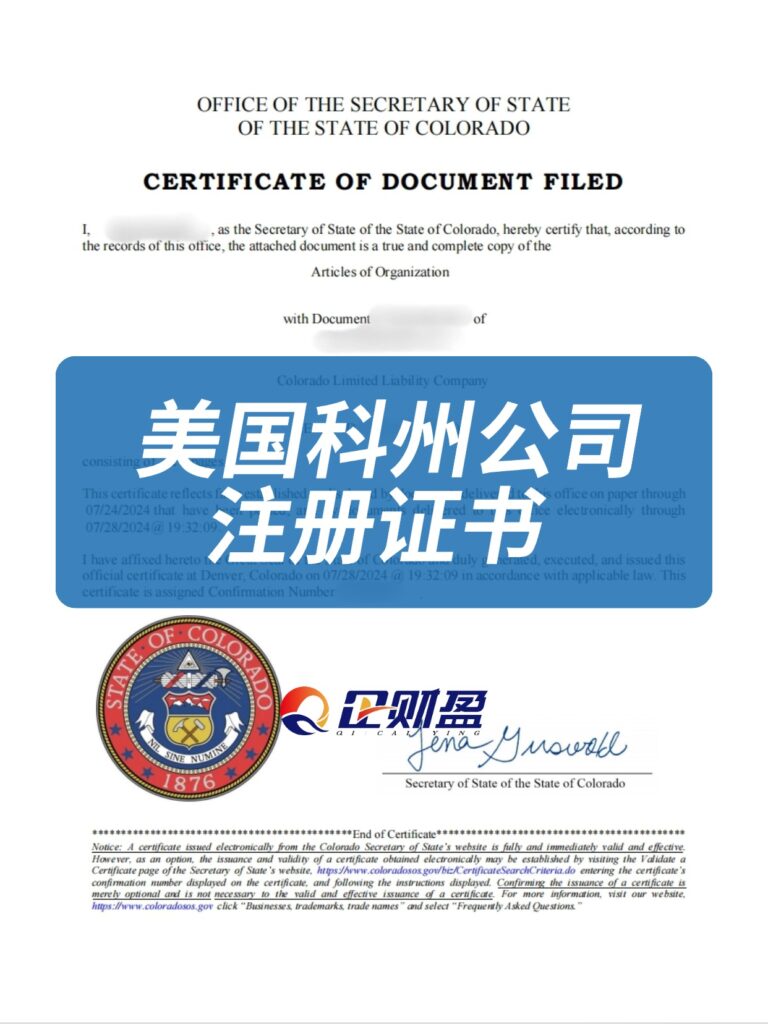
Colorado: The name is very free when registering a U.S. company, the registration price is low, the management is simple, and it is suitable for agriculture, minerals, and e-commerce industries.
If you still have questions about the business adjustment after the landing of the new U.S. IOR regulations, or need to handle the U.S. company registration, EIN application, IOR filing services, welcome to contact me at any time (micro-signal: qcygscszk, or call my cell phone: 18676749275). Let us use our professional U.S. market service experience to help you seize the compliance window and lay out 2026 in a steady manner.
VI. Taking the long view: the SAFE Act and future trends
The new regulations are just the beginning. The SAFE Act (Safeguarding Accountability for Foreign Imports Act), introduced by U.S. Senators, is moving forward, with the central goal of restricting the eligibility of "non-resident importers" to serve as IORs.
The bill requires future IORs to have a U.S. physical presence - at least one owner or full-time employee is a U.S. citizen/green card holder. While the bill has not yet officially gone into effect, the trend is clear:In the future, only companies that actually have a physical presence in the U.S. will be able to enjoy the access dividend of the U.S. market.
It is recommended that sellers who are in a position to do so should plan their trade entities in advance according to the standard of "U.S. entity + U.S. employees + U.S. account" to seize the first opportunity for compliance.
VII. What can we do for you?
In the face of the brand new trade environment after the new U.S. IOR regulations come into force, what you need is not just an information provider, but a professional partner who really understands the U.S. market and can help you complete the compliance transition.
The value that Enterprise Finance earnings can bring to you:
Let's you quickly figure out how your business should adjust after the new regulations. Based on your business model, shipment volume, and existing partners, we will help you analyze the current risk points you are facing, and tell you which links are the most urgent and which options are the most prudent.
Getting you through the U.S. company registration and compliance process. If you need to register a U.S. entity, apply for an EIN, purchase a Bond, or complete a CBP filing, we can provide you with a complete set of solutions from company registration, address arrangement, to tax ID number application. With a branch office in the U.S., we are familiar with local regulations and hands-on processes to help you complete your compliance transition efficiently.
Lets you set up compliant trade links and documentation systems. We will help you sort out the retention mechanism of "five consistent documents", i.e., procurement contract, invoice, payment voucher, logistics document and customs declaration, to ensure that your trade chain is clear and traceable, and can withstand CBP audits.
Gives you a ready-to-use local U.S. backup. When you encounter customs clearance issues, tax filings, account usage and other difficult issues in the US market, our local US team can respond in a timely manner to give you professional guidance and support.
If you still have questions about the business adjustment after the landing of the new U.S. IOR regulations, or need to handle the U.S. company registration, EIN application, IOR filing services, welcome to contact me at any time (micro-signal: qcygscszk, or call my cell phone: 18676749275). Let us use our professional U.S. market service experience to help you seize the compliance window and lay out 2026 in a steady manner.
Tags:
U.S. FCC
U.S. Customs
U.S. Company Registration Tips
Recommended
Cross-border e-commerce B2B must see! Registered Hong Kong company stationed in the Ali International Station, really fragrant!
In today's globalized business environment, the cross-border e-commerce B2B model is rapidly emerging with its unique advantages. For many enterprises engaged in cross-border trade, choosing a suitable platform and registering an advantageous company are undoubtedly the key keys to open the door to the international market.
2024 Hong Kong Company Account Opening Tips! How to choose the right Hong Kong bank account?
Global anti-money laundering regulations are becoming more and more stringent, the banks to maintain an account of the sunk cost is getting higher and higher, not moving hundreds of millions of dollars in fines, so that the major banks to open an account threshold as well as the audit process high up, already have a Hong Kong company bosses, how to choose the Hong Kong bank to open a public account? How much does it cost and how to operate? Today to give you a detailed introduction to the Hong Kong company account how to choose, as well as the approximate costs required and other content.
Hong Kong company registration advantages + registration conditions + registration process to share!
If you want to start a business and develop overseas markets, registering a Hong Kong company is undoubtedly a very forward-looking choice. With its unique geographical location, sound legal system, low tax rate and open business environment, Hong Kong company has become a "sharp weapon" for many business owners to open up overseas markets. Why is it so important to register a Hong Kong company in 2024?