Emergency! Effective March 20: The new U.S. IOR regulations officially landed, your goods may face the risk of customs clearance detention!
Published: 2026-03-17
With only the last few days left for the new regulations to take effect, sellers exporting to the U.S. must check themselves immediately
Recently, a lot of sellers doing the US market have been discussing one word:IOROn March 20, a major new U.S. Customs regulation on IOR will come into effect, directly affecting the clearance of all goods exported to the United States.
But the IOR is just the entry point. What really determines how far you can go in the U.S. market is the registration of a U.S. corporation after theBusiness Tax ComplianceToday's article is about how to get into the business under the new IOR regulations and how to make your business profitable through professional business tax management. Today an article to speak through: IOR under the new rules how to comply with the entry, as well as how to enter through professional business tax management, so that your U.S. business steady money.
I. What exactly is IOR? Why is it important to figure it out now?
IOR is Importer of Record(Abbreviation for (Importer of Record). Simply put.The person or company who, in the eyes of U.S. Customs, is solely responsible for the shipment.The
Core Points:
Must be a U.S. entityIOR must be a legally registered entity in the U.S. (U.S. domestic company or U.S. branch of a foreign company), and a company in China.Unable to serve directly as IOR
Three certificates are required to be legal IOR::
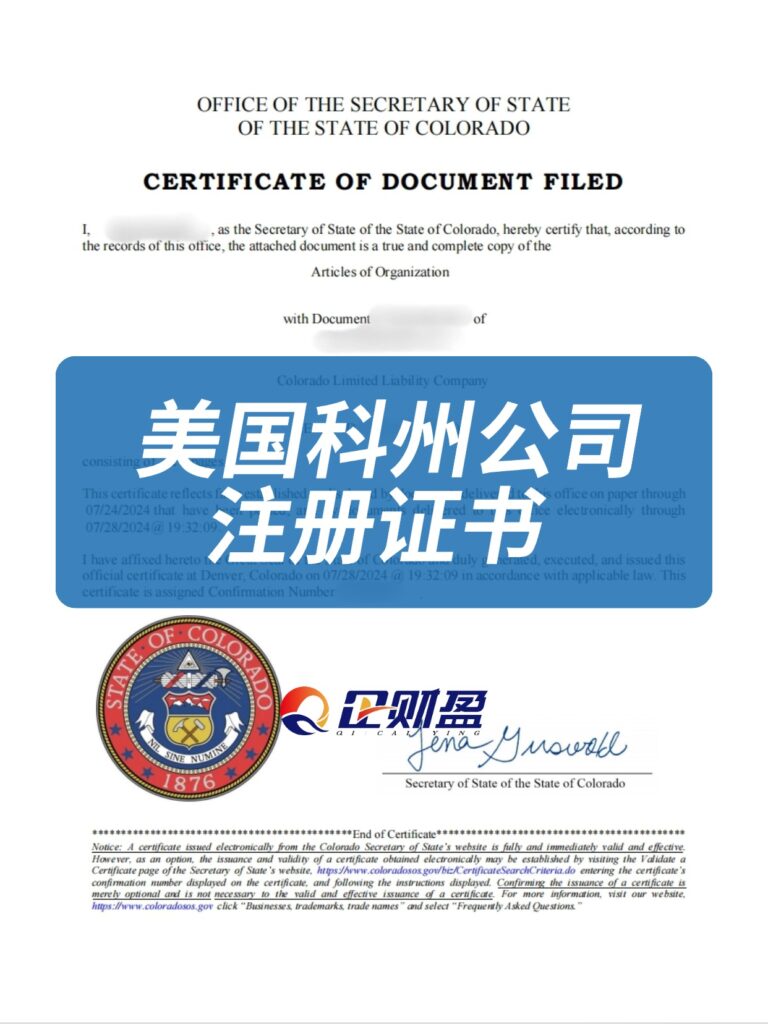
U.S. State Certificate of Registration
EIN Tax ID (Employer Identification Number) issued by IRS
CBP Importer of Record Qualification (complete Form 5106 submission)
Consequences of non-compliance with IOR: If the IOR qualification is not compliant or the declaration is false, the goods will be detained, fined by CBP (up to three times the value of the goods), and in serious cases, included in the CBP import blacklist.
II. The New Deal of March 20, 2026: What exactly has been changed?
Core changes in one sentence: U.S. Customs officially abolished the old IOR numbering system, all import declarations must use the real, real-time verification of the new IOR number.
The four hard and fast requirements of the New Deal:
Updating the complete CBP Form 5106--All data must be accurate and verifiable.
IOR Valid photo ID in person--Government-issued documents such as passports or driver's licenses
EIN verification document issued by IRS--such as 147C letters, 1040s, 941s, etc., must be sent directly from IRS to the IOR himself or herself
Valid Power of Attorney (POA) between the customs broker and the IOR--Valid authorization between licensed customs broker and IOR
commencement date::March 20, 2026 from 12:01 a.m. EDTThe
Third, why is it suddenly so strict? Three main reasons behind it
1. Crackdowns triggered by large trade balances According to Bloomberg, between the declared amount of China's exports to the U.S. in 2025 and the amount actually cleared by U.S. Customs, there are up to$112 billionThe huge difference between the
2. Cascading effects of the 5H identification upgrade CBP has launched a special review operation code-named "5H".The February 2026 figures are alarming::
3826 Chinese Export Containers Trigger 5H Inspection
3,137 cabinets were forced to be returned to theReturned shipments up to 82%
3. Upgrading at the legislative level: the SAFE Act U.S. Senator Bill Cassidy introduced the SAFE Act in March of this year, with the central goal ofRestrictions on the eligibility of "non-resident importers" to act as IORs, requires the IOR to have a U.S. entity present.
IV. Why is the "double clearing and taxation" model coming to an end?
The core logic of Double Clearance Tax Package: Freight forwarders act as IORs for sellers, taking care of customs clearance and duties in one stop.
But here's the thing.: Many of the freight forwarders used to act as IORs are shell companies with no real operations.
Impact of the New Deal::
Empty shell IOR can't pass validation
Head freight forwarders have joint initiatives to transformAppealSay goodbye to the double clearing package tax, the implementation of a single bill single clearing, trade closed loop
industry judgment: "Those who do US double clearing from today will be phased out of the market."
If you still have questions about the new IOR regulations, or need to handle the U.S. company registration, annual tax audit, IOR filing, welcome to contact me at any time (Tel: 13045886252, micro-signal: qcy20251218). We have a professional U.S. local team and a team of nearly 400 experts who can provide you with one-on-one consulting services to help you quickly comply with new regulations and steadily develop the U.S. market.
V. What should sellers do now? From IOR to U.S. Company Compliance Operations Full Strategy
With only the last few days left before the March 20 effective date, the following actions are recommended for immediate action:
Step 1: Emergency self-examination (by March 20)
Confirm what channel your shipment is going through
Confirm with your partner logistics provider that their IOR is compliant.
If you are going through FBA or first way self-clearance, make sure your IOR information is accurate and verifiable.
Step 2: Medium and Long Term Layout - Register U.S. Company and Do Your Own IOR
This is the fundamental solution. After registering a U.S. company, you can:
Use your own U.S. company as the IOR and take the initiative in customs clearance.
Obtain a real EIN tax ID number to lay the foundation for subsequent tax compliance
Establishing legitimacy in the U.S. market and increasing customer trust
The latest policy changes to U.S. company registration in 2026: According to the latest policy, there are three major trends in U.S. company registration in 2026:
Significantly lower registration costs: Delaware Registration Fee Reduced from $125 to $75, Arizona Eliminates Incorporation Fee
Process online: Virtual addresses are generally permitted in all states and do not require physical travel to the U.S.
BOI Information Declaration: Beneficial owner information needs to be declared to FinCEN, one declaration is sufficient
Step 3: Choose the right state of incorporation and save real money
Updated list of states with tax cuts for 2026 (a must-have):
Eight states reduce income tax rates effective January 1, 2026
Indiana, US state: Single tax rate reduced from 31 TP3T to 2.951 TP3T and further to 2.91 TP3T in 2027
Kentucky, US state: Single tax rate reduced from 41 TP3T to 3.51 TP3T
Mississippi, US state: Single rate reduced from 4.41 TP3T to 41 TP3T
Montana, US state: Top marginal tax rate reduced from 5.9% to 5.65%
Nebraska, US state: Maximum interest rate reduced from 5.21 TP3T to 4.551 TP3T
North Carolina, US state: Single tax rate reduced from 4.25% to 3.99%
Ohio: Single tax rate reduced from 3.125% to 2.75%
Oklahoma: Top tax rate reduced from 4.75% to 4.5%
Top 5 states that are completely exempt from personal income tax(for those who don't want to pay state taxes): Alaska, Florida, Nevada, South Dakota, Texas, Washington, Wyoming
How do you choose states for different businesses?
Cross-border e-commerce sellers: California (easy logistics), Texas (zero state tax), Delaware (good laws)
service industry: Washington State (low electricity prices), Texas (good industrial base)
Finance/financing: Delaware (public company preferred)
foreign trade and import-export: New York State (port advantages)
cost-sensitive: Wyoming (low cost of registration and maintenance)
Step 4: After the registration of the U.S. company, you must do these 3 major financial and tax affairs
1. Annual audits must not be forgotten Annual audits vary by state: by March 1 for Delaware regular corporations and June for LLCs; biennially in New York; and annually in California and Nevada. Failure to keep annual audits can result in fines or even company write-offs.
2. There is a way to file a tax return
federal tax: Profits taxed at 21%, no profits taxed
state tax: There are huge differences! Some states have zero state tax, but California and New York may be subject to franchise tax even if they don't operate a business
special attention: Zero tax returns are required even if there are no operations!
3. Exclusive filing priorities for cross-border sellers
Form 1099-K Reconciliation: The amounts on the form are gross receipts (including taxes, refunds, and fees), not net receipts. It is important to use the platform details and purchase invoices to itemize and calculate the true taxable income.
State Tax "Economic Nexus" Red Line: Even if you don't have an office, you must file a state sales tax return if your annual sales in a state exceed the threshold (commonly $100,000 or 200 transactions).
Related transactions must be reported Form 5472: Transactions (goods, funds, services) with U.S. overseas affiliates must be filed even if they are not profitable, or they are highly susceptible to triggering an audit.
If you need to register a U.S. company or operate cross-border e-commerce locally to start a business in the U.S., feel free to inquire (WeChat: 13045886252)▼▼▼
VI. Common Misconceptions about IOR and U.S. Company Operations
Myth 1: "I don't have a U.S. company, just find a freight forwarder as an IOR" After the new policy, freight forwarders must provide real verifiable IOR information. If the forwarder uses a shell company, your cargo may be detained at any time.
Myth #2: "I'll go FBA and Amazon will handle my customs clearance and taxes" Amazon is just the platform, it's not your IOR, and it doesn't do your taxes for you. The responsibility for customs clearance and taxes is on you.
Myth 3: "Everything will be fine after the U.S. company is registered" Re! Annual audits, tax returns, BOI information updates, forgetting any of these can incur fines and even affect the survival of the company.
Myth 4: "I don't have an office in the U.S., so I don't have to file a state tax return." This is a big mistake! Under the "economic nexus" standard, sales must be reported as long as they meet the standard.
VII. What can we do for you?
In the face of the new IOR regulations that will come into effect on March 20, as well as the complex business and fiscal issues in the operation of U.S. companies, what you need is not just an agency, but a professional partner who really understands the U.S. market and can help you avoid risks and save costs.
The value that Enterprise Finance earnings can bring to you:
Get your U.S. company registration in one step without detours. We will help you accurately choose the most suitable state for registration according to your business type (cross-border e-commerce, traditional foreign trade, manufacturing, etc.). If you want to save state tax, we will recommend Texas and Wyoming; if you have financing plan in the future, Delaware is the best choice; if you mainly do e-commerce logistics, California may be more suitable for you. At the same time of registration, we will help you apply for an EIN tax ID number, so that you get your hands on a "plug-and-play" U.S. company, rather than a piece of paper that you need to run follow-up.
Make your IOR compliance easy and your goods clear customs smoothly. We are familiar with all U.S. Customs CBP filing processes. We will help you prepare and check the CBP Form 5106 to make sure that every document meets the "true and verifiable" requirements of the new policy. If you need to buy Bond, we will help you match the most economical plan according to your shipment frequency and value to avoid spending more money than necessary.
Keep your U.S. company's annual tax return free of errors and overpayments. U.S. taxes are complex, and federal, state, sales, and franchise taxes ...... can be omitted or misreported if you're not careful. Our tax experts are familiar with the special filing requirements for cross-border e-commerce sellers-such as how to correctly reduce Form 1099-K, when Form 5472 must be filed, and what the "economic nexus" threshold is in each state. We'll help you plan your taxes throughout the year and maximize your deductions legally, so you don't have to pay more than you need to.
Let your U.S. company follow-up maintenance throughout the worry-free. When is the annual audit done and does the BOI information need to be updated? How do I deal with a change in company address? We take care of all these trivial but critical things. You will have a dedicated service advisor to remind you of the deadlines at all times, so that you can fully focus on your business without worrying about getting a penalty notice out of the blue.
Give your U.S. business a "local backup" that's always available. We have a branch office in the US with a team familiar with local regulations. When you encounter customs clearance problems, tax audits, or even need a local office address or telephone answering service in the U.S., we are able to respond in a timely manner and give you tangible support.
If you still have questions about the new IOR regulations, or need to handle the U.S. company registration, annual tax audit, IOR filing, welcome to contact me at any time (Tel: 13045886252, micro-signal: qcy20251218). We have a professional U.S. local team and a team of nearly 400 experts who can provide you with one-on-one consulting services to help you quickly comply with new regulations and steadily develop the U.S. market.
Tags:
U.S. Corporate Tax Returns
U.S. Company Registration Tips
Recommended
Cross-border e-commerce B2B must see! Registered Hong Kong company stationed in the Ali International Station, really fragrant!
In today's globalized business environment, the cross-border e-commerce B2B model is rapidly emerging with its unique advantages. For many enterprises engaged in cross-border trade, choosing a suitable platform and registering an advantageous company are undoubtedly the key keys to open the door to the international market.
2024 Hong Kong Company Account Opening Tips! How to choose the right Hong Kong bank account?
Global anti-money laundering regulations are becoming more and more stringent, the banks to maintain an account of the sunk cost is getting higher and higher, not moving hundreds of millions of dollars in fines, so that the major banks to open an account threshold as well as the audit process high up, already have a Hong Kong company bosses, how to choose the Hong Kong bank to open a public account? How much does it cost and how to operate? Today to give you a detailed introduction to the Hong Kong company account how to choose, as well as the approximate costs required and other content.
Hong Kong company registration advantages + registration conditions + registration process to share!
If you want to start a business and develop overseas markets, registering a Hong Kong company is undoubtedly a very forward-looking choice. With its unique geographical location, sound legal system, low tax rate and open business environment, Hong Kong company has become a "sharp weapon" for many business owners to open up overseas markets. Why is it so important to register a Hong Kong company in 2024?