Going Overseas | How to Choose Your First Stop? What are the ways for Chinese companies to go overseas?
Published: 2026-02-05
Chinese companies going overseas have achieved good results in the past decades.
▮ In terms of company types, established companies such asHaier, Huawei, Geely, WeichaiIn their respective home appliances, communications equipment, passenger cars, engineering equipment industry overseas accounted for a high proportion, part of which has accounted for half of the country, becoming the industry leader.
▮ Emerging companies such asDJI, ByteDance, Xiyin, Mihalyuetc., have risen rapidly in industries such as social, fast fashion and hand games. Because of their smaller value chains and higher global rankings, the process of going overseas is much smoother, often completing the 10- or 20-year overseas journey of traditional enterprises in a few years to a small 10 years.
⚠️ 2025 If your business is planning to go overseas, then this is one you can't miss!
01.What are the ways for Chinese companies to go overseas?
1. Trade exports
① Direct export:
Enterprises sell their products directly to foreign customers and handle the export process on their own, including finding customers, negotiating orders, arranging transportation, and handling customs clearance. For example, many small and medium-sized manufacturing enterprises in Zhejiang export their products around the world by participating in international exhibitions and utilizing B2B platforms to establish direct contact with foreign buyers.
② Indirect exports:
Enterprises sell their products abroad through domestic intermediaries, such as foreign trade companies. This approach is more suitable for enterprises that lack experience and resources in the international market. For example, some small factories, with the channels and customer resources of large foreign trade companies, to promote their products to the international market.
2. Outward Direct Investment (ODI)
① Greenfield investment:
Enterprises build new enterprises or factories overseas, from site selection, construction to operation are carried out by the enterprises themselves. For example, Haier invested in a refrigerator plant in South Carolina, U.S.A., to build a production base in full accordance with its own planning and standards to better meet local market demand.
② Cross-border mergers and acquisitions:
By acquiring or merging with overseas enterprises, enterprises can quickly gain access to their technology, brand, market share and sales channels and other resources. For example, Geely acquired Volvo Cars, gaining Volvo's advanced technology and brand influence, and enhancing its competitiveness in the global automobile market.
3. Strategic alliances and cooperation
① Joint Venture:
Co-financing, co-management, risk-sharing and profit-sharing with foreign enterprises to establish new business entities. For example, Dongfeng Motor and France's Peugeot Citroen Group have established a joint venture, Shenlong Automobile Co., Ltd., in which the two sides have cooperated in technology, production, sales and other aspects, and have utilized the strengths of both sides to develop the Chinese and global markets.
② Technology licensing and franchising:
Enterprises license their technologies, patents, brands or business models to foreign enterprises for licensing fees. For example, Huawei licenses its 5G technology patents to a number of foreign communications companies, realizing the overseas export of technology and revenues. McDonald's has been rapidly expanding its global market through the franchising model by authorizing its franchisees to use its brand and operation model.
(iii) Cooperation in research and development:
R&D cooperation with foreign enterprises and scientific research institutions to jointly overcome technical difficulties and share R&D results. For example, some Chinese pharmaceutical companies have cooperated with European and American scientific research institutions in the development of new drugs, taking advantage of the scientific research strengths of both sides to accelerate the process of bringing new drugs to market.
4. Cross-border e-commerce
① Third-party platform model:
Enterprises use third-party cross-border e-commerce platforms, such as SMTone and Shopee, to display and sell their products to global consumers. For example, many 3C product enterprises in Shenzhen sell their products to countries and regions such as Europe and the United States through the platform.
② Independent station mode:
Enterprises build their own independent e-commerce sites to attract foreign consumers through various marketing means. For example, Anchor Innovation has created several independent websites of its own brand, selling its electronic products directly to overseas consumers, shaping its brand image and accumulating user data.
Then, before the enterprise goes to the sea to invest, the enterprise's capital to be reasonable and compliant out of the country, it is necessary to apply for offshoreInvestment filing, the following is an introduction to the requirements of the foreign investment filing Ho conditions!
If your business has the need to go overseas, you need to register a Hong Kong company, a Singapore company or other overseas companies, we provide one-stop service, questions are welcome to contact our customer service WeChat (WeChat: jxhqcy890 / cell phone: 16625410105) to arrange for a senior manager one-on-one free consultation!
02.ODI filing: a key step for outbound investment by domestic enterprises!
What is an ODI offshore investment filing?
Overseas Direct Investment (ODI), known in English as Overseas Direct Investment, refers to the behavior of domestic enterprises and groups to acquire overseas ownership, control, operation and management rights and other related interests through establishment, merger and acquisition, and participation in shares, etc., after approval by relevant departments.
In layman's terms.As long as the domestic enterprises involved in foreign investment directly or indirectly to obtain the ownership, control and other rights and interests of foreign companies that need to be filed for foreign investment.
Commonly applicable scenarios for ODI outbound investment filings include the following two main types:
- Establishment of new offshore companies
- Offshore mergers and acquisitions companies
1. Establishment of new companies abroad
Definition: It refers to the situation where an enterprise establishes a new company outside of China and the mainland company acts as a shareholder with no specific requirements on the percentage of shareholding. This situation usually involves a series of processes such as registering a new company abroad, obtaining a business license and opening a bank account.
Purpose: Enterprises may choose to set up new companies abroad for a variety of reasons such as expanding overseas markets, utilizing overseas resources, and avoiding trade barriers.
2. Offshore M&A companies
Definition: It refers to the acquisition of control or management rights of an already existing company by an enterprise outside the country through the purchase of equity or assets. During the M&A process, an enterprise needs to conduct due diligence to understand the target company's financial status, operational status, legal risks, etc., in order to ensure that the M&A activities are carried out smoothly.
Purpose: Enterprises may acquire offshore companies to quickly enter new markets, acquire advanced technology, expand production scale or realize strategic transformation.
Note: If the enterprise's overseas investment involves sensitive countries and regions and sensitive industries, it also needs to implement approval management.
It should be reminded that the ODI filing is only for the establishment of offshore enterprises. In other words, shell companies set up by domestic enterprises along the path of outbound investment are not subject to review by the management. At the same time, the secondary investment behavior carried out by overseas enterprises is also not in the scope of foreign investment management and does not need to be audited by the relevant departments.
Why do I need an ODI filing?
1. Compliance requirements
The Chinese government has clear legal and regulatory requirements for outbound investment, and making an ODI filing is an important step to ensure that an enterprise's outbound investment behavior is in line with national laws, regulations and policy guidelines. This helps to safeguard national economic security and interests and prevent the outflow of illegal funds.
2. Avoiding the risk of non-compliance
Through filing, enterprises can ensure their compliance in the process of offshore investment and avoid the legal risks and economic losses they face due to irregular operation.
3. Financial security and liquidity
Legitimate funds leave the country:Through ODI filing, enterprises can complete the exit of domestic funds in a legal way to ensure the compliance and safety of capital flow. This helps enterprises to smoothly carry out their offshore investment activities and avoid project delays or failures caused by capital problems.
Foreign exchange management facilitation:
After the filing, enterprises can enjoy the convenience of the State's foreign exchange management and improve the liquidity and efficiency of capital utilization. This helps enterprises to better utilize offshore resources and achieve their investment objectives.
4. Tax incentives and financial subsidies
Tax Benefits:In some countries and regions, enterprises can enjoy tax incentives for overseas investment. Through ODI filing, enterprises can legally enjoy these preferential policies, reduce the cost of tax burden and increase the return on investment.
Financial subsidies:Some local governments provide capital subsidies and other support policies to encourage enterprises to invest abroad. Enterprises that have completed the ODI filing are likely to receive these policy supports, further reducing investment costs.
5. Resource allocation
ODI filing helps enterprises optimize the allocation of domestic and foreign resources and achieve effective utilization and complementarity of resources. This helps to enhance the overall competitiveness and sustainable development of enterprises.
If your business has the need to go overseas, you need to register a Hong Kong company, a Singapore company or other overseas companies, we provide one-stop service, questions are welcome to contact our customer service WeChat (WeChat: jxhqcy890 / cell phone: 16625410105) to arrange for a senior manager one-on-one free consultation!
03.Where is the best place to choose as the first stop for a company to go overseas?
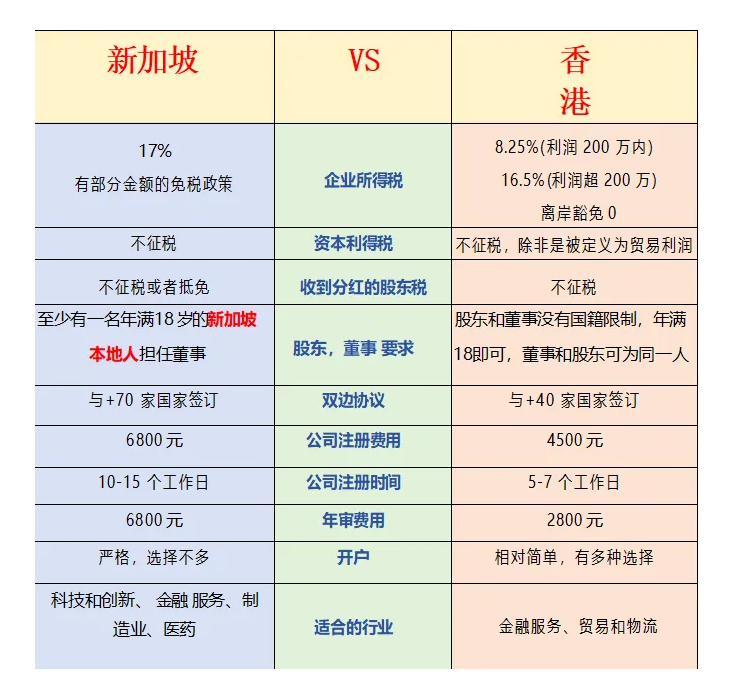
Enterprises usually choose Hong Kong or Singapore as their first stop when going overseas
✅ Direct comparison:
Advantages of a Hong Kong company:
Low and fast registered capital
Hong Kong Company Name Freedom
Minimal restrictions on scope of business
Low tax rate and fewer tax types, world-renowned tax depression
Facilitates brand building and enhances the company's international image
No foreign exchange controls, free flow of funds in and out of the country
Some circumvention of trade barriers
Debts incurred do not involve personal finances
Allowing shell companies to exist
Easy maintenance
Advantages of a Singapore company:
Singapore is one of the largest entrepot ports in the world;
Having an advantageous geographical location and a stable political situation.
Beneficial for investors to open up the Asian market and establish a business network in Southeast Asia;
Singapore has favorable tax policies;
The free flow of capital and lax foreign exchange controls are conducive to cross-border investment and trade by enterprises.
Singapore company registration process is easy.
Singaporean companies ranked first in terms of the number of foreign companies investing.
✅ Detailed comparison:
1. Tax policy:
Hong Kong:The tax system is simple and transparent, with major taxes including profits tax, salaries tax and property tax. The corporate income tax rate is 16.5% and the personal income tax rate is low, attracting many multinational corporations and high net worth individuals to set up offshore companies. There have been recent adjustments to the taxation policies of some industries, such as the transaction tax on virtual asset transactions.
Singapore:A global tax system is in place, with income tax on non-resident-source income, but tax incentives for most foreign income. The corporate income tax rate is 17%, with lower rates for qualifying technology and innovation businesses. Singapore also provides tax relief to multinational enterprises through a network of double tax treaties to reduce the cost of cross-border transactions.
2. Policies and regulations:
Hong Kong:The legal system is heavily influenced by British law, with a mature and well-established legal framework of company law, contract law and bankruptcy law. Hong Kong's open legal environment and protection of intellectual property rights provide a certain degree of legal protection for multinational enterprises. At the same time, Hong Kong's regulatory bodies, such as the Hong Kong Securities and Futures Commission (SFC) and the Hong Kong Companies Registry, impose stringent compliance requirements to ensure fair competition in the market.
Singapore:Adopting a mixed legal system of common law and civil law, its legal system is rigorous and highly transparent. Singapore's regulatory bodies, such as the Monetary Authority of Singapore (MAS) and the Accounting and Corporate Regulatory Authority of Singapore (ACRA), have stringent compliance and financial reporting requirements to safeguard market stability and investor interests. The Singapore government is committed to creating a highly rule-of-law and internationalized business environment.
3. Regulatory environment:
Hong Kong:The regulation of company registration and subsequent operation in Hong Kong is relatively standardized and efficient, with clear processes in fulfilling statutory requirements such as annual filing and auditing. Meanwhile, Hong Kong's regulatory policy on overseas investment is relatively lax, focusing mainly on compliance review and less intervention in the autonomous investment decisions of enterprises.
Singapore:The registration and operation of Singapore companies is strictly regulated, for example, the company's financial reports, the duties of directors and other aspects of the high standard requirements, the need for regular compliance filings, etc., but this strict regulation also helps to enhance the credibility of the company, from the side of the protection of the stability of investment activities.
4. Company establishment costs:
Hong Kong company formation costs:Hong Kong company registration fees are relatively more reasonable, the registration process is simple, the time required is shorter, in terms of registered capital requirements and other aspects of the threshold is low, for small and medium-sized mainland investment enterprises, the initial setup cost pressure is less.
Singapore company formation costs:Singapore company registration fees are generally slightly higher than in Hong Kong, and there are strict requirements for the company's registered address, statutory secretary, etc., need to invest a certain amount of additional costs to meet these requirements, but for the pursuit of high-quality company image and standardized operation of the investment enterprise, but also a reflection of the value.
5. Company operating costs:
Hong Kong company operating costs:
In the subsequent operation, the annual auditing and tax filing fees of Hong Kong companies have different charges according to the size of the company and the complexity of the business, but generally within the acceptable range of the market, and at the same time, Hong Kong's manpower costs and other aspects of the Asian region are at a medium level and relatively controllable.
Office space rentals in Hong Kong are high, especially in core business districts such as Central. Rental costs for virtual offices are around HK$500-2,000 per month, while shared office space can cost between HK$3,000-5,000.
The minimum wage in Hong Kong is HK$37.50 per hour, with ordinary staff earning HK$15,000-25,000 per month, and management salaries tend to be higher. Companies are required to pay at least 5% of the employee's salary as MPF contribution.
Singapore company operating costs:
Singapore's operating costs are relatively high, especially labor costs are at a high level in Asia. In addition, the professionalism required in tax filing, compliance maintenance, etc. is higher, and the corresponding service fees will be a bit on the high side, and the overall operating costs will have a certain impact on the profitability level of the enterprise.
Office space rentals in Singapore vary by location, with relatively higher rentals in core business districts. Monthly rentals are around S$2,000-5,000 per month for serviced offices, S$1,500-3,000 for shared offices and S$20-50 per square meter per month for traditional offices.
The salary level of Singaporean employees is high, with ordinary employees earning about S$3,000-5,000 per month, and management staff earning about S$3,000-5,000 per month.
The monthly salary of the management level may exceed S$8,000. In addition, the company is required to contribute 17% to the CPF for local employees.
synthesize and compare::
① If the mainland company invests overseas on a small scale, has relatively simple business and focuses on short-term cost control and flexible deployment of capital.A Hong Kong company may be a more appropriate choiceBecause of its relatively low cost of registration, operating costs can be controlled in certain aspects through flexible operation, while trade and investment exchanges between Hong Kong and other overseas countries are more convenient, and there are also certain advantages in taxation policies.
② If the mainland company invests in overseas projects of a larger scale and with greater potential for long-term development, has higher requirements for the company's international image, standardized operations and financing channels, and is willing to bear relatively high initial set-up costs and operating costs.Singapore companies have an advantageIts advantages in tax incentives, financing environment and legal regulation will provide strong support for the company's long-term stable development.
If your business has the need to go overseas, you need to register a Hong Kong company, a Singapore company or other overseas companies, we provide one-stop service, questions are welcome to contact our customer service WeChat (WeChat: jxhqcy890 / cell phone: 16625410105) to arrange for a senior manager one-on-one free consultation!
Tags:
Overseas Company Registration
Enterprises Going Overseas
external trade
cross-border e-commerce
Recommended
Cross-border e-commerce B2B must see! Registered Hong Kong company stationed in the Ali International Station, really fragrant!
In today's globalized business environment, the cross-border e-commerce B2B model is rapidly emerging with its unique advantages. For many enterprises engaged in cross-border trade, choosing a suitable platform and registering an advantageous company are undoubtedly the key keys to open the door to the international market.
2024 Hong Kong Company Account Opening Tips! How to choose the right Hong Kong bank account?
Global anti-money laundering regulations are becoming more and more stringent, the banks to maintain an account of the sunk cost is getting higher and higher, not moving hundreds of millions of dollars in fines, so that the major banks to open an account threshold as well as the audit process high up, already have a Hong Kong company bosses, how to choose the Hong Kong bank to open a public account? How much does it cost and how to operate? Today to give you a detailed introduction to the Hong Kong company account how to choose, as well as the approximate costs required and other content.
Hong Kong company registration advantages + registration conditions + registration process to share!
If you want to start a business and develop overseas markets, registering a Hong Kong company is undoubtedly a very forward-looking choice. With its unique geographical location, sound legal system, low tax rate and open business environment, Hong Kong company has become a "sharp weapon" for many business owners to open up overseas markets. Why is it so important to register a Hong Kong company in 2024?