While Temu has slashed prices to rock bottom, there are still people selling the same items for three times the price on another platform.
Published: August 19, 2026
Open Temu and search for ”phone case.”
$0.99. Free shipping.
As someone who makes phone cases, how does this price make you feel? Despair? Anger? Or are you already calculating how much more you’d have to lose to keep up?
Over the past year, Temu and SHEIN’s low-price strategy has been like a bulldozer, crushing the profit margins of countless cross-border sellers. Phone cases for $0.99, charging cables for $1.49, Bluetooth earbuds for $4.99—these prices don’t even cover the cost of goods.
Many sellers” first reaction is: ”It's over—we can't compete."
But there’s one thing I want to tell you: The same phone case sells for 15–20 rand (about 6–8 yuan) on Takealot in South Africa, with a gross profit margin of over 40%.
Even in places Temu can’t reach, there are still people quietly making money.——
Temu’s Logic: Subsidies for Traffic, Sellers Cover the Costs
First, let's clarify what Temu does.
Temu's model is essentially ”Platform Subsidies + rock-bottom prices + traffic siphoning“The platform uses subsidies to drive prices down to rock bottom, attracts a massive user base with low prices, and leverages that traffic to pressure sellers into lowering their prices.”
In this mode,Whoever has the lowest supply chain costs will survive.The
Directly supplied by the factory, with economies of scale, and able to sustain a gross profit margin of 3%—these businesses can survive.
Sellers focused on trading, those relying on brand premiums, and those depending on meticulous operations—they’ve basically been wiped out.
This isn't Temu's fault; it's dictated by its business model. Temu doesn't need you to make a lot of money; it needs your prices to be low enough.
The question is: If you're not a seller who sources directly from manufacturers, what do you do?
The answer is:Target a market that hasn't yet been saturated by the low-price model。——
Not all markets are price-driven.
South Africa is just such a market.
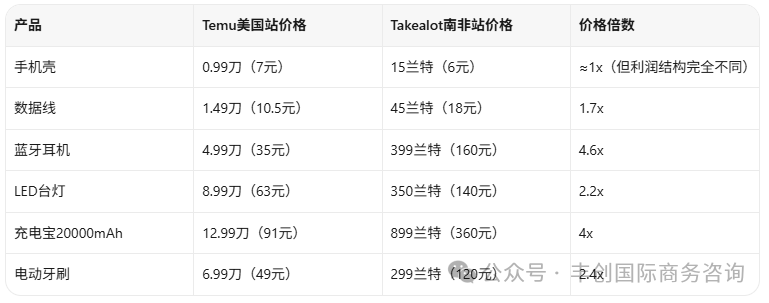
Let's compare data from a few product categories,Take a look at the price difference for the same product on Temu and Takealot::
You'll notice that the price differences for low-cost accessories (phone cases, charging cables) are relatively small, but the differences for high-priced items (Bluetooth earbuds, power banks, electric toothbrushes) are enormous.
Why? Because Temu uses subsidies to drive prices down to the absolute minimum for low-priced product categories, but for categories with medium-to-high average order values, the effect of subsidies diminishes, and the price advantage isn't as pronounced.
而On Takealot, the product categories with medium-to-high average order values are precisely the ones that South Africa’s middle class is most willing to buy.——They are willing to pay a premium for quality.——
Profit Structure Comparison: Higher Prices Don’t Necessarily Mean Higher Profits, but Takealot Truly Outperforms in Every Way
Let's run the full numbers for Bluetooth headphones.
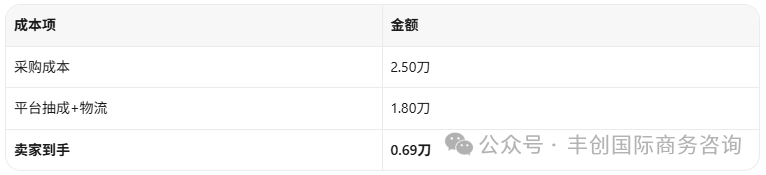
Temu Fully Managed Plan (Priced at $4.99):
Under the fully managed model, sellers aren’t responsible for logistics, operations, or customer service—but they also have no control over pricing. Whatever price the platform sets is final; you can only choose whether to ”do it or not.” A profit of $0.69 is less than 5 yuan.
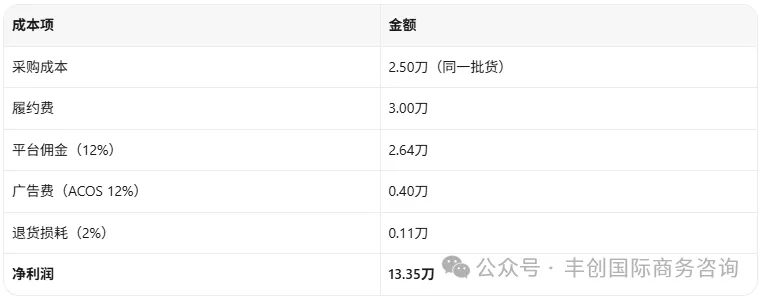
Takealot brick-and-mortar store (priced at $22 / 400 rand):
$0.69 vs. $13.35. That’s a 19-fold difference.
Same batch of goods, same factory, same quality. One makes 5 yuan on Temu, while the other makes 90 yuan on Takealot.
(Contact takealot+csdrcc12345)
——
Why hasn't South Africa been swept up in this yet?
Many people ask:If South Africa is so great, why isn’t everyone flocking there?
Three reasons:
First, the information gap still exists. Chinese cross-border sellers' attention is completely focused on Amazon, Shopee, TikTok Shop, and Temu. Takealot only began recruiting Chinese sellers last September, so most sellers aren't even aware of this platform.Chinese sellers account for less than 5%; information asymmetry equals profit margins.The
Second, the entry requirements are different from those of Temu. Temu’s fully managed model has virtually no barriers to entry—all you need is inventory. Takealot, on the other hand, requires you to register a company, open a local store, stock a local warehouse, create product listings, and run ads—so there are operational hurdles.Barriers keep the lazy away and protect those who work hard.The
Third, South Africa is protected by ”bias.” “Africa is poor,” ”logistics are poor,” ”it’s unsafe”—these prejudices have kept 99% sellers from entering the market.Prejudice is the best moat for pioneers.The
But this protection won’t last forever. The information gap is narrowing, the number of Chinese sellers is growing, and prejudices are being broken down. Those entering the market now are reaping the benefits of ”competition not yet taking off.” Once those benefits disappear, it will become the next Shopee.
(Contact takealot+csdrcc12345)
——
I'm not telling you to give up on Temu; I just want you to know there are other options.
Temu has its own value.If you're a factory-based seller who can minimize supply chain costs to the absolute minimum, Temu's full-service model is a high-volume sales channel. It doesn't require you to handle operations, build a brand, or manage logistics—all you need to do is supply the goods.
But if you're a trade-based seller or a seller looking to build a brand,Temu's business model isn't good for you.. You have no pricing power, no customer data, and no brand equity. After three years on Temu, you’ll have nothing to show for it except high sales volume.
Takealot Is Different. You have your own store, your own listings, control over your pricing, and your own customer reviews. By operating on Takealot for three years, you’ll build up brand equity.
We have our own warehouses, team, and network of stores in South Africa. We don’t limit ourselves to just one platform, but Takealot currently offers the best return on investment.The
Temu isn't the enemy; it's a reminder—in a market driven by price wars, you can never beat platforms that offer subsidies.
But in a market that hasn’t yet become overly competitive, you still have time to build your brand and establish competitive barriers.
Before it curls up.Want to know how competitive your product category is on Takealot and what the pricing landscape looks like? Send us your product information, and we’ll look into it for you. People who are actually in the business themselves provide data that’s more straightforward than any report.(Contact +csdrcc12345)
Tags:
Take-A-Lot stores in South Africa
South Africa takealot
Takealot Operations
Local Stores in South Africa
Takealot Platform
Recommended
Cross-border e-commerce B2B must see! Registered Hong Kong company stationed in the Ali International Station, really fragrant!
In today's globalized business environment, the cross-border e-commerce B2B model is rapidly emerging with its unique advantages. For many enterprises engaged in cross-border trade, choosing a suitable platform and registering an advantageous company are undoubtedly the key keys to open the door to the international market.
2024 Hong Kong Company Account Opening Tips! How to choose the right Hong Kong bank account?
Global anti-money laundering regulations are becoming more and more stringent, the banks to maintain an account of the sunk cost is getting higher and higher, not moving hundreds of millions of dollars in fines, so that the major banks to open an account threshold as well as the audit process high up, already have a Hong Kong company bosses, how to choose the Hong Kong bank to open a public account? How much does it cost and how to operate? Today to give you a detailed introduction to the Hong Kong company account how to choose, as well as the approximate costs required and other content.
Hong Kong company registration advantages + registration conditions + registration process to share!
If you want to start a business and develop overseas markets, registering a Hong Kong company is undoubtedly a very forward-looking choice. With its unique geographical location, sound legal system, low tax rate and open business environment, Hong Kong company has become a "sharp weapon" for many business owners to open up overseas markets. Why is it so important to register a Hong Kong company in 2024?