“Africa is too poor to do e-commerce”—that’s the most costly prejudice I’ve ever heard.
Published: August 19, 2026
Whenever I talk to people about Takealot in South Africa, the most common thing I hear is:
“Africa? Can Africans even afford to buy things?”
To be honest, I completely understand that reaction. Because that’s exactly how I felt two years ago.
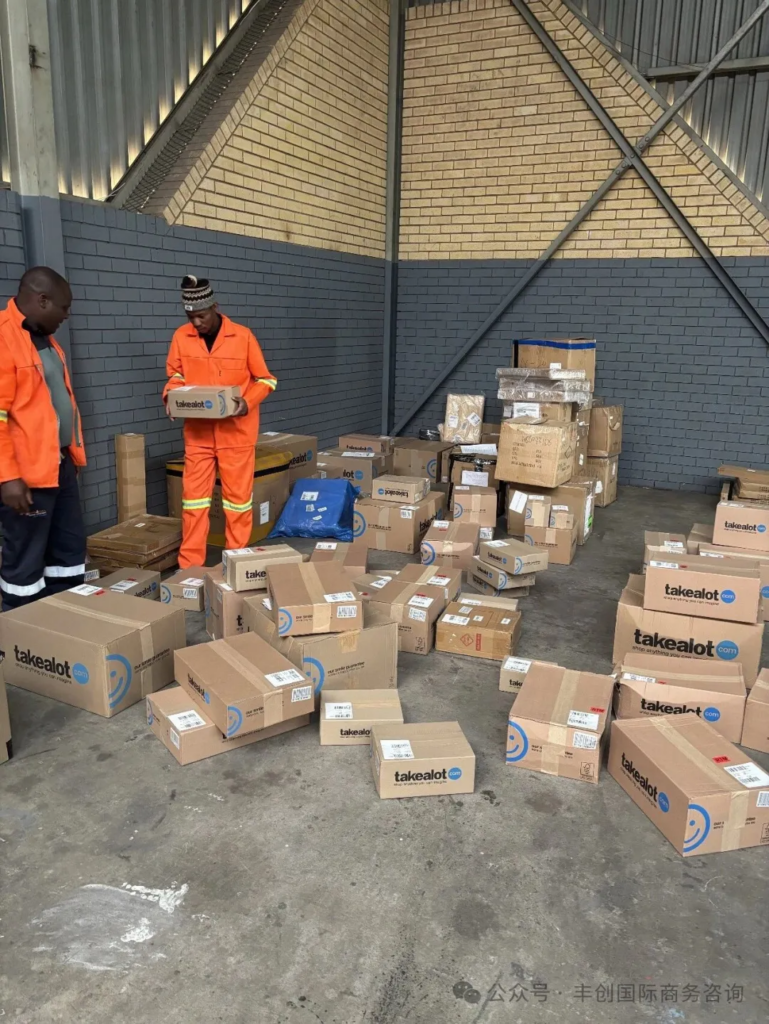
It wasn’t until I actually flew to South Africa and stood in the Sandton district of Johannesburg—where the streets were lined with BMWs and Audis, people were waiting in line at the Apple Store in the mall, and middle-class Black families were pushing shopping carts out of the mall with their trunks stuffed full of Takealot delivery boxes—that I truly understood.
At that moment, I realized:My understanding of South Africa is probably 99% all wrong.
And this ”mistake” is causing me to miss out on a genuine blue ocean market.
Today, using data and firsthand observations, we’ll debunk the five most common misconceptions all at once.——
Misconception 1: ”Income per capita in Africa is low, so people can’t afford to buy things.”
Facts::South Africa's GDP per capita exceeds $6,000, which is higher than that of Vietnam, India, and the Philippines.
You don't really think Vietnamese people can't afford things, do you? You don't really think the Indian market isn't worth pursuing, do you? South Africa's GDP per capita is 2 times, is from India 2.5 timesThe
More importantly, the middle class. South Africa has 3.4 million Black middle-class people, annual purchasing power 400 billion rand(approximately 160 billion yuan). On average, this group 37 years old...is currently in the midst of a shift in consumer preferences—from ”something that works” to ”something that works well,” and from ”cheap goods” to ”brand-name goods.”
On Takealot The average transaction value for mainstream customers is 400–600 rand.(Approx. 160–240 RMB). 76% users pay per monthOnline purchases totaling more than 2,000 rand. Spending over 1,000 RMB a month on online shopping—is that what you call being poor?
South Africa is not ”Africa.” In terms of economic development, infrastructure, and internet penetration, South Africa is in a league of its own on the African continent.Using South Africa to represent Africa is like using Shenzhen to represent China—it’s not wrong, but it’s far from reflecting the full picture.。——
Misconception #2: ”Logistics in Africa are inadequate; shipments won’t arrive.”
Facts: Takealot TFS Logistics covers 971 TP3T ZIP codes, with a 99.31% on-time delivery rate, and offers same-day delivery in major cities.
Many people's perception of logistics in Africa is still stuck in the past,“Long Lines at the Post Office + Lost Packages”... stage.
However, Takealot’s in-house TFS (Takealot Fulfillment Services) logistics network works as follows:
300,000 square meters of warehouse space, located in Johannesburg and Cape Town
A fleet of 280 company-owned delivery vehicles, including electric vehicles
Covers the 97% ZIP code area in South Africa
99.31 TP3T On-Time Delivery Rate
Same-day delivery is available in major cities (Johannesburg, Pretoria, Cape Town, Durban); standard delivery takes 1–2 days.
This delivery service holds up well against any global standard. I ordered something from Takealot in Johannesburg—I placed the order in the afternoon, and it was delivered by evening. It was even faster than when I ordered from JD.com in Shenzhen.
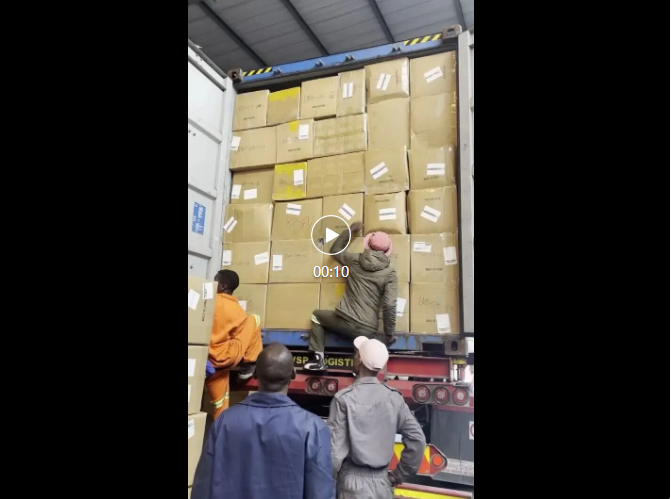
For sellers, as long as inventory is stored in a local warehouse in South Africa (either a platform warehouse or a third-party warehouse), there’s absolutely no need to worry about logistics. The initial shipment from China to South Africa is handled by international logistics providers, and once the goods are in the warehouse, Takealot takes care of the rest.(Inquiries about joining Takealot / Overseas Warehouses +csdrcc12345)
——
Myth #3: ”Africans only buy cheap goods”
Facts: The South African middle class places greater value on brand image and quality and is willing to pay a premium for high-quality products made in China.
This bias is the most dangerous because it can directly lead to mistakes in your product selection and pricing strategies.
The consumer psychology of South African consumers differs from that of consumers in Europe and the United States, as well as from that of consumers in Southeast Asia.
Consumers in Europe and the U.S. have been spoiled by Amazon Prime—they want everything to be fast, cheap, and easy to return. Consumers in Southeast Asia are extremely price-sensitive,CheapIt is the primary deciding factor.
South African consumers fall somewhere in between. It’s not that they don’t care about price, but they care more about“Is it worth it?”. If a good product is reasonably priced, customers are willing to buy it. But even if a poor-quality product is priced very low, they won’t buy it—because returning it is a hassle for them.
Our actual data from Takealot confirms this: SKUs priced in the mid-to-high range (300–600 rand) actually have higher conversion rates than those in the low-price range (100–200 rand). This is because the mid-to-high price range conveys“Sense of Quality”...and South Africa's middle class is willing to pay a premium for quality.
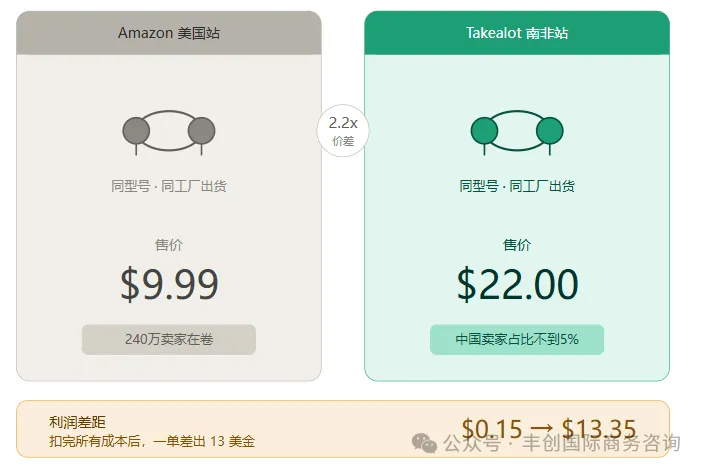
A pair of Bluetooth headphones sells for 399 rand (about 160 yuan) on Takealot, with a purchase cost of 25 yuan, resulting in a gross profit margin of over 80%. The same product sells for $9.99 on Amazon, with the same purchase cost, but a gross profit margin of less than 15%.
It’s not that South Africans only buy cheap goods; it’s just that there aren’t enough Chinese sellers entering the market to offer them quality products.——
Misconception 4: ”The African market is too small; it’s not worth pursuing.”
Facts: The South African e-commerce market is valued at 71 billion rand (approximately 28.5 billion RMB), with an annual growth rate of 29%, and Takealot has over 7 million monthly active users.
Many people think that a 28.5 billion yuan e-commerce market is small.
But who are you comparing yourself to? Of course, you’re small compared to Chinese e-commerce platforms, and you’re small compared to the U.S. market as well. But you’re a seller, not a platform—you don’t need to dominate the entire market.
All you need is oneThe market isn't saturated yet, and growth is still accelerating., and you still haveFirst-mover advantagethe market.
South Africa’s e-commerce market is growing at an annual rate of 29%. What does that mean? China’s e-commerce growth rate has slowed to around 10%, the U.S.’s is 8%, and Southeast Asia’s ranges from 15% to 20%. South Africa is one of the fastest-growing emerging e-commerce markets.
More importantly, there’s the intensity of competition. Takealot has 18,000 active sellers, with Chinese sellers accounting for less than 5%. Amazon has 1.65 million active sellers, with Chinese sellers making up nearly 50%. Swimming in a pool of 18,000 people is a completely different experience from competing for a share of the market in a pool of 1.65 million.
A small market with very little competition means that every effort you put in will pay off. A large market with fierce competition means that even if you spend 100,000 on advertising, you might not even make a splash.
(Contact takealot+csdrcc12345)
——
Myth 5: ”Africa is unsafe; you can’t do business there.”
Facts: The Sandton district of Johannesburg is the financial center of Africa; Standard Bank, Deloitte, and Microsoft's African headquarters are all located here.
This prejudice is understandable—media coverage of South Africa tends to focus on crime rates and safety issues.
But the South Africa of the business world is not the same as the South Africa portrayed in the news.
The Sandton district of Johannesburg is the financial hub of all of Africa. Standard Bank (Africa’s largest bank) is headquartered here, as are the African headquarters of Deloitte, Microsoft, and Google. The Sandton City mall features stores such as Gucci, Louis Vuitton, and the Apple Store, and is even more impressive than many high-end malls in China’s second-tier cities.
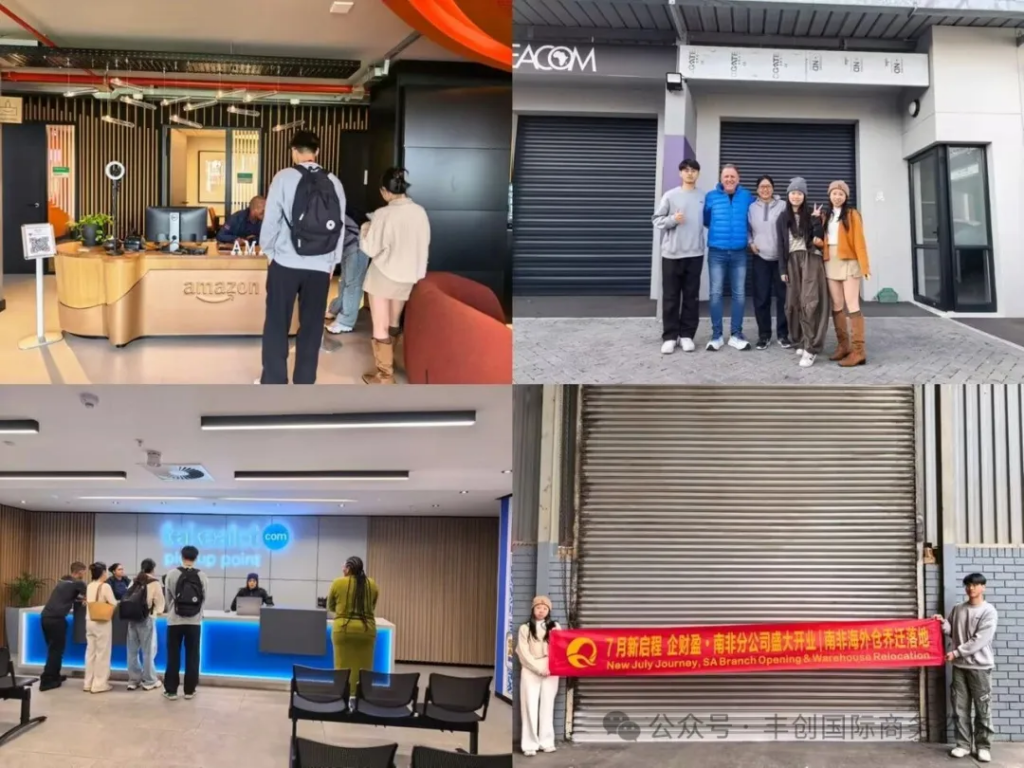
We have our own warehouse and local team in Johannesburg, and we’ve been operating for over a year without encountering any security issues.. The key is to choose the right area—business districts like Sandton, Rosebank, and Centurion are very safe, so don’t go where you shouldn’t.
The biggest fear in cross-border business isn’t ”insecurity”—it’s ”being too afraid to take action because of a lack of understanding.” If you don’t take a look, you’ll never know just how far your perception differs from reality. —
Prejudice is the most expensive cognitive tax
Five biases—each one is causing you to miss out on a real market opportunity.
“Africa is poor”——SoDon't you look at South Africa's per capita GDP and middle-class statistics?The
“The logistics aren’t up to par.”——SoYou haven't looked into Takealot's TFS delivery networkThe
“Buy only cheap stuff”——SoIf you put a good product in a market where price is the deciding factor, it will get crushed.The
“”The market is too small"——SoWould you rather struggle in a pool of 1.65 million sellers than give it a try in a pool of 18,000 sellers?The
“Unsafe”——SoYou’ll never fly over there to take a look; you’ll always live in your imagination.The
Every prejudice comes at a cost. And that cost is the profit you could have earned.
We have our own company, our own warehouse, and our own network of Takealot stores in South Africa. I’ve flown there, lived there, and done business there. South Africa isn’t what you imagine it to be—it might actually be much better than you think.
While everyone else is crowding into the European and American markets, the truly savvy sellers are looking where others don’t see.If you have any questions about the South African market—whether you plan to enter it or not—feel free to reach out to us. Preconceptions can be dispelled, but only if you’re willing to take a look at the actual data. (Contact us at +csdrcc12345)
Tags:
The South African E-commerce Market
Take-A-Lot stores in South Africa
Takealot Platform
South African e-commerce takealot
Recommended
Cross-border e-commerce B2B must see! Registered Hong Kong company stationed in the Ali International Station, really fragrant!
In today's globalized business environment, the cross-border e-commerce B2B model is rapidly emerging with its unique advantages. For many enterprises engaged in cross-border trade, choosing a suitable platform and registering an advantageous company are undoubtedly the key keys to open the door to the international market.
2024 Hong Kong Company Account Opening Tips! How to choose the right Hong Kong bank account?
Global anti-money laundering regulations are becoming more and more stringent, the banks to maintain an account of the sunk cost is getting higher and higher, not moving hundreds of millions of dollars in fines, so that the major banks to open an account threshold as well as the audit process high up, already have a Hong Kong company bosses, how to choose the Hong Kong bank to open a public account? How much does it cost and how to operate? Today to give you a detailed introduction to the Hong Kong company account how to choose, as well as the approximate costs required and other content.
Hong Kong company registration advantages + registration conditions + registration process to share!
If you want to start a business and develop overseas markets, registering a Hong Kong company is undoubtedly a very forward-looking choice. With its unique geographical location, sound legal system, low tax rate and open business environment, Hong Kong company has become a "sharp weapon" for many business owners to open up overseas markets. Why is it so important to register a Hong Kong company in 2024?