The Complete Guide to Opening a Bank Account for a Hong Kong Company in 2026: From Preparing Documents to the In-Person Interview—Don’t Miss a Single Step! Key Points for KYC Review + Timeline + Guide to Avoiding Pitfalls
Published: July 22, 2026
You’ve finally decided to register a company in Hong Kong. Maybe it’s to receive cross-border payments, maybe it’s to expand your brand overseas, or maybe your clients require you to have an overseas entity. But company registration is just the first step—the real headache comes next: opening a bank account.
Many people assume that once a company is registered in Hong Kong, it will automatically be granted a bank account. This may be the biggest misconception you have about Hong Kong’s financial system. In Hong Kong, the Companies Registry (CR) and the banking system are two completely separate entities. While company registration only requires a complete set of documents, opening a bank account involves the bank reviewing far more than just a Business Registration Certificate.
💡 Not sure if your information meets the bank’s review criteria? Add WeChat ID qcygscszk or call 18676749275 and send [Account Opening Pre-Review] to receive a free pre-review of your documents.
01 Three Things to Do Before Opening an Account: Ask Yourself First
Before preparing any materials, we recommend that you first think carefully about these three questions:
First, what is your business model? Is it cross-border e-commerce, general trade, consulting services, or equity investment? Depending on the type of business, the bank’s review criteria will vary significantly.
Second, do you have any affiliated companies in mainland China? This is currently the key factor most Hong Kong banks use to determine whether you are “genuinely in business.” If you have a company in mainland China that is operating normally—even if it only has two years of social security records and basic bank transaction history—it will be of substantial help in opening a corporate bank account in Hong Kong.
Third, in what situations do you primarily use your account? Is it for receiving U.S. dollars, paying suppliers, converting foreign currency into RMB for use in mainland China, or simply as an offshore cash pool? The specific use case will determine which bank you should choose and what supporting documents you’ll need to provide.
02 Checklist for Preparing Materials: Different Industries, Different Requirements
There is no one-size-fits-all standard checklist for opening a bank account in Hong Kong. However, we can divide the required information into two main categories: “General Information” and “Industry-Specific Information.”
General documents include: Hong Kong Certificate of Incorporation (CI), Business Registration Certificate (BR), Incorporation Form (NNC1) or Annual Return (NAR1), Articles of Association (M&A), and identification documents for directors and shareholders (ID card + passport/Hong Kong-Macau Travel Permit). These are the basic documents required by any bank.
Supplementary industry information is what truly sets you apart. Take the e-commerce industry as an example: you’ll need to provide the e-commerce platform’s terms of service, screenshots of sales data from the past few months, and procurement and logistics contracts. If you’re in traditional trade, you’ll need procurement contracts, sales contracts, corresponding bank statements, and customs declaration documents. For startups without established business data, a well-crafted business plan will serve as your best ticket to success.
Here’s a detail that many people overlook: Banks place great importance on whether your documents support each other. For example, if you claim to be in the cross-border e-commerce business but the contracts you provide are in the format typically used for traditional foreign trade—this inconsistency will cause the bank manager to doubt the authenticity of your business.
📌 Do different industries require different lists of supporting documents? Add WeChat ID qcygscszk and send [Document Checklist] to receive a complete list of materials specific to your industry.
03 KYC Review: What Banks Are Looking For
KYC (Know Your Customer) isn’t just a formality. During your in-person interview with the bank manager, every answer you give contributes to your account’s “score.”
There are really only a few key issues they’re concerned about: Is your company actually in operation? Are your sources of funds legitimate? Are your counterparties on the list of sensitive countries? Does the purpose of your account align with your business model?
Many clients run into problems during in-person interviews not because they lack the necessary qualifications, but because they are inadequately prepared. For example, if a bank asks you, “What products does your company primarily offer?” and you respond with “We do everything”—to the bank, this signals an unclear business focus and higher risk. You should be able to clearly articulate your product categories, target markets, and supply chain structure—and even list the names of a few specific customers or suppliers.
Another example is when a bank asks about your “estimated annual turnover” and “average transaction amount.” If the figures you provide are inconsistent or clearly don’t match the scale of your business, the bank manager will most likely ask you to go back and provide additional documentation. This isn’t meant to be difficult; it’s simply the bank’s risk control mechanisms at work.
04 From Application Submission to Interview to Home Visit: Timeline
Provided all required documents are submitted, the timeline may vary by bank, but the overall process is generally as follows: In the first week, submit your documents to the bank manager for preliminary review; once the preliminary review is approved, the bank will schedule an in-person interview, typically within 1–2 weeks after the documents are reviewed; After the in-person interview is approved, the application enters the bank’s internal approval process, which generally takes 2–3 weeks to produce a result. In other words, a one-and-a-half-month timeframe is a reasonable estimate from the time you begin preparing your documents until you finally receive your account.
There’s one step that’s often overlooked: the preliminary review. Many agencies promise to “guarantee account opening,” but when the application reaches the bank’s preliminary review stage, the documents are returned, and only then are clients told that “additional XX materials are required.” This isn’t a matter of the agency not trying hard enough; rather, review standards vary across different banks and change over time. Qicaiying’s approach is to conduct an internal pre-review before submission to identify potential issues the bank might raise in advance, thereby reducing the need for rework.
05 After Opening an Account: Don’t Think You’re in the Clear
Your account has been opened, but this is just the beginning. Hong Kong banks are imposing increasingly strict ongoing compliance reviews on accounts. You need to maintain good account management practices: log in regularly to manage your account, avoid frequent buying and selling, keep clear records of your transactions, and complete your annual audit and tax filing on time.
We’ve seen far too many cases where an account was operating normally, but because the client failed to maintain accounting records or undergo an audit for an entire year, the bank sent an inquiry letter. Since the client did not respond in a timely manner, the account was frozen or even closed. In Hong Kong, banks have the right to unilaterally close accounts, and once your account is closed by one bank, your applications to open accounts at other banks will also be affected—because banks share risk information with one another.
So, opening an account simply opens the door to Hong Kong’s financial system. How to operate safely, compliantly, and sustainably within that system is what you really need to focus on.
Why choose Enterprise Caiying
What Can We Do for You—
✔️ Hong Kong Company Registration: Full-service agency, registered office address, and a valid business address for bank KYC verification—not a virtual address
✔️ Fast-Track Bank Account Opening: We have established "whitelist" partnerships with banks such as HSBC, Overseas-Chinese Banking Corporation, Hang Seng, and Dah Sing, and pre-screen documents to increase the success rate of account openings.
✔️ One-stop, end-to-end support: From company registration to opening a bank account, annual reviews, bookkeeping, and audits—a dedicated representative will handle everything for you, so you don’t have to go through the process yourself.
✔️ Cross-border Tax Planning: Hong Kong Certificate of Residence (CoR) and CRS compliance strategies to help you prevent unnecessary exchange of tax information
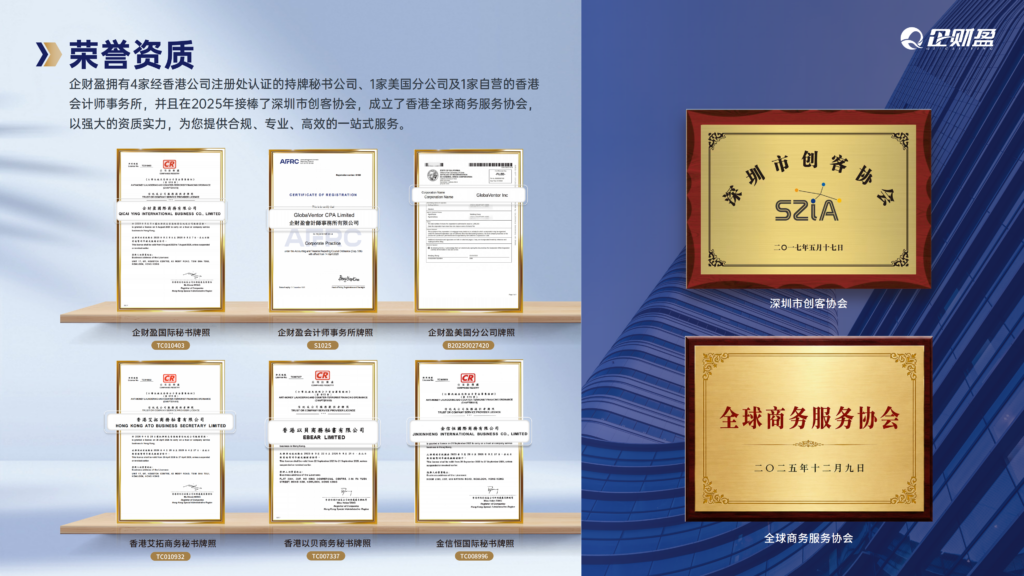
✔️ Local on-the-ground team in Hong Kong: 3 licensed secretarial firms + 1 in-house Hong Kong accounting firm; government correspondence and bank verifications are handled locally; bookkeeping and auditing are not outsourced
Why You Can Trust Us—
✔️ Hong Kong Licensing Qualifications: Three licensed secretarial firms certified by the Hong Kong Companies Registry—not ordinary agencies—that possess the qualifications of a statutory secretary
✔️ In-house accounting firms: 1 self-operated Hong Kong accounting firm + a Greater Bay Area accounting firm; audit reports are not outsourced
✔️ Endorsed by industry associations: Vice President of the Shenzhen Bookkeeping Services Association; Board Member of the Shenzhen Cross-Border E-Commerce Association
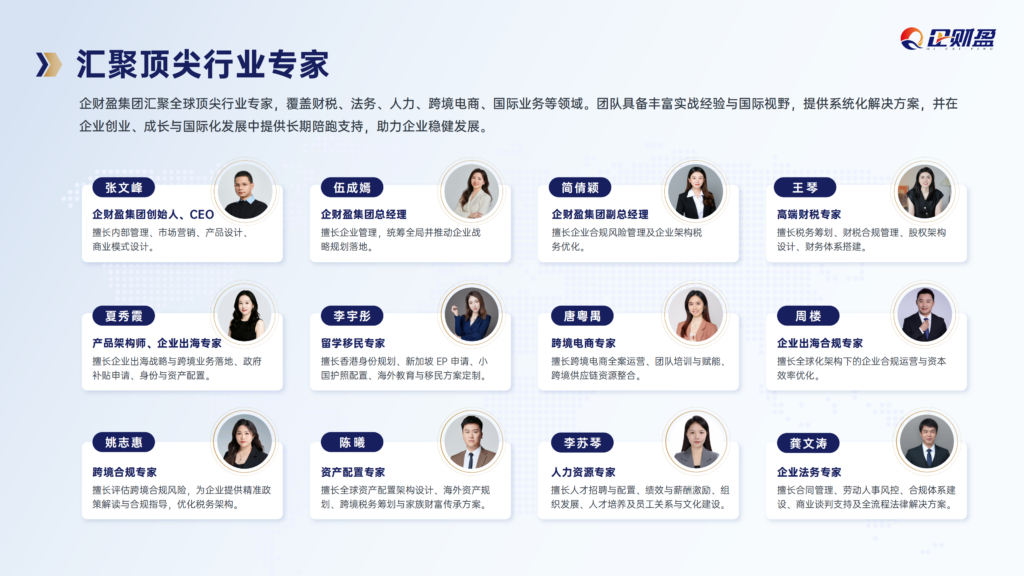
✔️ Founded in 2015, we have served over 500,000 small, medium, and micro enterprises with a team of over 400 professionals, including lawyers, CPAs, tax consultants, and cross-border compliance experts. Our core team members have an average of 8–15 years of industry experience.
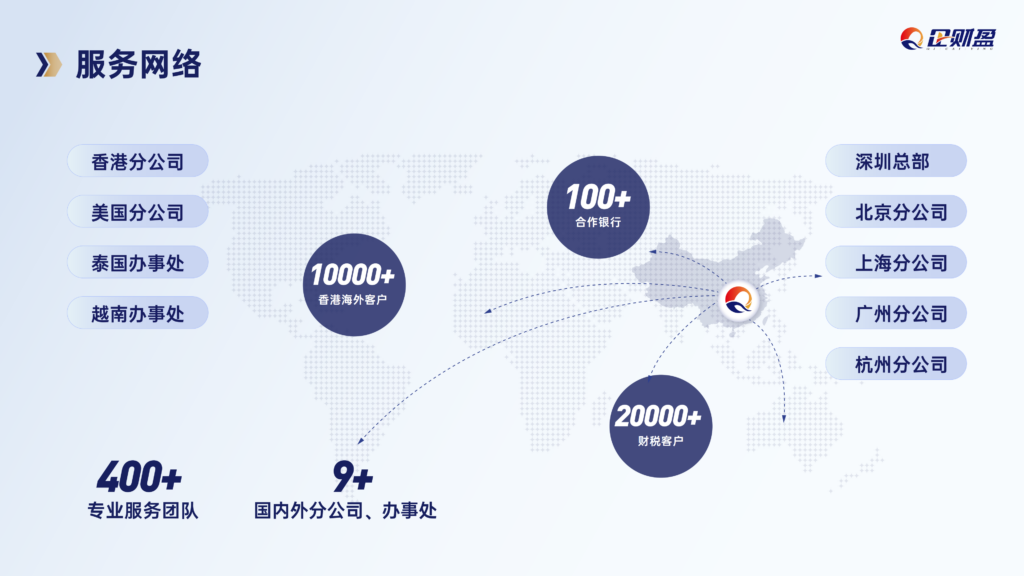
✔️ Global Presence: Headquartered in Shenzhen, with branches in Beijing, Shanghai, Guangzhou, Hangzhou, Hong Kong, Southeast Asia, and the United States
If you're considering registering a company or opening a bank account in Hong Kong, feel free to reach out to us—
Tags:
Documents Required to Open a Bank Account in Hong Kong
Opening a Bank Account for a Hong Kong Company
Hong Kong Bank Account Opening
Recommended
Cross-border e-commerce B2B must see! Registered Hong Kong company stationed in the Ali International Station, really fragrant!
In today's globalized business environment, the cross-border e-commerce B2B model is rapidly emerging with its unique advantages. For many enterprises engaged in cross-border trade, choosing a suitable platform and registering an advantageous company are undoubtedly the key keys to open the door to the international market.
2024 Hong Kong Company Account Opening Tips! How to choose the right Hong Kong bank account?
Global anti-money laundering regulations are becoming more and more stringent, the banks to maintain an account of the sunk cost is getting higher and higher, not moving hundreds of millions of dollars in fines, so that the major banks to open an account threshold as well as the audit process high up, already have a Hong Kong company bosses, how to choose the Hong Kong bank to open a public account? How much does it cost and how to operate? Today to give you a detailed introduction to the Hong Kong company account how to choose, as well as the approximate costs required and other content.
Hong Kong company registration advantages + registration conditions + registration process to share!
If you want to start a business and develop overseas markets, registering a Hong Kong company is undoubtedly a very forward-looking choice. With its unique geographical location, sound legal system, low tax rate and open business environment, Hong Kong company has become a "sharp weapon" for many business owners to open up overseas markets. Why is it so important to register a Hong Kong company in 2024?