Takealot Local Store vs. Cross-Border Store: After a Year of Operation, What’s the Actual Price Difference?
Published: July 29, 2026
Last month, a seller on Takealot reached out to me, and the first thing he said was:
“I’ve been running my cross-border store for eight months. The daily order volume looks decent, but when I tally up the numbers at the end of the month, I’m left with hardly anything. What exactly went wrong?”
I asked him to put together a list of all the costs and send it to me. After reviewing it, I asked him:
“Have you ever calculated,Same quality, same quantity, if you uselocal store”If I do that, how much more can I earn in a year?"
He froze.
Many sellers choose to open cross-border stores for one simple reason—Low barriers to entry—no need to register a South African company or set up a local warehouse—and it’s easy to get started.. That’s true. But ”easy to get started” and ”high earnings” are two different things.
In today’s article, we’ll put domestic and cross-border stores on the same playing field, starting withCommissions, shipping, customs duties, returns, cash flow, conversion rates, and hidden costs...let's break it down item by item and crunch the numbers.
Once you've finished the calculations, you'll find that:The shortfall might be much greater than you imagine.The
One,7 Key Dimensions: Domestic Stores vs. Cross-Border Stores
Before we do the final calculations, let’s first take a close look at exactly how these two models differ at each key stage.
① Platform Commission
sports event
local store
cross-border store
sales commission
11%-18%
13%-20%
Reasons for the Discrepancy
Domestic Standard Rates
Includes cross-border surcharge: 2%–3%
Cross-border stores are inherently 2–3 percentage points more expensive.Monthly sales of 100,000 rand translate to a net profit of 24,000 to 36,000 rand per year....I didn't do anything, but I already lost money.
② Logistics Costs and Delivery Times
sports event
local store
cross-border store
Shipping method
Direct Shipping from Local Warehouse / Official Warehouse
Inbound Shipment → Customs Clearance → Local Delivery
Shipping Cost per Order
12–18 rand
35–55 rand
Delivery Timeframe
1-3 days
7–20 days
Stability
高
Low to medium
The combined cost of the initial leg of shipping, customs clearance fees, and final-mile delivery fees,The logistics cost per order is nearly three times that of a brick-and-mortar store.Slow delivery times also directly lower conversion rates and repeat purchase rates.
③ Tariffs and Taxes
sports event
local store
cross-border store
import tariff
not have
5%-20%
VAT Value Added Tax
15% is included in the selling price
Payment at the Time of Import
Customs Clearance Fees
not have
200–500 rand per ticket
A shipment worth 50,000 rand could incur customs duties and VAT totaling8,000–12,000 rand—that’s enough to cover the entire value of the 15%–24% inventory.
④ Return Costs
sports event
local store
cross-border store
return rate
4%-6%
7%-10%
Cost per Return
10–15 rand
80–150 rand
Returns processing
Available for resale
Most Unclaimed Items/Discounts
Returns are the aspect that cross-border sellers are most likely to overlook.Based on 6,000 orders per year and a return rate of 81 TP3T, a cross-border store could lose more than 40,000 rand annually in returns alone.
⑤ Warehousing and Inventory
sports event
local store
cross-border store
Warehousing Solutions
Local Warehouse / Official Warehouse
Domestic Stock + First Leg in Transit
Monthly Storage Costs
2,000–4,000 rand
3,000–6,000 rand
Inventory Turnover
High (Fast Restocking)
Low (long lead time)
The biggest problem isn't the rent, but ratherCapital tied up in inventory in transit. With a transit time of 30–45 days for ocean freight, this means keeping at least 1–2 months’ worth of inventory in transit—That money is dead money.
⑥ Cash Conversion Cycle
sports event
local store
cross-border store
settlement cycle
7–14 days
30–45 days
Annual Turnover Rate
About 26 times
About 8–12 times
Cost of Capital Tied Up
lower (one's head)
高
If the settlement cycle doubles, capital efficiency halves.With the same initial investment, domestic stores may turn over inventory more than 20 times a year, while cross-border stores may turn it over fewer than 10 times.
⑦ Traffic and Conversion Rate
sports event
local store
cross-border store
Traffic Skew
Yes (local tags take priority)
Fewer
“Ships Locally” label
there are
not have
Average conversion rate
3%-5%
1.5%-3%
Buyer Trust
高
Low to medium
The buyer saw“Ships locally, delivered in 1–3 days”...the speed at which orders are placed is noticeably faster. A 1-2 percentage point difference in conversion rate translates to a tangible difference in the number of orders generated from the same traffic.
Two,A Single Chart Explains It All: Just How Big Is the Annual Cost Difference?
We summarize the dimensions above toMonthly sales of 100,000 rand, average order value of 200 rand, and approximately 6,000 orders per yearFor example, let's calculate the annual general ledger:
cost item
Local Store (Rand/Year)
Cross-border Store (Rand/year)
difference
Platform Commission
144,000
180,000
+36,000
logistics costs
90,000
270,000
+180,000
Tariffs + Customs Clearance
0
120,000
+120,000
Warehousing Costs
36,000
60,000
+24,000
Return-Related Losses
4,500
48,000
+43,500
Cost of Capital Tied Up
12,000
45,000
+33,000
Total Operating Costs
286,500
723,000
+436,500
Note: The above data are estimates based on typical industry scenarios; actual figures may vary depending on product category, operational strategies, and logistics solutions.
With the same annual sales of 1.2 million rand, here’s how much more a cross-border store spends compared to a domestic store
436,500 rand
Equivalent to RMB 174,000 yuan per year
Let's break it down to see where this discrepancy comes from:
Logistics is the one area where it falls short.180,000 rand—This is the biggest cost; customs clearance fees120,000 rand—Taxes that cross-border stores can’t avoid; return discrepancies43,000 rand— Profit Killers: Commission Spreads36,000 rand—The platform’s ”hidden tax” on cross-border sellers.
This money didn't just fall from the sky—it comes from your profits (for more information on local stores in South Africa, add csdrcc12345).
Three,Those ”hidden” costs are the real reason you’re not making money
The table above is alarming enough, but there are still some other costs,It won't show up on any bill, but it's actually eating away at your profitsThe
Hidden Costs, Part 1: Negative Reviews and Ranking Penalties
Cross-border store logistics are slow; buyers can’t wait → they follow up on their orders → they leave negative reviews → the listing’s ranking drops → traffic decreases → order volume declines. This is a vicious cycle that’s hard to stop once it starts. Local stores offer fast shipping and prompt after-sales service, so they naturally have lower negative review rates—which means you get more sustainable traffic for the same marketing budget.
Hidden Costs, Part 2: The Risk of Excess Inventory
Cross-border stores have long lead times for restocking, so they often overstock to avoid running out of inventory. Once a particular item stops selling, the inventory gets stuck in the South African warehouse,Storage fees pile up day by day, and you have to offer discounts to clear out inventory.. Local stores can restock quickly and have flexible inventory turnover, allowing them to adjust their stocking strategies within two days—so they don’t have to sit idly by and watch inventory pile up in a single warehouse.
Hidden Costs, Part 3: Exchange Rate Fluctuations
Revenue from the cross-border store is in South African rand, while costs are in Chinese yuan, with exchange rate fluctuations in between.The rand has been quite volatile against the yuan; a single adverse fluctuation could wipe out one or two months' worth of profits.. Since both revenue and major costs for local stores are denominated in rand, exchange rate risk is significantly reduced.
Hidden Costs, Part 4: Policy and Compliance Risks
South Africa’s regulations on cross-border e-commerce continue to tighten. Import access lists, product certification, tax compliance… Cross-border sellers must adapt to every policy change,In mild cases, additional materials must be submitted; in severe cases, the product will be taken off the shelves and a fine imposed.. The compliance framework for domestic stores is clearer, and policy risks are lower.
Four,Local Stores Also Offer These ”Hidden Perks”
In addition toSave money, Local stores also enjoy certain ”privileges” that cross-border stores don’t have:
The 1Takealot Official Warehouse Service Platform handles storage, picking, shipping, and returns for you—all you have to do is sell; leave the logistics entirely to the platform. The cross-border store option is currently unavailable.
Priority Registration for 2 Major Sales Events: Black Friday, Christmas Sale, Payday Sale… During these peak traffic periods, local sellers get priority access to registration and prominent display spots.
3. There is greater scope for brand-oriented operations—brand flagship stores, brand story pages, and brand advertising—and establishing brand awareness in the South African market can only be achieved through local stores.
4. Local Customer Service and After-Sales Support: Local phone numbers, local addresses, and local returns and exchanges—these details are synonymous with ”reliability” in the eyes of buyers and directly determine conversion rates.
Speaking of local warehouses, I’d like to mention our own progress.
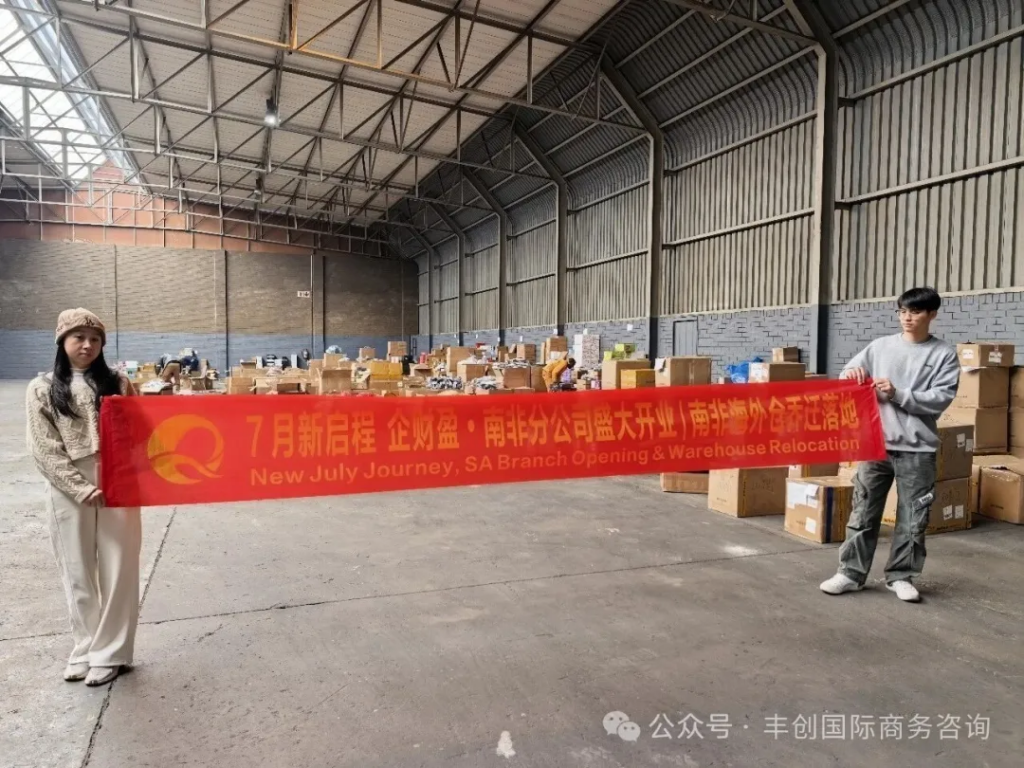
Our overseas warehouse in South Africa is now up and running; the team visited the facility last month. We thoroughly reviewed the location, storage capacity, and management processes—it’s not the kind of arrangement where the company merely lends its name while actually outsourcing operations to a third party.
If you don’t currently meet the requirements for joining an official warehouse, or if you’d like to test the waters with a local store model using a more flexible solution first, our warehouse can serve as a transitional option. With your inventory in our hands, restocking, returns and exchanges, and inventory adjustments are all much more convenient.
Five,Final Thoughts: Choice Matters More Than Effort
At this point, some sellers might say:“I know local stores are great, but registering a company in South Africa and setting up a local warehouse—that’s no small feat.”
That's right, the initial barriers to entry for domestic stores are indeed a bit higher than those for cross-border stores. But what you need to consider isGeneral Ledger...it's not a one-day hurdle.
The same annual sales of 1.2 million rand—
Operating costs for brick-and-mortar stores are approximately 286,000 rand, Cross-border Store Agreements 723,000 randThe
difference 436,000 rand, equivalent to RMB 174,000 yuanThe
With this amount of money, you can register a company in South Africa, set up a local warehousing system, and even hire a local operations manager.In other words, the extra money spent by the cross-border store over the course of a year is enough to cover all the startup costs of the domestic store.
Starting next year, the advantages of brick-and-mortar stores will only grow—lower costs, faster inventory turnover, more stable foot traffic, and greater brand value.
So, back to the original question:After a year of operations, how much of a shortfall is there, exactly?
The answer is:It falls short by the entire startup cost, plus future growth potential.
If you're running a cross-border store on Takealot or planning to enter the South African market, it's time to seriously consider switching to a local store.Barriers to entry are temporary, but the profit gap is long-term.
If you choose the right path, it will grow wider the further you go; if you choose the wrong path, the harder you try, the more exhausted you’ll become.
In South African e-commerce, local stores are the way to go.
We’ve already set up our own overseas warehouse in South Africa. Our team has inspected the facility in person—this isn’t just talk. If you’re planning to shift to local stores and need local warehousing support, let’s talk. We’ll help pave the way for you. (Contact us at +csdrcc12345)
Tags:
Takealot Operations
Local Stores in South Africa
Takealot Platform
South African E-commerce Platforms
South Africa takealot inbound
South African takealot platform
Recommended
Cross-border e-commerce B2B must see! Registered Hong Kong company stationed in the Ali International Station, really fragrant!
In today's globalized business environment, the cross-border e-commerce B2B model is rapidly emerging with its unique advantages. For many enterprises engaged in cross-border trade, choosing a suitable platform and registering an advantageous company are undoubtedly the key keys to open the door to the international market.
2024 Hong Kong Company Account Opening Tips! How to choose the right Hong Kong bank account?
Global anti-money laundering regulations are becoming more and more stringent, the banks to maintain an account of the sunk cost is getting higher and higher, not moving hundreds of millions of dollars in fines, so that the major banks to open an account threshold as well as the audit process high up, already have a Hong Kong company bosses, how to choose the Hong Kong bank to open a public account? How much does it cost and how to operate? Today to give you a detailed introduction to the Hong Kong company account how to choose, as well as the approximate costs required and other content.
Hong Kong company registration advantages + registration conditions + registration process to share!
If you want to start a business and develop overseas markets, registering a Hong Kong company is undoubtedly a very forward-looking choice. With its unique geographical location, sound legal system, low tax rate and open business environment, Hong Kong company has become a "sharp weapon" for many business owners to open up overseas markets. Why is it so important to register a Hong Kong company in 2024?