Enterprise Caiying Weekly News Brief|U.S. illegal tariffs can apply for refunds, Hainan Free Trade Port simplifies registration, PayPal integrates Brazil's Pix, China and Italy sign e-commerce cooperation plan ......
Published: 2026-04-20
Tax Update: Refunds May Be Claimed for Unlawfully Imposed U.S. Tariffs
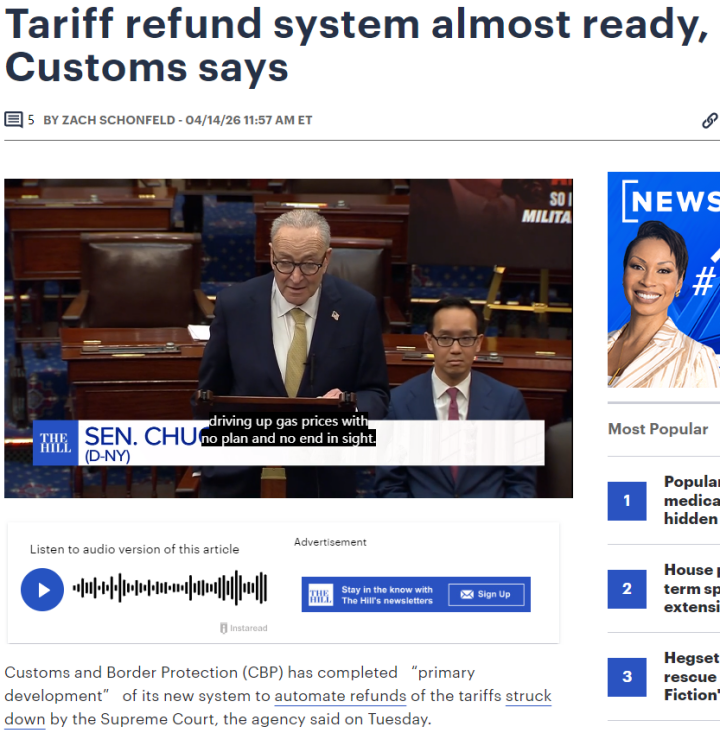
Recently, U.S. Treasury Secretary Bessent stated that importers are now permitted to apply for refunds of import duties previously deemed to have been unlawfully collected. However, applications must be submitted through U.S. Customs and Border Protection (CBP), while the Treasury Department is solely responsible for the subsequent payments. Currently, approximately $127 million in refund applications are being processed, and funds are being disbursed in stages. The exact timing of the refunds will depend on the progress of customs reviews. Meanwhile, CBP has indicated that the refund system is largely complete, but only about 20% of eligible companies (out of a total of approximately 300,000) have completed registration for electronic payments; companies that have not completed registration will not be able to receive refunds.
Tax Update: Hainan Free Trade Port Simplifies Business Registration Process
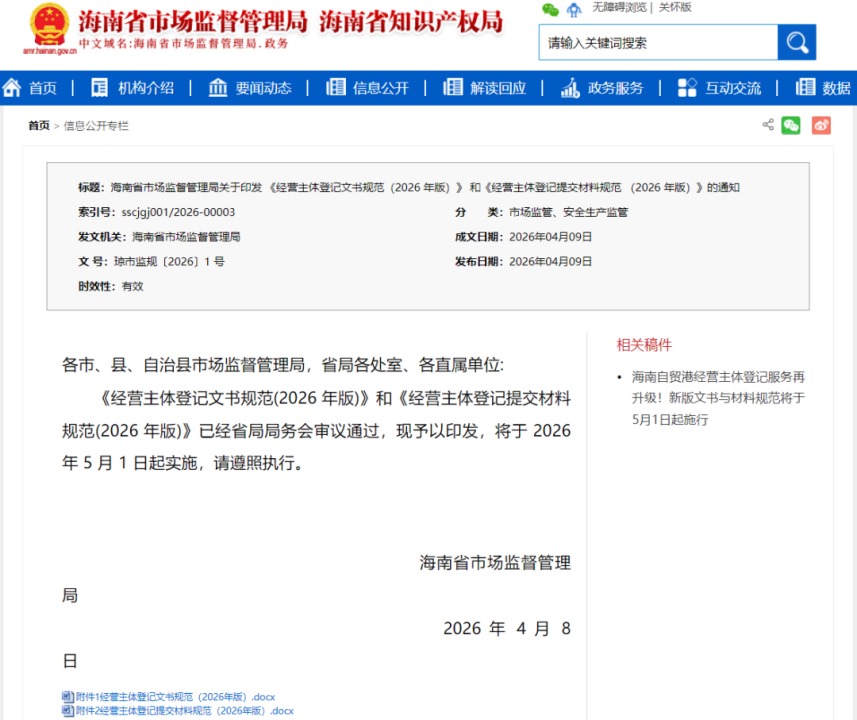
Recently, the Hainan Provincial Market Supervision Administration released a new version of the business entity registration guidelines, including the *Guidelines for Business Entity Registration Documents (2026 Edition)* and the *Guidelines for Materials to Be Submitted for Business Entity Registration (2026 Edition)*. The new regulations will officially take effect on May 1, 2026. They optimize procedures in four key areas—alignment with the rule of law, greater convenience for businesses, stricter risk prevention and control, and more unified standards—with the aim of reducing the institutional costs associated with starting and modifying a business.
Cross-Border Updates: PayPal Integrates Brazil’s Pix Payment System
PayPal recently announced that it has officially integrated its global payment platform with Pix, Brazil’s ”nationwide” instant payment system. This integration primarily benefits small and medium-sized enterprises; merchants can now offer consumers both Pix and credit card payment options through PayPal’s unified interface, thereby combining the ”locally preferred payment method” with the ”security and convenience of a global payment network.”
Russia’s Yandex has announced the launch of an e-commerce price analysis tool based on ”OK Price” technology, which can compare and analyze prices for over 4 billion products in Russian online stores, covering categories such as pharmaceuticals, home appliances, and cosmetics. Using Yandex’s product tool, merchants can see whether their product prices are at the market average, above average, or below average, and track price changes over the course of a week, helping them optimize their pricing strategies.
Cross-Border Updates: Amazon Notifies Sellers of Updates to Italian VAT Compliance Requirements
Amazon has issued a reminder to sellers using Italian FBA (Amazon’s official fulfillment centers), Pan-EU (Pan-European) service, or Italian third-party fulfillment centers that the Italian VAT compliance requirements have been updated. Sellers must ensure that their tax representative is officially registered with the Italian tax authority and must submit a personal financial guarantee of at least 50,000 euros, valid for at least 36 months. Failure to meet these requirements may result in the seller’s Italian VAT number being flagged as invalid in the EU VAT Information Exchange System (VIES), causing the seller’s FBA inventory in Italy to become unsellable.
Cross-Border Updates: TikTok Shop Adjusts Return Shipping Fee Rules in Indonesia
TikTok Shop plans to adjust its return shipping fee rules in Indonesia effective June 1, requiring sellers to share the cost of round-trip shipping in cases where buyers return items for personal reasons, with a one-way cap of 5,000 Indonesian rupiah (approximately $0.29), excluding returns caused by logistics issues.
Overseas Insights: China and Italy Sign E-Commerce Action Plan
China and Italy have signed the "China-Italy E-Commerce Action Plan": The two sides will enhance the capacity of small and medium-sized enterprises (SMEs) in both countries to promote their products through e-commerce platforms; strengthen cooperation on e-commerce infrastructure—including logistics, customs clearance, and payment systems—to improve the efficiency of cross-border order fulfillment; and explore cooperation in new business models such as live-streaming e-commerce, digital marketing, and AI services.
Overseas Insights: 2025 Southeast Asia E-commerce Report: Shopee Tops the List, Content-Driven E-commerce on the Rise
The 2025 Southeast Asia E-commerce Report shows that Shopee leads the market with $83.2 billion in GMV and a 53% market share, while TikTok Shop (including Tokopedia) recorded $45.6 billion in GMV, representing 65.7% of Shopee’s size. Content-driven e-commerce accounted for 32% of the region’s total transaction value, emerging as the core driver of growth. Shopee, TikTok Shop, and Lazada collectively held a 98.8% market share.
Tags:
New Tax Regulations
Cross-Border E-Commerce Platform Updates
Overseas Market Insights
Enterprise Finance Group
Recommended
Nuggets of gold in Southeast Asia! Entrepreneurs Vietnam Business Tour Hot Recruitment
In recent years, Southeast Asia has become a "must-contend place" for Chinese cross-border e-commerce enterprises. Vietnam's economic growth momentum is strong, and all the data fully reflects its good development trend. In recent years, Vietnam's economic level continues to maintain an annual growth rate of 6%, much higher than the global average. If you have the intention to start investment in Vietnam, then today's article should not be missed!
Enterprise Caiying Group was honored as the governing unit of Shenzhen Inter-association, joining hands to break through the new ecology of globalized enterprise service.
Shenzhen Cross-border E-commerce Association (SZCEA) formally awarded Enterprise Caiying Group the honor of governing unit!
Enterprise Caiying Group|One-Stop Global Service Group
Founded in 2015, Enterprise Caiying is a leading one-stop industrial, commercial, fiscal and business service group in China, which always focuses on the core needs of enterprise growth and personal development, and provides you with professional and efficient comprehensive service support.