Export sales on credit are completely over! Just one quarter into 2026, some sellers have already been required to pay 13% in VAT, amounting to 160,000 in back taxes!
Published: June 5, 2026
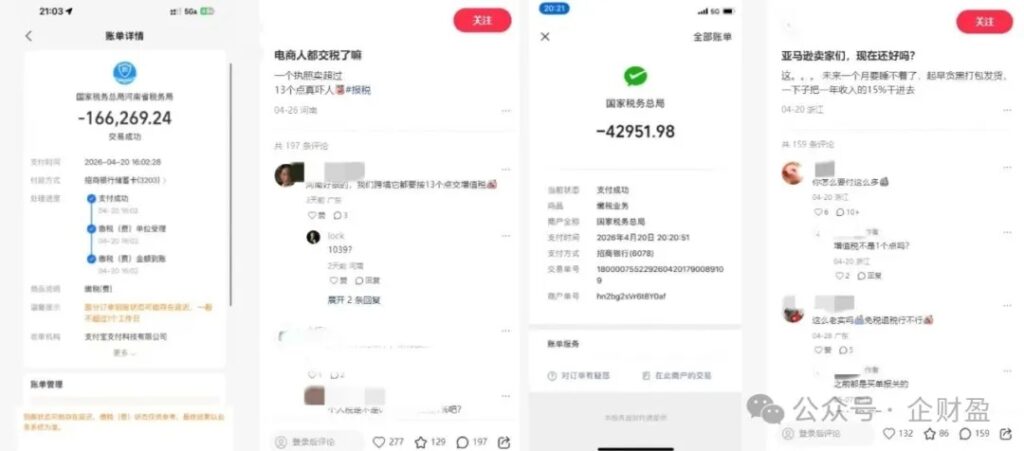
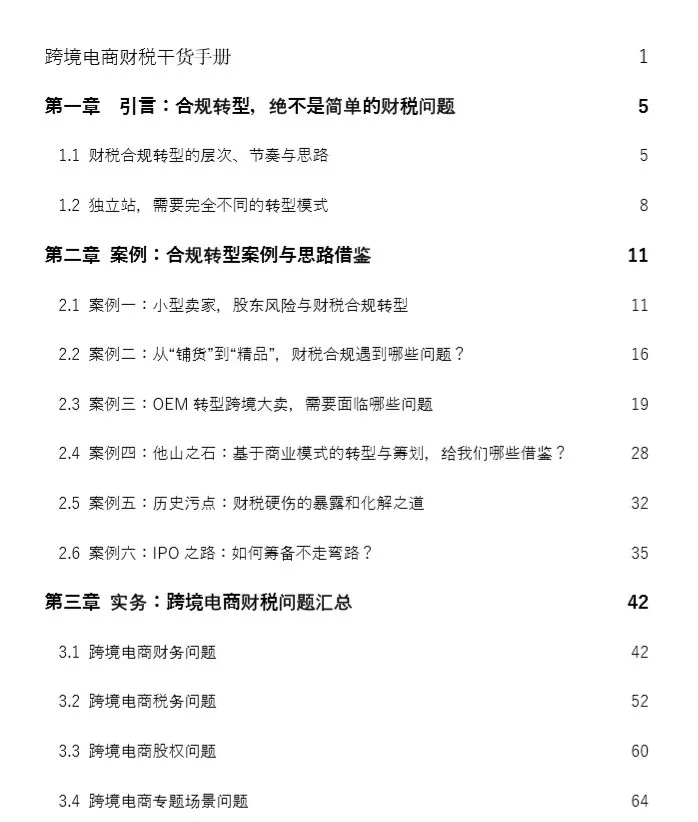
Recently, two screenshots of back taxes have been going viral in the cross-border e-commerce community.
A seller from Henan, Amount of back taxes:166,269.24 yuan A seller from Zhejiang, Amount of back taxes:42,951.98 yuan
(Screenshot source: Shared by a netizen; authenticity verifiable)
Both sellers are involved in cross-border e-commerce on platforms such as Amazon and TikTok, and their business models are strikingly similar: Purchases on 1688 without invoices → Paying for exports → Platform proceeds deposited into a personal bank account → Company files a zero tax return or underreports taxes
They thought, “As long as the money comes in, no one will investigate me,” but just after the first quarter of 2026 ended, the tax authorities delivered a “surprise”—Pay the full amount of VAT for 13% based on revenue...No room for negotiation, no leeway.
This is not an isolated case. .
By 2026, the “last veil of modesty” covering tax and financial compliance in cross-border e-commerce had been completely torn away. [If your business model is similar to that of these two sellers, you should stop and think right now: Could you be the next one to receive a tax back payment notice? Business owners who need advice on financial and tax compliance can also contact our customer service directly via WeChat (WeChat ID: jxhqcy890 / Mobile: 16625410105).]
01Why was a 13% penalty imposed on a buy-side export transaction?
Many sellers have long relied on export sales through purchased orders, and the core logic is:
I had a freight forwarder prepare a set of customs declaration forms, and the goods were shipped;
Payments received by the platform are converted into foreign currency via third-party payment providers (such as Wanlihui, XT, etc.) and deposited into individual bank accounts;
The company has virtually no revenue on its books, or reports only a very small portion of it.
Back when regulations were lax and data wasn’t shared, this “tactic” actually worked.
.
But things are different now.
By 2026, Phase IV of the Golden Tax System will be fully operational, with data from four sources—the platform, banks, customs, and tax authorities—fully integrated. The tax authority's backend system clearly shows:
How many stores do you own?;
How much inventory each store shipped (based on customs export data);
How much money has the platform settled (data from payment institutions);
Which personal or corporate accounts did these funds ultimately go to (bank data)?
.
When youNo official customs declaration form, no input invoices, and the goods were exported via a “buy-on-delivery” arrangementIn such cases, the tax authority's system will automatically classify the transaction as a domestic sale.
What does “deemed domestic sales” mean? It means that the tax authorities treat your export business the same way they would domestic sales. Domestic sales are subject to13% Value-Addedtoll, so you need to take some too.
This is how the sellers from Henan and Zhejiang in the screenshot were required to pay back taxes. And there's absolutely no room for leniency. The tax authorities have made it clear in their latest guidance:
“Transactions involving exports without proper customs clearance, without input invoices, or based on fabricated invoices will be directly deemed domestic sales. VAT will be retroactively assessed at a flat rate of 13%, with no exceptions and no retroactive leniency.”
02The “Three Major Red Lines” for Cross-Border E-Commerce Taxation in 2026”
In addition to export invoicing, there are three red lines in 2026 that sellers must not cross:
Red Line 1: Long-term zero reporting and disorderly reporting
The system has automatically flagged sellers with a history of long-term zero tax returns. Once flagged, your tax officer will require you to correct your tax returns for the past few years and provide complete business documentation. Can’t provide it? You’ll have to pay back taxes plus penalties.
.
Red Flag 2: Consolidating Revenue from Multiple Stores into a Hong Kong or Overseas Company
In the past, many sellers adopted the “Saiwei model,” using a single Hong Kong-based company to consolidate revenue from all their stores. As of 2026, the tax authorities have revised their guidelines: they no longer recognize this method of pooling funds. More inclined towardSeparate Accounting for Individual Stores. The old Savi architecture urgently needs to be overhauled.
.
Red Line 3: Underreporting the Value of Goods and Forging Documents
Underreporting the value of goods directly triggers a tax refund inquiry; at best, this results in back taxes and fines; at worst, it involves criminal liability. Document verification has become standard practice, and the tax authorities now require businesses to retain a complete set of supporting documents for the four flows: funds, transactions, procurement, and logistics.
.
03What exactly can be done to “pay less tax while remaining compliant”?”
The answer is not to keep plowing ahead, nor is it to randomly find receipts just to meet the quota. Instead,By implementing the right compliance framework, we reduced the tax rate from 13% to 2%–4%.
The solution we’ve designed for cross-border sellers is called“Outsourced Procurement and Sales + Centralized Export” Compliance FrameworkThe
.
Step 1: Establish a centralized procurement and export company in China
Centralize the procurement of goods from suppliers such as 1688;
in order to0110 Method: Formal Customs Clearance for Export, sell the goods to its own overseas affiliated companies (such as a Hong Kong company);
This step resolves the “invoicing” issue: you have the customs declaration, the shipping document, and the contract,four streams in one.;
Export ProcessValue-Added Tax Exemption, you don't have to pay 13%.
.
Step 2: Using a Hong Kong Company as an Overseas Transit and Funding Platform
After the Hong Kong company receives the goods, it will thenB2B sales to various retail companies in China(Amazon stores, TikTok stores, etc.);
Note: The goods are already overseas, so this transaction is classified as“Both ends are outside”(Both purchasing and sales are conducted overseas);
Revenue for Each Store or CompanyEach person should file their own return, and are not consolidated into the Hong Kong company.
.
Step 3: The store operates as a separate legal entity and is eligible for the fixed-rate taxation grace period
Each store purchases directly from the Hong Kong company and then sells to end consumers;
You get to keep all the income,Complies with the tax authority’s 2026 requirement for “independent accounting for individual stores”, it will not be flagged as an anomaly by the system;
At the same time, seize the opportunity toFinal Window Period for Approved Tax AssessmentThe
.
Currently, several cities—including Shenzhen, Guangzhou, Xiamen, Shanghai, Ningbo, Wuhan, and Chengdu—still offer the option of assessed-tax collection:
January–September 2025, by2%Approved;
Q4 2025, as of4%Approved.
Starting in 2026, tax collection will be based entirely on audited accounts, and there will be no more fixed-rate assessments.
Let's do the math: Sellers with annual revenue of 5 million:
Export Invoice Under Investigation → Pay 13% VAT = 650,000 + Late Payment Fees + Fines
Compliance Framework + Fixed-Rate Taxation → VAT Exemption; Income Tax Calculated as 2% - 4% = 100,000–200,000
Compliance costs were slashed by more than half. .
This framework may sound complex, but we have a proven checklist for its practical implementation. At Qicaiying, we have already helped hundreds of cross-border e-commerce sellers transition from “order-based exports” to “consolidated exports,” with the shortest transition taking just two weeks. If you’d like to find out whether this framework is suitable for your company, scan the QR code to contact our online customer service (WeChat ID: jxhqcy890 / Mobile: 16625410105). We’ll arrange for a professional account manager to address your questions and provide end-to-end one-on-one service ↓↓↓
04What should sellers do if they have already received a tax payment notice or warning?
If you’ve been summoned for a meeting with a tax officer or have received a tax risk alert, don’t panic, and don’t try to make up for it on your own.
We haveHistorical Account Review Service::
In accordance with the tax authority’s self-inspection requirements, we’ll help you organize your past platform transaction records, purchase records, shipping documents, and payment receiptsSort everything out.;
Organize and compileThe Chain of Evidence Combining Four Streams, issue a formalReport on the Review of Past Accounts.;
This report can be used forApplication for Fixed-Rate Tax Assessment, or it can be used toDealing with Unannounced Audits by the Tax Authority.;
A professional tax advisor will accompany you throughout the process of liaising with your assigned tax officer., help you understand the business logic, and strive toThe mildest corrective action conclusion...to avoid having to pay the full tax under the 13% rule.
.
In 2026, cross-border e-commerce officially enteredThe Era of Comprehensive AuditsThe
The Value-Added Tax Law has been strictly implemented;
Phase IV of the Golden Tax System ensures comprehensive data transparency with no blind spots;
The window for fixed-rate taxation is closing;
Paying bills for exports, accepting payments via personal cards, and filing zero-reporting—each one is a minefield.
There are only two options now: Either proactively comply and resolve historical issues using the low-cost 2%-4% solution; Either passively undergo an audit and face the consequences of paying 13% in VAT, plus late payment penalties, fines, and a 50% drop in profits.
The sellers from Henan and Zhejiang shown in the screenshot serve as the best cautionary examples.
.
【 If you are currently in a situation where you have been “summoned for a meeting” or “issued a warning,”Don’t go searching for solutions online on your own, and don’t listen to non-professional advice from friends. Just add our Qicaiying online customer service WeChat (jxhqcy890 / Mobile: 16625410105), and our professional, experienced managers will provide you with detailed answers.
We recommend that cross-border e-commerce sellers do these three things right away: 1️⃣ Review your platform transaction history and company tax filings from the past year to see how big the discrepancy is; 2️⃣ Check your customs declaration method to see if you’re still using the “buy-and-export” method; 3️⃣ Add our Qicaiying online customer service WeChat (jxhqcy890 / Mobile: 16625410105) and send “Financial and Tax Compliance.” I’ll send you the risk self-assessment form so you can spend 10 minutes giving yourself a comprehensive checkup.
This isn't just marketing hype—it's a reality that every cross-border seller will have to face in 2026. The sooner you act, the lower your costs will be. The window of opportunity won’t wait.
Compliance transition is better sooner rather than later, the earlier the layout, the lower the cost, the more stable the development.
📌 If your business is in one of the following stages:
[Start-up period] Annual revenue < 20 million: Worried about the impact of zero filing, private collection, and Golden Tax Phase IV?
We have the corresponding solutions and practical experience.
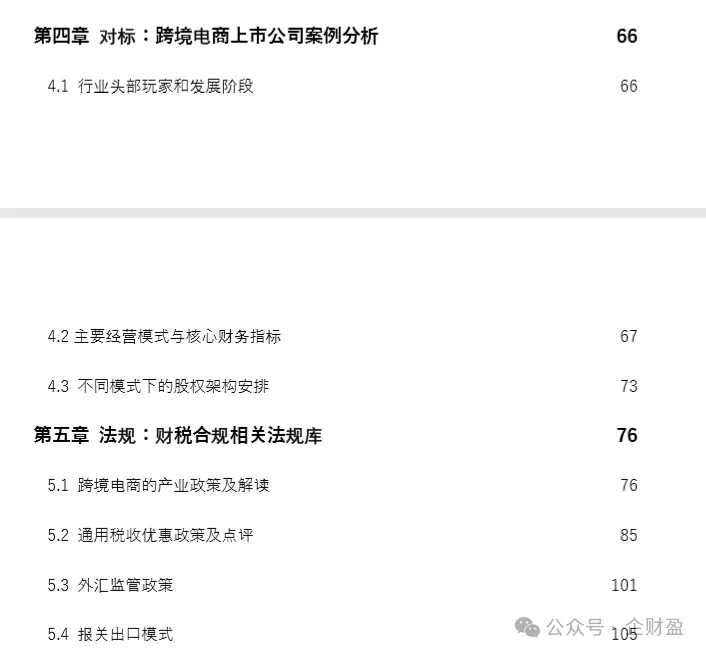
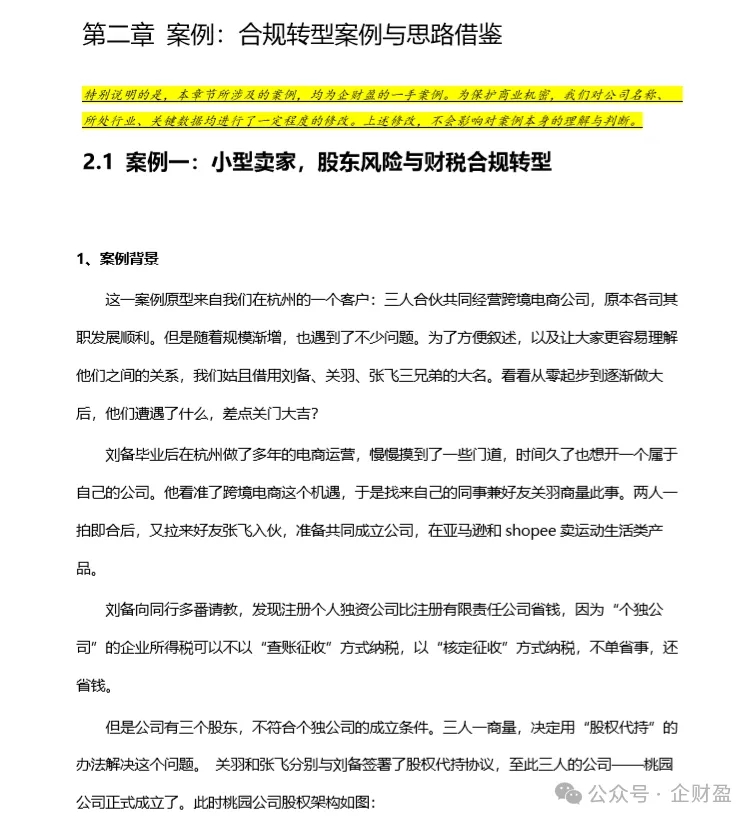
Cross-border e-commerce there are many ways to plan, organized a detailed cross-border e-commerce tax compliance manual PDF, if there is a need for the boss can find me to get free ~ 👉 👉 Sweep the code to add my company's online customer service (micro-signal: jxhqcy890 / cell phone: 16625410105)), arranging professional managers to answer queries and provideFull Process Compliance ProgramOne-to-one service ↓↓↓
1、 Two sets of accounts: the internal accounts are chaotic and lead to difficult assessment, while the external accounts are difficult to file tax returns due to tax evasion and tax evasion;
2. Low income from external accounts, difficulties in financing, investment, mergers and acquisitions and IPOs;
3, no ticket purchases, personal accounts in and out of large sums of money, suspected of money laundering, tax evasion boss sleepless nights;
.
Compliant Overseas and Domestic Equity Structures for Cross-Border Enterprises
1、Build a good in-country structure, that is, tax-saving and compliance
2, must set up a Hong Kong company as well as good positioning
3、Use of Hong Kong company offshore tax exemption policy
4. How is the store company built?
5、Why do we need to do offshore investment filing?
.
Cross-border e-commerce fiscal and capital rational planning
1. Normative design for procurement without and with tickets
2. Reasonable pricing of goods exported from Hong Kong companies to achieve both tax savings and compliance
3, the company structure flow, goods flow, financial flow, tax flow, capital flow, contract flow, bill flow reasonable planning management
4、 How to make cross-border e-commerce enterprises and bosses' income legal? How to plan for shareholders' dividends?
5. Need to share the cost of payroll for in-country employees
6、 Must do cross-border service tax-free record
.
You can find the answers to all these questions in this PDF.
If you haveHong Kong Company Registration, Bank Account Opening, Annual Audit, Tax Audit, ODI Filing and Tax ComplianceIf you have any questions or comments, please feel free to contact our online customer service:jxhqcy890 / Mobile: 16625410105), arranging professional managers to answer queries and provideLicensed Secretary + Full Process Compliance ProgramOne-to-one service ↓↓↓
Tags:
# Tax Payment
# Export Tax Refund
# Hong Kong Company
# Cross-Border E-Commerce Tax Compliance
# Hong Kong Company Registration
# Fiscal Compliance
# cross-border e-commerce
# Amazon
Advantages of registering a Hong Kong company
Register Hong Kong Company
Hong Kong Company Account Opening
Recommended
Cross-border e-commerce B2B must see! Registered Hong Kong company stationed in the Ali International Station, really fragrant!
In today's globalized business environment, the cross-border e-commerce B2B model is rapidly emerging with its unique advantages. For many enterprises engaged in cross-border trade, choosing a suitable platform and registering an advantageous company are undoubtedly the key keys to open the door to the international market.
2024 Hong Kong Company Account Opening Tips! How to choose the right Hong Kong bank account?
Global anti-money laundering regulations are becoming more and more stringent, the banks to maintain an account of the sunk cost is getting higher and higher, not moving hundreds of millions of dollars in fines, so that the major banks to open an account threshold as well as the audit process high up, already have a Hong Kong company bosses, how to choose the Hong Kong bank to open a public account? How much does it cost and how to operate? Today to give you a detailed introduction to the Hong Kong company account how to choose, as well as the approximate costs required and other content.
Hong Kong company registration advantages + registration conditions + registration process to share!
If you want to start a business and develop overseas markets, registering a Hong Kong company is undoubtedly a very forward-looking choice. With its unique geographical location, sound legal system, low tax rate and open business environment, Hong Kong company has become a "sharp weapon" for many business owners to open up overseas markets. Why is it so important to register a Hong Kong company in 2024?