Golden Tax IV data iron net has been woven! 2026, cross-border e-commerce tax compliance into the final window of time
Published: 2026-02-04
A storm of fiscal and tax compliance is sweeping the cross-border e-commerce industry as data is opened up and there is no dead angle for regulation.
In 2026, for the cross-border e-commerce industry, 'compliance' is no longer an option, but a lifeline that determines the survival of a business.
Customs data show that despite the volatile international environment.The scale of China's cross-border e-commerce imports and exports has continued to grow strongly over the past few yearsThe industry has become the absolute main force in stabilizing foreign trade. On the other side of the booming industry is the increasingly strict and intelligent regulatory environment. Especially Comprehensive on-line and in-depth application of the "Golden Tax IV" system, is placing the business behavior of every market player under the precise scrutiny of a network of data.
Many of the early sellers who grew rapidly on the model dividend used to habitually "Personal account receipts, billed exports, public-private mix" and other operations that have now evolved into potentially lethal enough risks.
Since the implementation of the fourth phase of the Golden Tax, cross-border e-commerce "compliance" of the topic of heat remains high.Why is Golden Tax Phase IV called "the most stringent tax supervision"? What will be the impact of cross-border e-commerce tax non-compliance?
There is a need to consult the tax compliance business bosses can also directly add customer service WeChat consulting!(WeChat: jxhqcy890 / Mobile: 16625410105)
Provisions of our foreign exchange control policy"Whoever exports collects the foreign exchange."If a cross-border e-commerce company fails to follow the formal "customs declaration and tax payment" process, it will be difficult to legally collect foreign exchange, and once it is audited by the customs or tax authorities, it may not only need to make up for the export revenue, but also may face other legal consequences.
Golden Tax Phase IV is not a simple upgrade, but aA regulatory revolution with "data" at its core. It realizes the "Comprehensive sharing and intelligent comparison of data from multiple departments, including tax, bank, customs, social security and municipal supervision.The
This means that the figures in an enterprise's tax return will be cross-audited with massive amounts of data such as bank flows, logistics and customs information, and social security payment records.
In the past, it was common for cross-border e-commerce "Payments for goods are collected through personal cards or third-party payment instruments, and the company's public accounts are zero or minimally declared for long periods of time" practices that will go before the systemat a glanceThe
The stark contrast between the unusual flow of bank accounts (frequent large personal account receipts) and the almost zero income from the public accounts will be a red flag for system alerts.
The regulatory logic is clear:Where the transaction occurs, the revenue is recognized and the tax is paid.
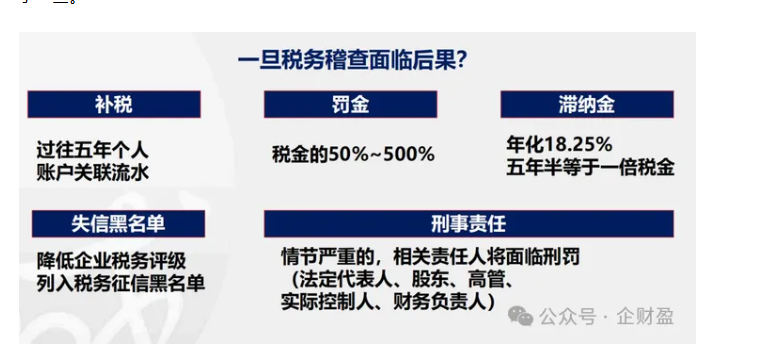
Any attempt to conceal income and evade tax obligations will have nothing to hide in front of big data. Once audited, you will face not onlyBack taxes, late feesIt's more likely that there will behuge fineIn addition, it is not only the case that the company's creditworthiness will be destroyed, but also that criminal liability will be involved.
There is a need to consult the tax compliance business bosses can also directly add customer service WeChat consulting!(WeChat: jxhqcy890 / Mobile: 16625410105)
01.How do cross-border e-commerce companies respond?
1、Small and medium-sized sellers who have started soon.
The company's pre-development period, dry million do not zero declaration, more or less to report some tax, and then the social security to the corresponding company to ensure the normal operation of the domestic. At the same time, apply for Hong Kong offshore companies, as well as offshore accounts. Ensure that the foreign exchange funds receive and pay problems.
The advantages of registering a Hong Kong offshore company as well as account for cross-border e-commerce:
Tax advantages: low tax regime and low tax rates:
Hong Kong has a low tax regime, with profits tax as the main tax type and a relatively low tax rate. For cross-border e-commerce companies, this can significantly reduce the tax burden and improve profitability. Specifically, Hong Kong's corporate income tax (i.e. profits tax) rate is 8.251 TP3T for the portion of annual profits below HK$2 million until 2024, and 16.51 TP3T for the portion in excess.
In addition, there is no value-added tax, sales tax and consumption tax in Hong Kong, which further reduces the operating costs of cross-border e-commerce.
Offshore tax exemption policy:
Hong Kong has a tax exemption policy for companies operating offshore, as long as the business of the company registered in Hong Kong by the cross-border e-commerce company is of an offshore nature, it can enjoy tax exemption. This provides enterprises with great space for tax planning.
Foreign exchange payments and receipts
Hong Kong has no foreign exchange controls and funds can flow in and out freely. This is very important for cross-border e-commerce, as cross-border e-commerce needs to handle multiple currencies and often requires cross-border payments. Such a policy in Hong Kong can greatly simplify the process of capital movement and improve the efficiency of capital utilization.
Low registration and maintenance costs:
Hong Kong companies have relatively low registration costs and allow companies to operate without a physical office, which greatly reduces the initial investment and day-to-day operating costs. In addition, the maintenance procedures of a Hong Kong company are relatively simple and inexpensive.
The Hong Kong government's tax policy for enterprises is relatively liberal, with fewer tax types and relatively lower tax rates, which saves enterprises a lot of tax costs.
Easy logistics:
As an international trade center, Hong Kong is free and convenient for logistics in and out, and most of the goods imported and exported are tax-free. This provides great convenience for cross-border e-commerce and can save a lot of logistics costs and time costs.
If your business has registered Hong Kong companies and cross-border e-commerce tax compliance needs, you can scan the code to add our online customer service, arrange the specialist manager to answer questions and provide professional advice andFull one-on-one service ↓↓↓
2、It has begun to scale, want to finance the loan of medium and large sellers:.
Improve the statistics, procurement, invoice procurement, export tax rebates, clear order flow, this stage, the focus is on good financial aspects of the statement, back to the public account, the four streams of the problem.
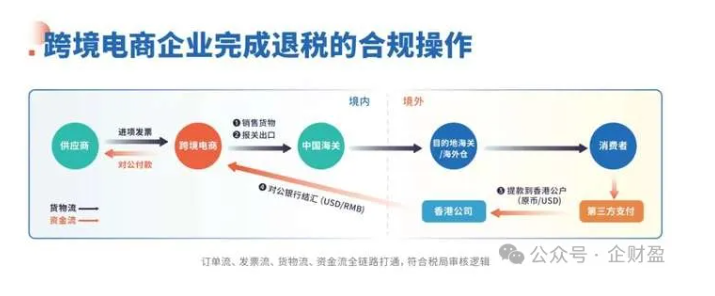
Cross-border e-commerce goods out of the sea line is long, multiple links, high complexity, and involved in the complexity of the main body, the management of the pain points throughout the flow of information, goods flow, capital flow, showing fragmentation, quantitative sea, information technology and other typical characteristics, it is difficult to reflect the real trade data of the enterprise, and increase the difficulty of tax compliance.
The core aspects of cross-border e-commerce exports can be divided into:Customs, Taxes, ExchangeThe four flows of documents are the order flow, invoice flow, cargo flow and capital flow, according to the enterprise's own business management, which is also reflected in the order flow, invoice flow, cargo flow and capital flow. The cross-border e-commerce export of all links and chains of documentary data to match each other and the four flows are the key to cross-border e-commerce compliance, but also the underlying logic of tax compliance.
.
3. Super sellers who are ready to go public :) Do an asset inventory, adjust the liability structure and equity structure, and do the VAT filing in the country of operation.
Many cross-border e-commerce businesses think that compliance means losing money. It's actually a misconception; in fact, compliance is what makes a business better in the long run!
If your business has registered Hong Kong companies and cross-border e-commerce tax compliance needs, you can scan the code to add our online customer service, arrange the manager to answer questions and provide professional advice andFull one-on-one service ↓↓↓↓ (micro-signal:jxhAna888)
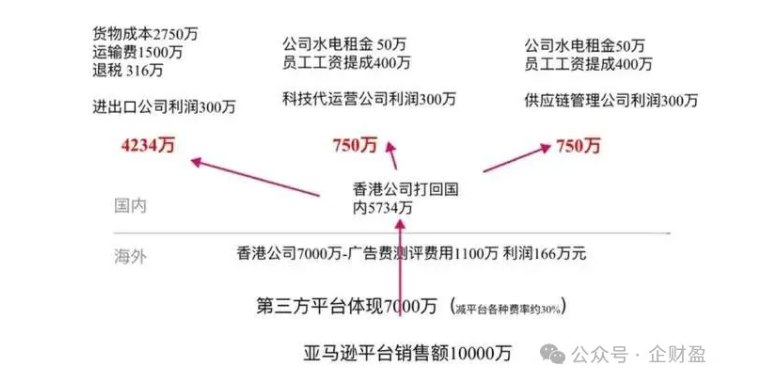
To make money safely and securely, you still have to be financially and tax compliant; how to be compliant? In fact, it is not so difficult, the problem one by one to solve it, we come to the business model at home and abroad split up a little bit, changing the structure of income. Give an example:
With the addition of a Hong Kong company as an overseas capital pooling, with a Hong Kong company providing the contract and invoice, and issuing the invoice for goods (the above chart adds 10% ticket points), not only can you enjoy tax rebates, but also the overall profitability has been improved!
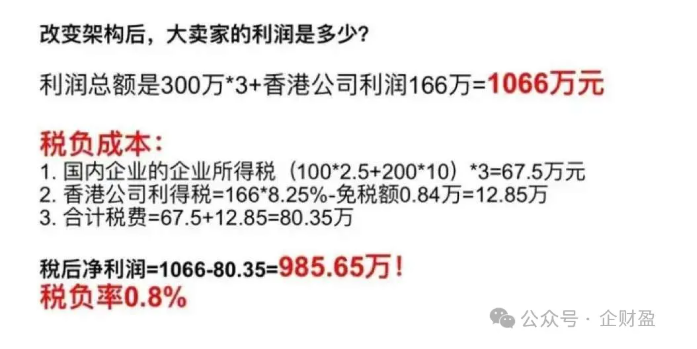
It's amazing how simply by changing the company model, you can also increase the company's revenue! Looking at the calculations in the chart below, the increase is mostlyRebate dividends derived from export tax refunds;
The entire structure to do down, the tax burden rate properly controlled in the thousandths of a percent or so, the tube, 1% do not need, the tax can still be finished tax, this "insurance premium" is worth it.
With the transparency of the international affairs environment, the future of tax planning needs to spend more effort to create a holistic program, after all, the money earned, safe and compliant business can be a long time to come ~
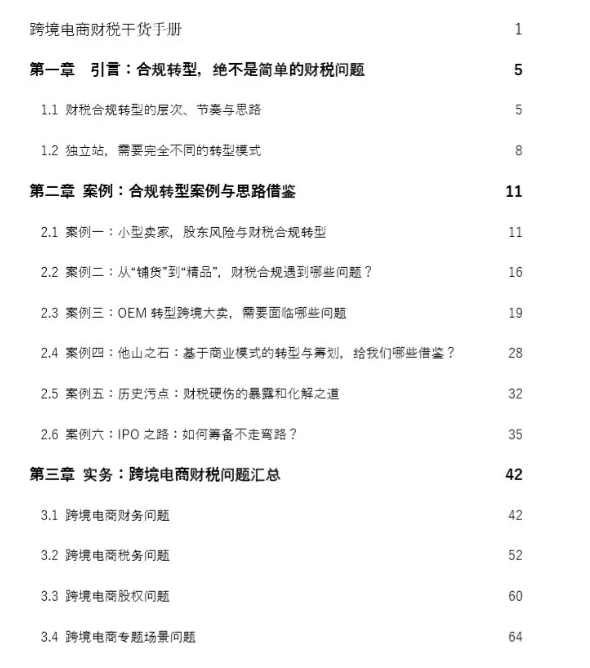
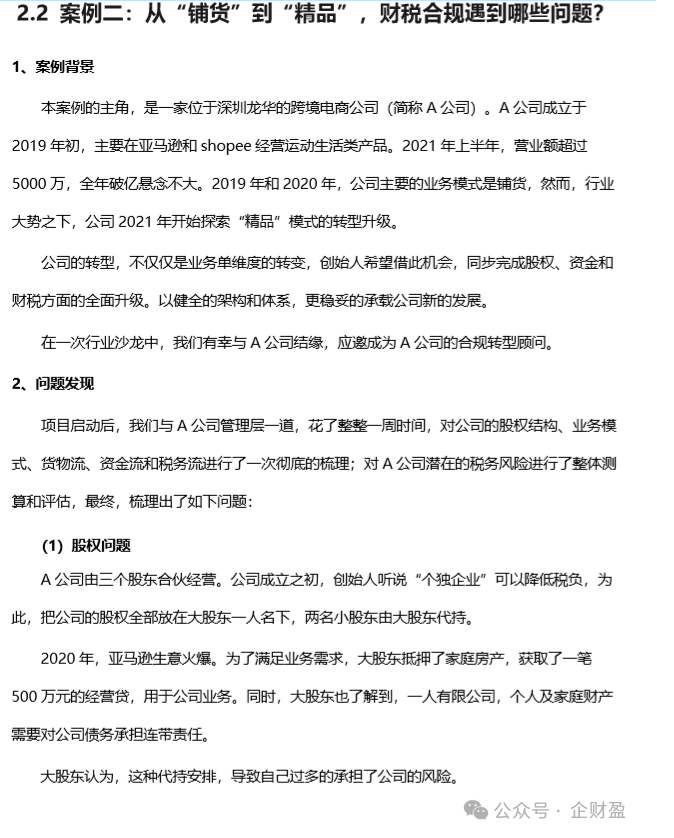
Cross-border e-commerce there are many ways to plan, organized a detailed cross-border e-commerce tax compliance manual PDF, if there is a need for the boss can find me to get free ~ 👉 Sweep the code to add my company online customer service(WeChat: jxhqcy890 / Mobile: 16625410105), arrange professional managers to answer questions and provideFull Process Compliance Programone-to-one service
1、 Two sets of accounts: the internal accounts are chaotic and lead to difficult assessment, while the external accounts are difficult to file tax returns due to tax evasion and tax evasion;
2. Low income from external accounts, difficulties in financing, investment, mergers and acquisitions and IPOs;
3, no ticket purchases, personal accounts in and out of large sums of money, suspected of money laundering, tax evasion boss sleepless nights;
Compliant Overseas and Domestic Equity Structures for Cross-Border Enterprises
1、Build a good in-country structure, that is, tax-saving and compliance
2, must set up a Hong Kong company as well as good positioning
3、Use of Hong Kong company offshore tax exemption policy
4. How is the store company built?
5、Why do we need to do offshore investment filing?
Cross-border e-commerce fiscal and capital rational planning
1. Normative design for procurement without and with tickets
2. Reasonable pricing of goods exported from Hong Kong companies to achieve both tax savings and compliance
3, the company structure flow, goods flow, financial flow, tax flow, capital flow, contract flow, bill flow reasonable planning management
4、 How to make cross-border e-commerce enterprises and bosses' income legal? How to plan for shareholders' dividends?
5. Need to share the cost of payroll for in-country employees
6、 Must do cross-border service tax-free record
You can find the answers to all these questions in this PDF.
If you haveHong Kong Company Registration, Bank Account Opening, Annual Audit, Tax Audit, ODI Filing and Tax Compliance等需求,👉 扫码添加我司在线客服(微信:jxhqcy890 / 手机:16625410105),安排专业经理解答疑惑,提供Licensed Secretary + Full Process Compliance ProgramOne-to-one service ↓↓
Tags:
Financial and Tax Compliance
e-commerce tax
tax inspection
cross-border e-commerce
Recommended
Foreign funds repatriated this way are taxed at only 1% and are compliant!
How to collect overseas trade funds? Is there a safe and compliant way to operate? There are funds in foreign countries, usually individuals or companies in business transactions with foreign companies and generate revenue, this situation in fact, there are ways to comply with the legal operation, and the return of the tax rate is extremely low! Before we provide the method, let's first understand how most people do it?
Cross-border e-commerce Amazon small team annual income of 20 million, how to do financial and tax compliance?
Amazon four people small team annual income of 5 million, the main body is a general taxpayer but did not do the tax rebate, withdrawals to the boss's private card, that now, want to develop more products, if the collection of more than 20 million, how to comply with the collection to do this fiscal compliance?
Export tax refunds are difficult and complicated?The latest export tax refund filing conditions process in 2024!
For some newly established or just started to have export business of foreign trade enterprises, the whole process of export tax rebate declaration is in a state of ignorance, do not know how to handle, where to go, the process and so on. In this article, we organize the process from the filing of export tax rebate (exemption) to the declaration of export tax rebate, as well as the latest policy in 2024.