The Same Product Sells Like Hotcakes in Brazil but Gathers Dust in Chile: Never Just Copy and Paste When Selecting Products on Mercado Libre!
Published: August 19, 2026
A seller lists the same batch of Bluetooth earbuds on all four Meike Duo sites at the same time.
Three months later—
Brazil Station: 800 orders per month, Consistent Restocking
Mexico Station, We saw a surge in traffic during the Day of the Dead, and after thatFade into Silence
Chile Station, for a total of 12 orders,Inventory has been piling up for half a year
Columbia Station, with almost no orders,Final Clearance Sale
The same product, the same images, and the same pricing strategy—yet the results are worlds apart.
Why?
Because Meike Duo isn't just one marketplace—it's four marketplaces.
Many new sellers treat Mercado Libre as a single, unified platform: they register one account, select a batch of products, and list them across all four sites. They figure that since it’s all Latin America and it’s all Mercado Libre, the approach to product selection should be pretty much the same.
This Is the Biggest Cognitive Trap When Working with Meikeduo!
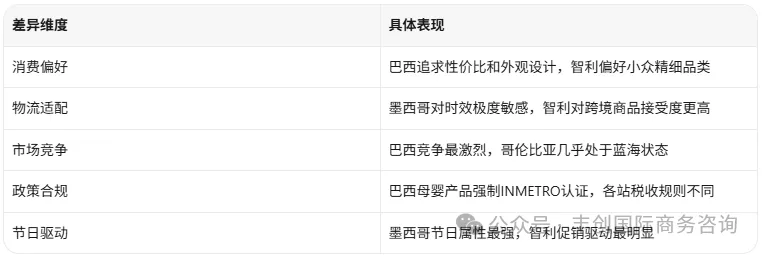
Brazil, Mexico, Chile, and Colombia—these four locations’consumer preference,Logistics Adaptation,Competitive Environment,compliance requirement...the differences are so significant that the same product can be a huge hit on one platform but a massive loss on another.
In today’s post, I’ll break down and explain the product selection strategies for these four websites in detail.——
I. First, let's get one thing straight: Why can't the same product selection be used across all four sites?
Mercado Libre operates in more than ten Latin American countries, includingBrazilian,Mexico,Chile,Columbia (District of, or University etc)These are the four core sites with the highest traffic and sales.
Many sellers reason as follows: Platform rules are uniform → Product selection strategies can be applied universally → Distribute a shipment across four stations simultaneouslyThe
The first part of this reasoning is correct—the platform’s backend operations are indeed standardized.But the second half of that statement is completely wrong.The
In a nutshell: A one-size-fits-all approach to product selection = a waste of operational resources.
Refined Site-Specific, Differentiated Product Selection...is the key to helping Mercado Libre sellers break through the intense competition in 2026. Small and medium-sized sellers don’t need to focus on all four platforms at once—by leveraging their own sourcing strengths and strategically targeting 1–2 platforms with differentiated product categories, they’ll actually find it easier to create bestsellers. ——
II. An In-Depth Breakdown of Product Selection Strategies for the Four Major Platforms
1. Brazil: Latin America’s Largest E-Commerce Market, Driven by Value for Money and Localization
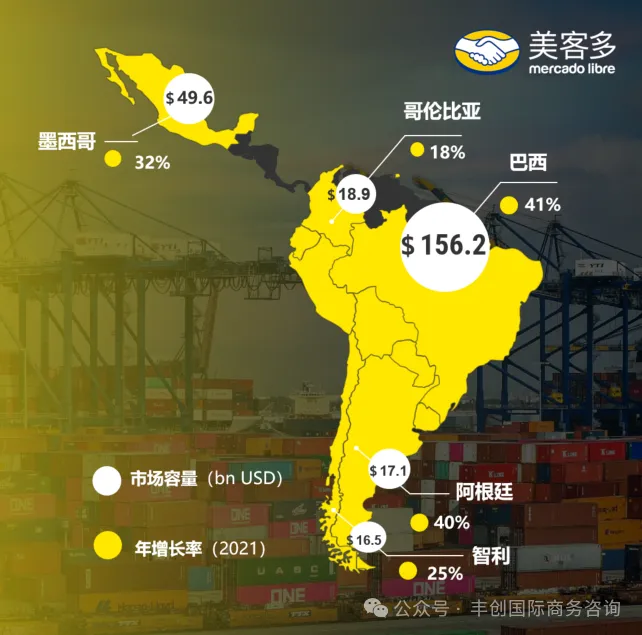
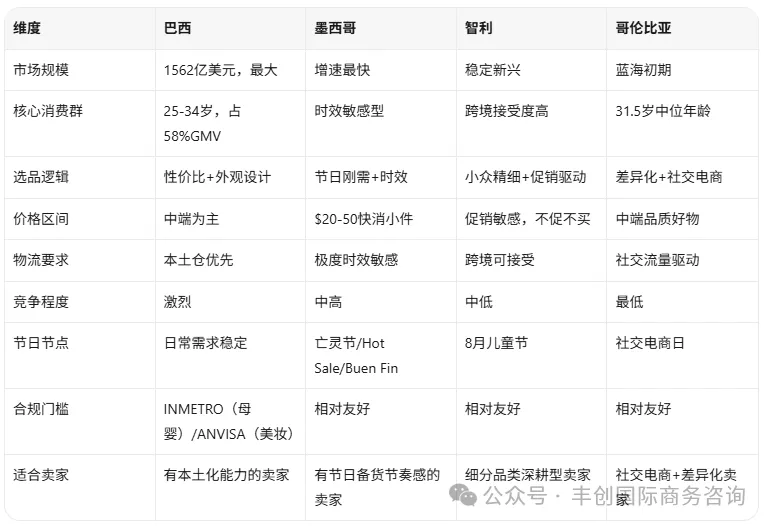
Brazil is Latin America’s largest economy, with an e-commerce market valued at $156.2 billion. The key characteristics of this market are:Young, quality- and appearance-conscious, and looking for value for money—but not just the lowest price.
Key Data:
Users aged 25–34 accounted for 58% in GMV, making them the dominant consumer group.
Electronics accounted for 18.11 TP3T, ranking first
Apparel accounted for 14.11 TP3T, closely followed by
Pajamas account for 65% of women's apparel sales, with a preference for highly stretchy fabrics and bright colors.
Beauty tools (such as smoky eye shadow palettes) are experiencing rapid growth
Maternity and baby products are growing rapidly, but INMETRO certification is mandatory.
Core Logic of Product Selection:
The Brazilian market is large and highly competitive. Avoid getting caught up in "red ocean" categories like 3C electronics; instead, focus on a few opportunities:
First, women's apparel subcategories.What does the statistic “65%” for pajamas in women’s clothing indicate? It shows that Brazilian female shoppers have a huge demand for loungewear and have distinct preferences—high elasticity, vibrant colors, and comfortable fabrics. If you make basic white T-shirts, nobody will buy them, but if you create a boldly colored yoga pajama set, you’ll actually get orders.
Second, the beauty tools sector.Brazilian women have extremely strong purchasing power when it comes to beauty products, with products such as smoky-eye eyeshadow palettes, makeup brush sets, and manicure kits showing steep growth curves. Note: For beauty products, it is important to comply with the regulations set by ANVISA (the Brazilian National Health Surveillance Agency).
Third, exercise caution when entering the maternal and infant products market.The market is indeed growing, but INMETRO certification is a strict requirement—children’s toys, baby and toddler products, car seats, and other items all require certification. Putting products on the shelves without certification means they could be taken down at any time and result in fines. Sellers with a certified supply chain can proceed; those without should steer clear.
Beauty Tools (Eyeshadow Palettes, Makeup Brushes, Nail Care Tools)
Electronic accessories (phone cases, data cables, chargers—avoid the highly competitive smartphone market)
Small Home Goods (Storage, Decor, Kitchen Gadgets)
Maternity and Baby Products (Must have INMETRO certification)
3C Devices (Highly Competitive, Low Margins)
Basic clothing (lacks differentiation; can't compete with local sellers)
2. Mexico: A time-sensitive market where holiday demand is the biggest variable
Mexico is one of the fastest-growing markets on Meike. The most distinctive features of this market are:Consumers are extremely sensitive to delivery times and prefer items in stock and free shipping.
Key Data:
Small FMCG items priced between $20 and $50 are the most popular.
Consumers have very little patience when it comes to cross-border shipping, and the return rate skyrockets if packages aren't signed for within 7 days.
It has a very strong local holiday focus and is the most clearly holiday-driven of the four major sites.
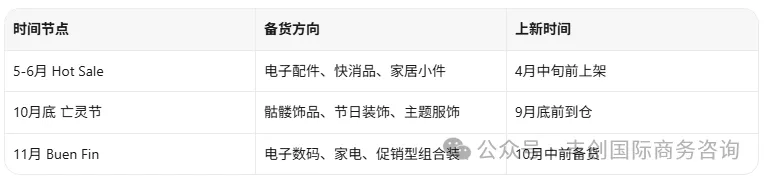
The three major shopping events: Day of the Dead (late October–early November), Hot Sale (May–June), and Buen Fin (November)
Core Logic of Product Selection:
The core strategy for the Mexico market is completely different from that of the other three markets—you’re not selling everyday consumer goods; you’re selling essentials for the holidays.
The Day of the Dead is one of Mexico’s most important traditional holidays. Skull-themed accessories, Day of the Dead decorations, and festive clothing—sales of these products skyrocket during the holiday, and competition is minimal. This is because most Chinese sellers are completely unaware of this holiday and certainly don’t stock up on inventory in advance.
"Hot Sale" and "Buen Fin" are official promotional events on Mercado Libre, similar to China’s 618 and Double 11. During these two periods, consumers tend to make bulk purchases of electronics, home appliances, and fast-moving consumer goods, resulting in a significant increase in average order value.
The timing of product selection is crucial:
Keep one key point in mind: Mexican consumers arelimitation periodGiven the sensitivity of this market, you must prioritize shipping from local warehouses or Mexican overseas warehouses. The small-package direct shipping model offers an extremely poor customer experience on the Mexico marketplace, and return rates resulting from delivery times exceeding 7 days will wipe out your profits entirely.
Mexico Station Product Selection List:
Day of the Dead-themed products (skull accessories, holiday decorations, themed clothing)
Small FMCG Items ($, priced between $20 and $50; cosmetics, personal care, and daily consumables)
Small Household Items (Storage, Kitchen Tools, Cleaning Supplies)
Electronic accessories (phone cases, charging cables, stands—moderate average order value)
Oversized/Heavy Cargo (High shipping costs; no advantage in delivery speed)
Products that require a long-term educational process (Mexican consumers primarily make impulse purchases)
3. Chile Market: A Niche, Specialized Market Segment Where Promotions Drive Traffic
Chile is the most stable emerging market in Latin America. The characteristics of this market are completely different from those of Brazil and Mexico—Focus on quality, not volume; compete on niche markets, not price.The
Key Data:
Consumers have shown a very high level of acceptance of cross-border products
Extremely sensitive to promotional offers—won’t buy without a discount
The market is smaller than those in Brazil and Mexico, but competition is also much less intense.
The annual Children's Day sale in August is a periodic peak in traffic.
Core Logic of Product Selection:
The logic of the Chilean market is this: while you’ll face intense competition here in mass-market categories, it’s actually easier to generate sales in niche segments.
Why? Because the Chilean market is small, so large sellers aren’t interested in entering it—it’s mostly small and medium-sized sellers. If those small and medium-sized sellers sell mass-market products (phone cases, charging cables, basic clothing), they still can’t compete. ButIf you focus on a niche market—Maternity and Baby Products, Creative Gifts, Small Smart Wearables—In fact, it can generate differentiated profitsThe
The Children’s Day sale every August is a key event for the Chile marketplace. Glow-in-the-dark toys, baby comfort items, and children’s shoes and clothing often become short-term bestsellers during this period. But note that this is ”short-term”—once this period passes, daily sales of these products are not very high, so you need to carefully control your inventory levels and avoid overstocking.
Chile Stop Product Selection List:
Maternal and Infant Product Categories (Soothing Toys for Infants, Glowing Shoes for Children, Educational Toys)
Creative Gifts (Holiday Gifts, Creative Desk Ornaments, Personalized Small Items)
Small Smart Wearables (Fitness Bands, Sports Watch Accessories—Non-Head-Worn Brands)
Small Outdoor Gear (Chile has a strong outdoor culture, so there is demand for mountaineering and hiking gear)
Mass-market FMCG (small market size, difficult to achieve high sales volume)
Heavy/Oversized Cargo (Logistics Costs Account for Too Large a Proportion of Total Costs)
4. Colombia: An Emerging Blue Ocean—The Best Battleground for Differentiation and Breakthrough
Colombia isThe least competitive of the four major sitesIt is also the platform where small and medium-sized sellers are most likely to see results.
Key Data:
Median age of the population is just 31.5—a young market
Market competition is relatively mild, and there are gaps in many product categories.
People in the 54% demographic shop through social commerce—Facebook and Instagram are major sources of traffic for product sales.
Consumers seek quality; this is not a market driven solely by low prices.
Core Logic of Product Selection:
The approach for the Colombia market is different from the first three markets—it’s not a market that can take off solely on the back of a platform’s organic traffic,social e-commerce storeThis is a hidden variable for this site.
What does it mean that 54% users shop through social commerce? It means that when selecting products, you can’t just consider search traffic within the platform—you also need to consider“Is this product suitable for promoting on social media?”The
Recommended Niche Categories:
Multi-Pack Basics— Colombian consumers prefer practical multi-pack purchases. Multi-packs of T-shirts, socks, and underwear sell better than single items. While the average transaction value isn’t high, sales volume remains steady.
Power Tool Sets and Auto Repair Parts—Colombia has a thriving DIY culture and a high number of registered vehicles; in fact, these types of products sell better in Colombia than in Brazil or Mexico. It’s a niche category with little competition.
Using Social Commerce to Drive Traffic—When selecting products, consider their ”photogenic appeal.” A product that looks great in photos on Instagram, combined with influencer endorsements, can drive incremental traffic from outside the platform. This is a strategy unique to the Colombia site.
Auto Repair Parts (Filters, Windshield Wipers, Headlights—Small, Lightweight Items Preferred)
Eye-Catching Products Perfect for Social Media Recommendations (Creative Home Goods, Personalized Accessories)
High-priced products (market demand is limited; pricing should be restrained)
Purely low-priced, unbranded products (Colombia wants high-quality, unique items—not the 9.9 items from Yiwu with free shipping)
For more Meituan operation tips, add csdrcc12345 to learn systematically!
——
Comparison of Stations 3 and 4: A Single Table Shows the Differences at a Glance
——
IV. How Should Beginners Choose a Website? Three Questions to Help You Find Your Direction
Don't try to cover all four stations right off the bat. Ask yourself these three questions:
Question 1: What are your strengths in terms of product sourcing?
Has a factory supply chain and offers great value for money → Brazil Site
Has a supply chain for holiday-themed products or rapid response capabilities → Mexico Site
Have product sources for niche categories (maternity and baby products, creative gifts) → Chile Site
Practical combo sets available (tools, multi-piece sets) → Colombia Site
Question 2: What are your logistics capabilities?
Have access to overseas or local warehouses in Mexico → Mexico Site
Cross-border direct shipping, delivery time: 7–15 days → Chile (high acceptance rate) or Colombia
Has a local warehouse in Brazil → Brazil site (it’s very difficult to operate in Brazil without a local warehouse)
Question 3: What are your strengths in operations?
Specializes in listing optimization and ad placement → Brazil site
Specializes in holiday marketing and timing → Mexico Site
Specializes in in-depth exploration of niche categories and profit management → Chile Site
Specializes in social media management and KOL collaborations → Colombia Edition
Once you've answered these three questions, you should be able to narrow it down to one or two sites.First, get it up and running on one site, then consider replicating it to a second one—but remember, when you replicate it, you’ll need to rework the product selection logic; don’t just copy and paste the listings.。——
V. The Three Most Common Mistakes in Product Selection
Misconception 1: Copying the same listing directly across four platforms
The language is wrong. The Brazil site uses Portuguese, while Mexico, Chile, and Colombia use Spanish—but even among these three Spanish-language sites, the wording conventions and search keywords are completely different. Simply copying and pasting listings results in keyword mismatches and no organic search traffic.
The right approach:Conduct keyword research for each listing on its own and rewrite the titles and descriptions in the local language.
Misconception 2: Seeing that someone else had huge success in Brazil, you go to Mexico to replicate it
Just because a product is a hit in Brazil doesn’t mean it will be a hit in Mexico. Consumer preferences, price acceptance, and the competitive landscape in Brazil are completely different from those in Mexico. A product that ranks in the top three in its category in Brazil might not even show up in search results if you bring it to Mexico.
The right approach:Conduct market research and competitive analysis for each site individually; do not assume that results are transferable across sites.
Misconception 3: Ignoring Compliance Differences and Listing Products Uniformly Across the Entire Site
INMETRO certification in Brazil, NOM certification in Mexico, and labeling requirements in Chile—compliance standards vary by country. A product that sells fine in Colombia might be immediately taken off the shelves in Brazil simply because it lacks INMETRO certification.
The right approach:Before listing a product, verify compliance requirements for each platform, and complete any necessary certifications in advance—don’t wait until the product has been delisted to take corrective action. ——
VI. In conclusion
Meike Duo isn't a single platform—it's four marketplaces.
Brazil prioritizes value for money and localization; Mexico focuses on holiday essentials and delivery speed; Chile emphasizes niche, specialized products and promotional timing; and Colombia prioritizes differentiation and social engagement.
Four platforms, four strategies, four approaches to product selection.
If you get it wrong, you'll just end up paying the platform a "tuition fee."
Let’s be clear: the Latin American market in 2026 is where your growth will come from.
Want to know how to open a local store on Meike Duo? Which platform is best suited for your product sources?
Scan the QR code below or message me directly at +csdrcc12345, and I’ll send you a checklist of common pitfalls to avoid when selecting products for these four platforms, along with the onboarding process.
Tags:
Takealot Local Store
Takealot inbound
South Africa
Takealot, South Africa
Takealot
South African e-commerce
Recommended
Cross-border e-commerce B2B must see! Registered Hong Kong company stationed in the Ali International Station, really fragrant!
In today's globalized business environment, the cross-border e-commerce B2B model is rapidly emerging with its unique advantages. For many enterprises engaged in cross-border trade, choosing a suitable platform and registering an advantageous company are undoubtedly the key keys to open the door to the international market.
2024 Hong Kong Company Account Opening Tips! How to choose the right Hong Kong bank account?
Global anti-money laundering regulations are becoming more and more stringent, the banks to maintain an account of the sunk cost is getting higher and higher, not moving hundreds of millions of dollars in fines, so that the major banks to open an account threshold as well as the audit process high up, already have a Hong Kong company bosses, how to choose the Hong Kong bank to open a public account? How much does it cost and how to operate? Today to give you a detailed introduction to the Hong Kong company account how to choose, as well as the approximate costs required and other content.
Hong Kong company registration advantages + registration conditions + registration process to share!
If you want to start a business and develop overseas markets, registering a Hong Kong company is undoubtedly a very forward-looking choice. With its unique geographical location, sound legal system, low tax rate and open business environment, Hong Kong company has become a "sharp weapon" for many business owners to open up overseas markets. Why is it so important to register a Hong Kong company in 2024?