The same Bluetooth headphones sell for $9 on Amazon, but $22 on this platform.
Published: August 12, 2026
Last week, a seller posted a screenshot in the group chat, sparking a heated discussion.
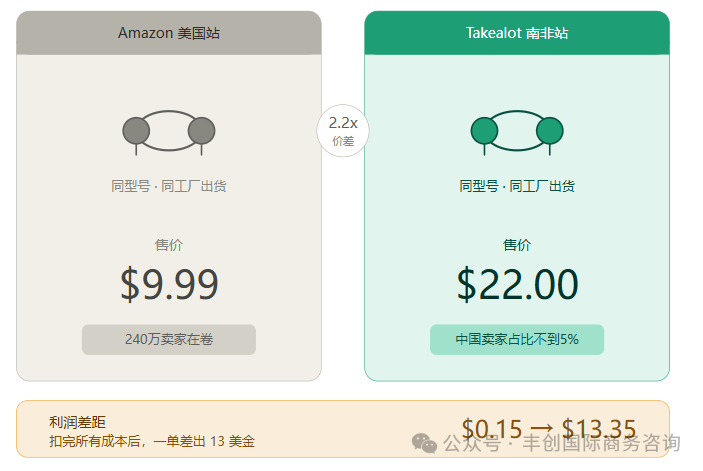
The screenshot shows a price comparison for the same Bluetooth headphones—from the same factory, same model, and same quality batch—on two different platforms. Amazon U.S.: $9.99. The other platform: $22.
It's more than double the amount.
The group chat went wild. Some people said, ”No way,” others asked, ”What’s that platform?” and some just asked, ”Send me the link.”
Today, let’s talk about this: Why can the selling price of the same batch of goods vary so much depending on the platform? And what does this price difference really mean? ——
I. Let’s do the math first: $9.99 versus $22—what’s the difference in profit?
Just because the selling price is double doesn't mean the profit is double. Let's break down all the costs and calculate them separately.
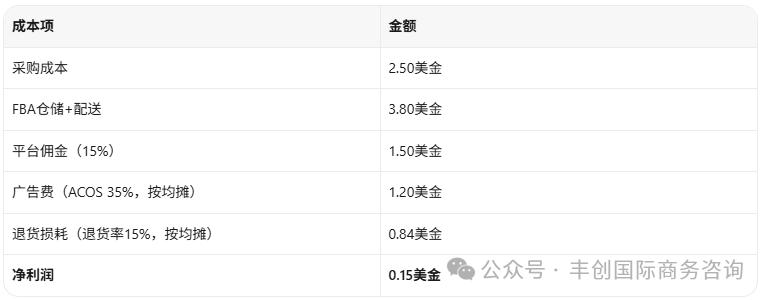
Amazon U.S. (Price: $9.99):
You read that right. For Bluetooth earbuds that sell for $9.99, after all costs are deducted, the profit per order is $0.15—which is equivalent to 1 yuan.
And that’s assuming everything goes smoothly. If ACOS skyrockets to 40% and the return rate hits 20%, we’ll be losing money outright.
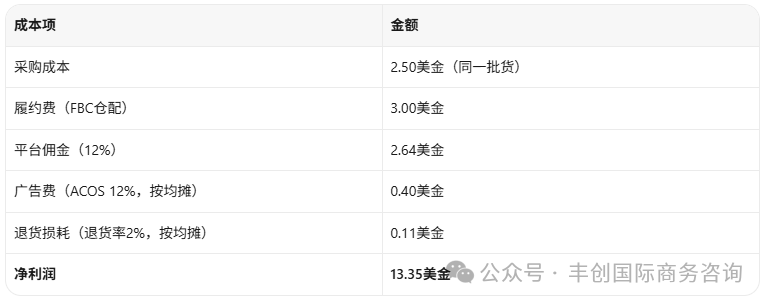
Takealot South Africa (Priced at $22, approximately 400 rand):
For the same shipment, Amazon makes a profit on each order 0.15 US dollars—I made a profit on my last order on Takealot 13.35 U.S. dollars.
Not quite right 89 timesThe——
II. Why Is the Gap So Large? Three Structural Reasons
This is no coincidence; there are structural reasons behind it.
Reason #1: The level of competition is completely different.
If you search for ”Bluetooth earbuds” on Amazon US, there are over 400 competing products on the first page. If you sell them for $9.99, someone will sell them for $7.99 tomorrow, and someone else will sell them for $5.99 the day after tomorrow. Prices are being driven down by competitors—it’s not that you don’t want to charge more.
If you search for the same keywords on Takealot, there may be fewer than 10 competing products from Chinese sellers. No one is competing with you on price,Your pricing flexibility is realThe
The second reason: the advertising costs differ by a factor of 10.
The CPC for Amazon’s core keywords is $1.20, and for some categories, it reaches $2.00. For every order you fill, advertising costs eat up $1–$2. If your ACOS is below 30%, you’re considered a skilled seller.
On Takealot, the CPC for most product categories is less than 2 rand (about 0.8 yuan), and many ad slots have no bidders at all—you can secure an impression just by meeting the minimum bid. ACOS generally ranges from 10% to 15%.
Advertising costs are one of the biggest variables affecting e-commerce profits. A 10-fold difference in CPC and a 2- to 3-fold difference in ACOS—this single factor determinesThe profit structures of the two platforms are completely different.The
Reason #3: The return rate is an order of magnitude lower.
Amazon's average return rate is 151 TP3T or higher, while for electronics, it ranges from 81 TP3T to 151 TP3T. The total loss from a single return isn’t limited to the value of the merchandise—it also includes return shipping costs, inspection labor, repackaging, double-counted warehousing fees, and a decline in ranking weight. We previously calculated that a return on an order with an average order value of 200 yuan results in a total loss of 80–120 yuan.
The return rate at Takealot's brick-and-mortar stores ranges from 1% to 2.5%. For every 100 orders, there are 1 to 2 returns, so the cost of returns is virtually negligible.
The return rate was 13 percentage points lower...With monthly sales of 1,000 orders, the difference in annual profit ranges from over 100,000 to several hundred thousand.
(Contact takealot+csdrcc12345)
——
III. This Is Not an Isolated Case
Some might say, “Aren’t Bluetooth headphones a special case? Is it the same for other product categories?”
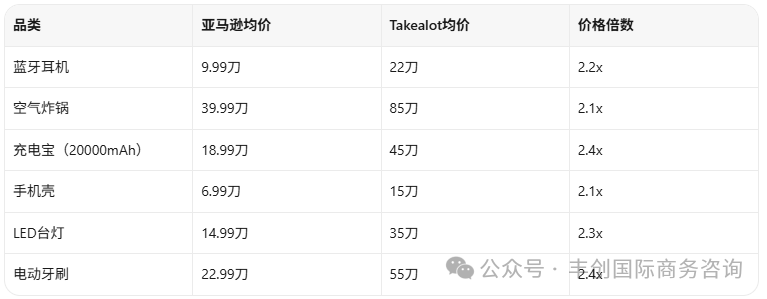
We compiled data from several major product categories for comparison:
Most product categories are available on Takealot 2 to 2.5 timesPrice range.
It’s not that South Africans are ”gullible and deep-pocketed”; it’s just that Chinese sellers haven’t entered the market to compete yet.Supply and demand determine prices.——With no competition on the supply side, prices remain at a reasonable level.——
IV. Pricing flexibility doesn’t mean you can charge whatever price you want
Here’s a point that’s often misunderstood:Just because there's a wide price range on Takealot doesn't mean you can set prices however you want.The
South African consumers aren’t ”flush with cash”; they’re ”willing to pay a premium for quality, but hate being taken for a ride.” If you try to sell cheap, knock-off goods at a high price, the bad reviews will teach you a lesson.
The correct pricing strategy is:
Use products that have been verified on Amazon to place an order on Takealot at a price higher than Amazon's 60%-120% The price.
The extra profit margin isn’t pocketed in full; instead, a portion of it is passed on to consumers (it’s 10%-20% cheaper than local competitors),Set aside a portion forAdvertising Budget, part of it becameProfitThe
用“Cheaper than local competitors + better quality”...by targeting the market with this combination, rather than exploiting consumers with the mindset that ”it’s more expensive than its Chinese counterparts.”
Having been in South Africa for so long, our biggest takeaway is this: the South African middle class’s understanding of ”value for money” is very similar to that of Chinese consumers—it’s not about the cheapest option, but about ”quality that justifies the price.” If you offer them good products at a reasonable price, they’ll buy from you again, leave positive reviews, and recommend you to their friends.
(Contact takealot+csdrcc12345)
——
V. It’s Not That Your Product Has No Value—It’s Just in the Wrong Place
Let's go back to the screenshot at the beginning of the article.
The same pair of Bluetooth headphones, one order on AmazonEarn 1 yuan, an order on TakealotEarn $13. It's not because the product has changed; it's because the market has changed.
We have our own overseas warehouse in South Africa, and our team handles the day-to-day operations on Takealot. We’ve handled products ranging from Bluetooth earbuds to air fryers, and from power banks to electric toothbrushes—as long as a product has a competitive supply chain, listing it on Takealot almost always yields a much better profit margin than on Amazon.
It's not that Amazon can't do it; it's that you should know:Your product may not be worthless—it might just be in the wrong place.TheWant to know how well your product category sells on Takealot? Send us your product links, and we’ll help you research competitors and price ranges in the South African market. People who are actually in the business themselves can give you a more direct assessment than any tool.(Contact +csdrcc12345)
Tags:
Take-A-Lot stores in South Africa
Takealot Platform
Takealot Opens Its First Local Store
South African takealot platform
Recommended
Cross-border e-commerce B2B must see! Registered Hong Kong company stationed in the Ali International Station, really fragrant!
In today's globalized business environment, the cross-border e-commerce B2B model is rapidly emerging with its unique advantages. For many enterprises engaged in cross-border trade, choosing a suitable platform and registering an advantageous company are undoubtedly the key keys to open the door to the international market.
2024 Hong Kong Company Account Opening Tips! How to choose the right Hong Kong bank account?
Global anti-money laundering regulations are becoming more and more stringent, the banks to maintain an account of the sunk cost is getting higher and higher, not moving hundreds of millions of dollars in fines, so that the major banks to open an account threshold as well as the audit process high up, already have a Hong Kong company bosses, how to choose the Hong Kong bank to open a public account? How much does it cost and how to operate? Today to give you a detailed introduction to the Hong Kong company account how to choose, as well as the approximate costs required and other content.
Hong Kong company registration advantages + registration conditions + registration process to share!
If you want to start a business and develop overseas markets, registering a Hong Kong company is undoubtedly a very forward-looking choice. With its unique geographical location, sound legal system, low tax rate and open business environment, Hong Kong company has become a "sharp weapon" for many business owners to open up overseas markets. Why is it so important to register a Hong Kong company in 2024?