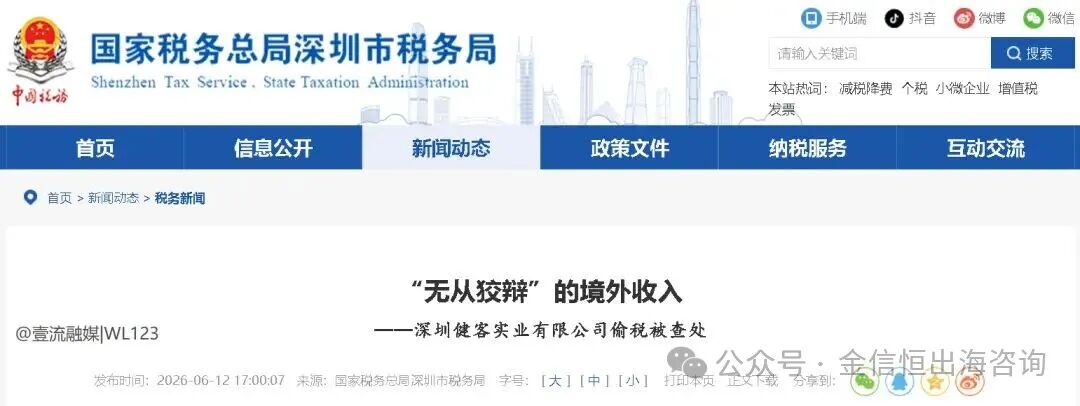
Received 3.09 million in payment for goods via personal WeChat and was fined 680,000—The Price of Using Personal Accounts for Cross-Border E-Commerce Payments
Published: August 7, 2026
图片

QCYAs a professional one-stop business service platform, we are committed to providing our clients with company registration services in major mainland cities such as Beijing, Shanghai, Guangzhou, Shenzhen, and Hangzhou,Cross-Border E-Commerce Services, Hong Kong company registration, offshore company registration, bookkeeping and tax filing, annual reviews and audits, corporate bank account opening, financial and tax compliance, equity structure planning, ODI filing, cross-border e-commerce services, Hong Kong residency, immigration, and study abroad—we provide high-quality services to support businesses in their global expansion.

For information + quotation, please contactContact me (WeChat/Phone: JXH23314))The 

图片
 
图片

The company was called Shenzhen Jianke Industrial Co., Ltd. At the time, orders were pouring in, and its annual sales revenue totaled 3.0984 million yuan. However, the money never went through the company’s bank account; it all ended up in personal WeChat accounts and private bank cards. When filing taxes at the end of the year, the company reported only 20,000 yuan in operating revenue.3.09 million and 20,000—that’s a difference of more than 150 times.

In 2025, the Fourth Audit Bureau of the Shenzhen Municipal Taxation Bureau investigated this company. The outcome was clear:A total of 679,900 yuan in back taxes and fines was collected, and leads regarding suspected tax evasion were referred to the public security authorities.

0 1

PART

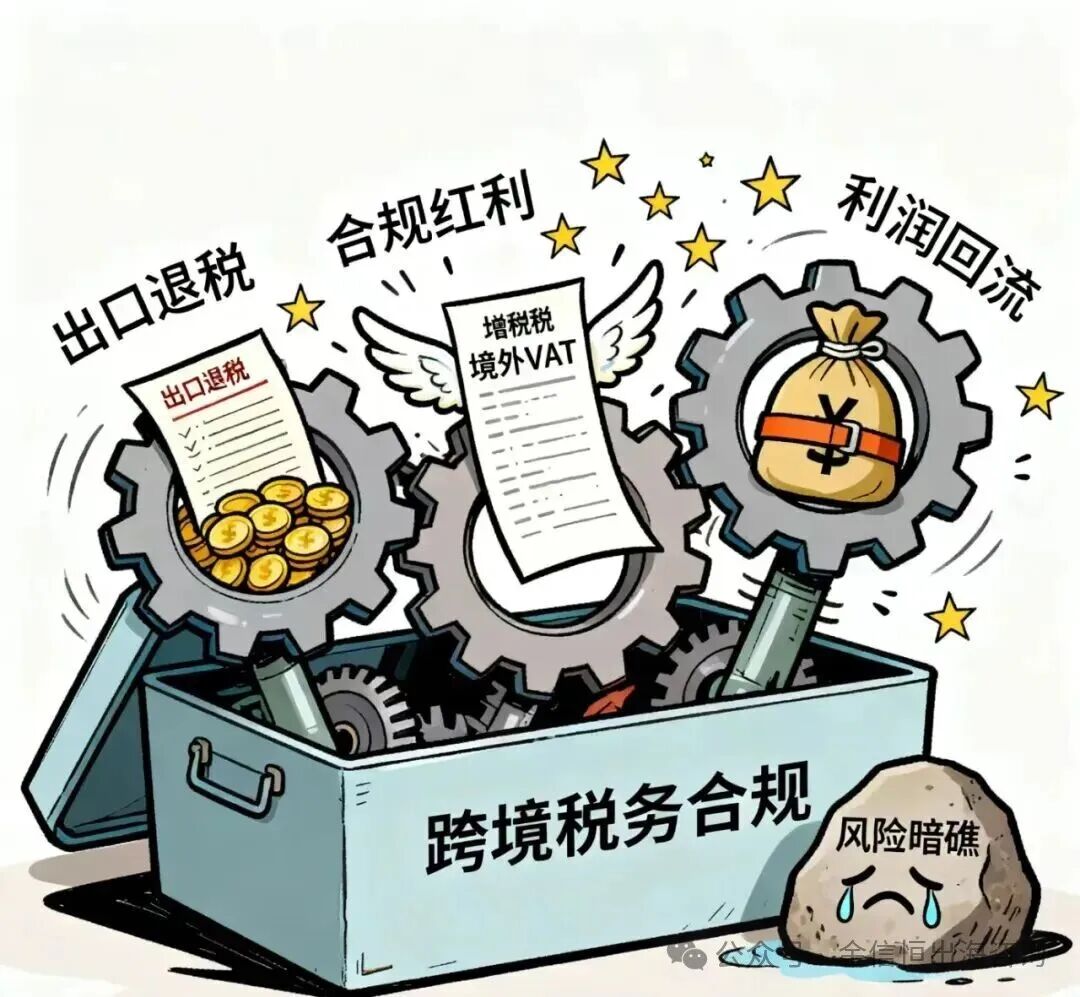
Collecting Payments Through Personal Accounts: Four Major Risks

1. The first pitfall: Concealing income is directly classified as tax evasion.

A personal account received payment for goods from the company, but the funds were not recorded in the company’s books, and no tax return was filed. Under tax law, this is referred to as “concealing income.”

Article 63 of the *Tax Collection and Administration Law* clearly states: Taxpayers who forge, alter, conceal, or unlawfully destroy accounting books and accounting vouchers, or who overstate expenses or underreport or omit income in their accounting books, are guilty of tax evasion. The tax authorities shall recover the tax arrears, impose late payment penalties, and levy a fine ranging from 0.5 to 5 times the amount of tax evaded.

That’s how Jianke Industrial ended up owing 680,000 in back taxes and penalties.

2. The Second Pitfall: Commingling of Assets—Individuals Liable for Company Debts.

Many businesses engaged in cross-border trade are registered as limited liability companies. Under normal circumstances, shareholders are only liable to the extent of their investment; if the company incurs debt, the worst-case scenario is that the company goes bankrupt, and the shareholders’ personal assets remain unaffected.

But if youReceiving company payments into a personal account is legally referred to as “commingling of assets.”. Once a company is subject to debt collection or fined, the court can pierce the corporate veil and directly seek to recover the debt from the shareholders' personal assets.

The money the company owes becomes money you personally owe.

3. The Third Pitfall: Personal foreign exchange accounts cannot be used to receive payments related to business operations.

The limit on personal foreign exchange accounts is intended for current account transactions such as studying abroad, travel, and visiting relatives—not for receiving corporate payments.

Splitting large foreign exchange payments into smaller amounts and receiving foreign currency through multiple personal accounts is known as “fragmented foreign exchange settlement,” which is in itself a violation of foreign exchange regulations. Once a bank detects this, the consequences range from having the account frozen—which is the mildest penalty—to being placed on the State Administration of Foreign Exchange’s blacklist.

The Fourth Threat: Phase IV of the Golden Tax System is targeting the shift from public to private ownership, and its ability to see through such arrangements is greater than you might imagine.

Following the launch of the Golden Tax Phase IV system, data has been integrated between the tax authorities and banks, customs, and the State Administration of Foreign Exchange.The system automatically detects and compares large-amount transfers between business and personal accounts. If your personal account receives 3 million in a year but your company reports only 20,000 in income, the system will immediately flag it in red.


图片


0 2

PART

A compliant funding process actually consists of just three steps

Step 1: Revenue from overseas sales must be deposited into the company’s business bank account.

Whether it's payments from Takealot, Amazon, or other platforms, the first recipient must be the company's business bank account.

Step 2: Immediately transfer any funds that have already been deposited into your personal account to the business account and record the transaction in the books.The

If you’ve previously received payments into your personal account, don’t wait—transfer the funds to your business account immediately, and make sure to catch up on your bookkeeping and tax filings. Although you may have to pay late payment penalties, it’s better than being accused of tax evasion.

Step 3: Establish a closed-loop process of “receiving corporate payments—compliant reporting—distributing dividends after tax payment.”

Money is deposited into the company's account → Taxes are reported and paid based on actual income → After-tax profits are transferred to the individual through compliant dividends.

03

PART

put at the end

Going back to the question at the beginning: “Many people in the cross-border business do this—so why was he hit with such a severe penalty?”

The answer is:It's not that we're not looking—we just haven't found you yet.The

Since 2026, special tax audits targeting cross-border e-commerce have been conducted in multiple cities. Receiving payments through personal accounts, filing zero tax returns, and issuing fraudulent invoices—what were once considered “unwritten rules” in the industry—are now being exposed one by one.

图片

///

LAST

concluding remarks

If you, too, are facing—If you have questions about receiving payments from a company in a personal account, or any other questions regarding cross-border e-commerce tax compliance,Scan the QR code to add our online customer service representative (Microsignal:(JXH23314)(math.) genusBased on your specific situation, we will arrange for a professional consultant to address your questions and provide one-on-one, end-to-end compliance solutions.

To learn about the specific procedures and obtain the relevant materials,You can scan the QR code to add our online customer service representative (WeChat ID:JXH23314), where a professional manager will answer your questions and provide one-on-one service throughout the entire process ↓↓↓


图片


/// Previous Issues Review


The company has revenue of 30 million, but profits are less than 1 million. After filing your tax returns in compliance with regulations, are you actually making a profit or a loss?


What Should Foreign Trade Business Owners Do When They Receive a Text Message About a Tax Self-Inspection? A Three-Step Response Guide


Start a Business in Singapore in 2026 to Obtain an EP and DP: One Person Starts a Business, the Whole Family Settles Down


Guide to Starting a Business and Settling in Singapore in 2026 | Company Registration + EP/DP


Major Data Release! When Expanding into Mexico, Local Stores on Mercado Libre Are the Key Growth Area


Decree No. 837 Takes Effect: Overseas Investment Faces “Comprehensive Tightening”; Major Changes Are Coming for ODI!


2企财盈宣传单页260723_画板 1(1).jpg

Tags:
  • Cross-Border E-Commerce Imports and Exports
  • Cross-Border E-Commerce Updates
  • Cross-Border E-Commerce Tax Refunds
  • Cross-Border E-Commerce Taxation
  • Cross-border e-commerce is the only compliant option
  • A New Blue Ocean in Cross-Border E-Commerce