Zero Tariffs in 53 Countries + Fewer Than 3,000 Chinese Sellers: The Opportunities at South Africa’s Takealot Keep Piling Up…
Published: August 6, 2026
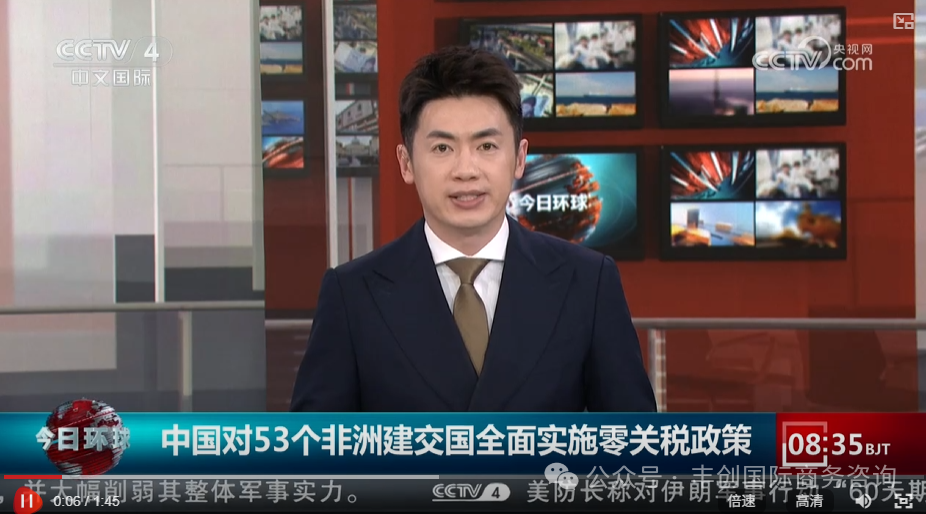
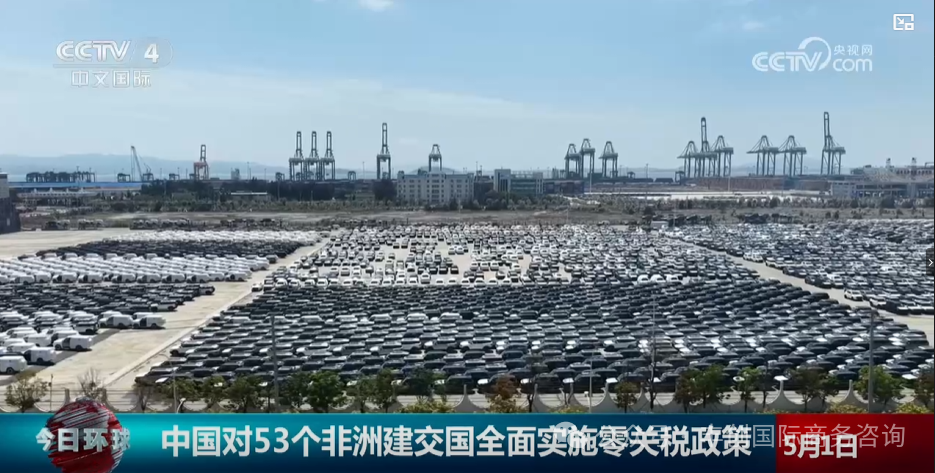
On May 1, 2026, China fully implemented zero tariffs for 53 African countries with which it has established diplomatic relations.
The news was only in the spotlight for a day before it was overshadowed by other trending stories. Hardly anyone in the cross-border e-commerce community was talking about it.
But what has happened over the past two months is even more interesting than the news itself.——
I. Zero tariffs do not mean that ”African goods enter China duty-free”; this is a mutually beneficial arrangement.
Many people's first reaction to this news was: "Oh, so African goods entering China are now tax-free—we can do business with them."exportationWhat does that have to do with it?
That's a big deal.
Let's start with the policy itself. On February 14, 2026, China announced that it would fully implement zero tariffs for 53 African countries with which it has established diplomatic relations for a period of two years, to be enforced in the form of preferential tariff rates. This means that tariffs on South African citrus fruits (previously 12%), red wine (previously 14-20%), and mineral raw materials have all been reduced to zero.
But that's just the first layer.
The real logic behind dividends is as follows:
First, reduce raw material costs and increase profits on finished products. Zero tariffs have caused the cost of importing raw materials and semi-finished goods from South Africa into China to plummet. Attention sellers of 3C products, home goods, and accessories—the procurement costs for upstream raw materials from South Africa, such as minerals, crystals, and leather, have dropped by 30%–40%. If you operate a supply chain involving ”African raw materials + processing in China + re-export of finished goods,” you’ll see a tangible increase in your gross profit margin.
Second, South Africa's purchasing power has been stimulated. The zero-tariff policy is not one-sided—China has opened its doors to African goods, leading to increased foreign exchange earnings for African countries. As a result, local businesses and consumers now have more money, and their ability to import Chinese goods has risen accordingly. South Africa relies on Chinese imports for 80% digital products; when the local economy is revitalized by trade dividends, “Made in China” products are the first to benefit.
Third, trade infrastructure between China and Africa is expanding rapidly. As these policies are implemented, logistics platforms, payment gateways, and payment processing tools are all rolling out special support measures for China-Africa trade. Lower fees for rand exchange, increased dedicated China-Africa shipping capacity, and simplified customs clearance procedures—these changes are nothing new, but each one is lowering the barriers to your operations.
In 2025, China-Africa trade volume reached $348 billion, a year-over-year increase of 17.7%, setting a new record high.China has been Africa's largest trading partner for 16 consecutive years. Once the zero tariffs take effect, this figure will rise even further.
For sellers on Takealot, you’re at the starting point of this growth curve.——II. Why Takealot, and not another platform?
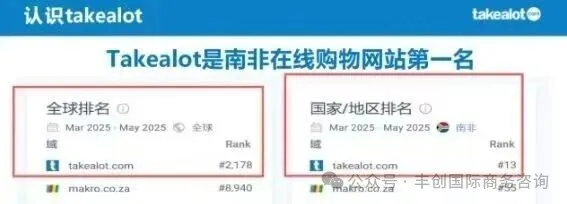
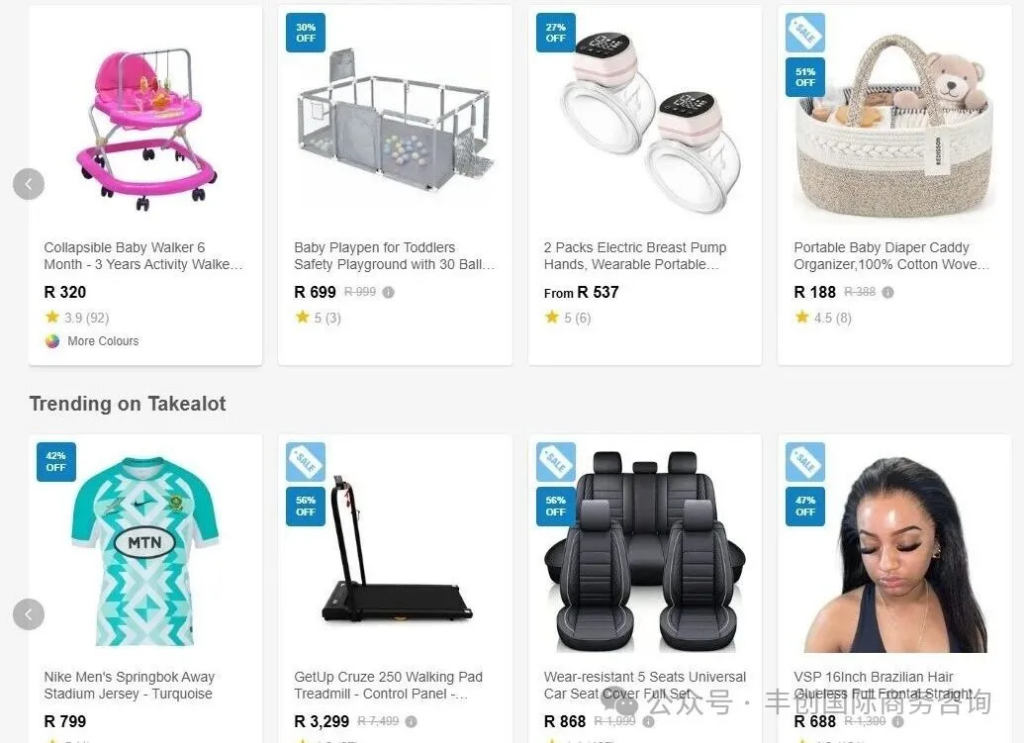
Takealot isn't the only e-commerce platform in South Africa. Amazon entered the South African market in 2024, and Temu and SHEIN are also active there.But if you ask anyone who has actually lived in South Africa for more than two years, there’s only one answer:Takealot.
1. Market share speaks for itself. Takealot's market share in the South African e-commerce market exceeds55%, with monthly active users exceeding7 million, with monthly traffic exceeding65 million. Total population of South Africa61 million...which means that nearly one in every 10 people shops on Takealot. Amazon South Africa currently holds a market share of approximately 12%,Less than a quarter of Takealot's priceThe
This gap cannot be bridged by subsidies alone—Takealot’s parent company, Naspers, is one of Africa’s highest-valued publicly traded companies. In fiscal year 2026, Takealot turned a profit for the first time, with revenue exceeding $1 billion and GMV growing by 17%. This is a platform with a proven profit model and ample financial resources—not a startup that’s still burning through cash.
2. The level of competition speaks for itself. Active sellers from China currently on the Takealot platformNo more than 3,000(math.) genusAccounts for less than 5%. What does that mean?
Chinese sellers account for more than 40% of sales on Amazon U.S., and in some categories, there are more Chinese sellers than U.S. sellers. On Takealot, when you list a product, there may be only a dozen or even just a few competing products in the same category—you’re not taking anyone’s livelihood away; there’s still room on the shelves for you to fill.
3. The profit structure speaks for itself. Takealot Average Order Value380–600 rand (approximately 145–230 yuan)... The middle class is the core consumer group. Products purchased domestically on 1688 for 20–60 yuan have a landed cost of 50–120 yuan after shipping by sea and adding customs duties. Mainstream product categoriesGross profit margin: 35%–55%Between—This is Amazon U.S.'s comparable products1.5 times or moreThe
4. It all comes down to payment collection efficiency. Amazon’s payment cycle is approximately 30 days, while Takealot automatically settles orders that have been successfully delivered every Thursday. When it comes to running a business, your funds can turn over once a week on Takealot, whereas on Amazon, they only turn over once a month. For small and medium-sized sellers, this is no small matter—it determines whether you can restock quickly, test new products quickly, and scale up quickly.
5. The return rate speaks for itself. The overall return rate on the Takealot platform ranges from 1% to 2.5%. Anyone who’s sold on Amazon knows what these numbers mean—return rates on European and American platforms often range from 8% to 15%, and returns eat into profits even more aggressively than advertising costs.
When you put all this data together, the conclusion is simple:Takealot isn't just a ”maybe it could work” platform; it is currently one of the world's leading e-commerce platforms,Lowest competition intensity, highest profit ceiling, and highest operational tolerance for errorsThe best one.(Assistance with onboarding + csdrc12345)
——
III. Zero Tariffs × Takealot: Three Benefits Are Compounding
Looking at zero tariffs on their own, or Takealot on its own, is just a good opportunity. But when the two are combined, they create“Three-Pronged Dividend”structural window.
First: Policy Benefits. Zero tariffs reduce costs + accelerated China-Africa trade and infrastructure development + lower costs for exchanging South African rand. This isn’t just a concept—it’s a tangible benefit that saves money on every order.
Second Layer: Platform Dividends. Chinese sellers have less than 51 TP3T; new products gain traction quickly, and advertising costs remain low. New stores are exempt from monthly fees and security deposits for the first three months, and they also receive 1,200 rand in advertising credit and a 501 TP3T search weighting bonus. Takealot’s support for new sellers is among the most substantial among global e-commerce platforms today.
Third: Supply Chain Benefits. South Africa has a weak manufacturing base and relies heavily on imports for small appliances, digital accessories, and household goods. Chinese supply chains have a near-dominant advantage in the South African market in terms of product variety, responsiveness, and cost control. You don’t need to be the strongest supplier; you just need to be a Chinese seller who can provide a stable supply.
The window of opportunity presented by the convergence of these three benefits won’t last forever.The zero tariff is a two-year policy....It may only take a year for the proportion of Chinese sellers on Takealot to rise from 5% to 15%—we’ve already seen this play out in Southeast Asia. —
IV. Which Product Categories Sell Well on Takealot? We’ll Let Our Real-World Experience Speak for Itself
We don't rely on other people's reports to choose products—we sell them ourselves.. The following four areas are ones we have tested and validated:
① Power Supply and Energy Storage—The Absolute Essential Among South Africa’s Essential Needs
Unstable power supply has long been a problem in South Africa, and load shedding is almost a daily occurrence. Search volume for products such as high-capacity power banks, home inverters, solar camping lights, and LED emergency lights remains consistently high year-round.
A 200,000-mA power bank sells for the equivalent of about 450 yuan on Takealot. If you do the math on the domestic purchase price, you’ll see just how big the profit margin is.
② 3C Digital Accessories—The Home Turf of China’s Supply Chain
This category accounts for approximately 32% of the platform’s sales. While cell phone penetration is high in South Africa, local accessories command a significant premium; a single data cable sold in a South African brick-and-mortar store may cost 8 to 10 times the domestic purchase price. Bluetooth earbuds, phone mounts, chargers, and protective cases—these products are compact, have low shipping costs, and feature a clear gross profit model.
‼️But note: Overall growth in the consumer electronics accessories market is slowing (around -5%), and low-priced unbranded products have already begun to face intense competition. We recommend focusing on mid-range products with strong brand recognition and establishing a firm foothold through quality and differentiation.
③ Small Home Appliances—Growing Demand Among Middle-Class Households
There is strong demand among middle-class South African households for upgrading their home appliances. The Chinese supply chain holds a clear advantage in product categories such as air fryers, juicers, electric kettles, and electric irons. Annual sales of over 200,000 air fryers are not an isolated case—it is a trend across the category.
④ Outdoor Camping Gear—Seasonal Surge in Demand
South Africa has a strong outdoor culture, with the peak season beginning each September and steady demand for camping, fishing, and hiking gear. Approximately 25 million people participate in outdoor activities each year—an extremely high penetration rate for a country with a population of 61 million.
These types of products are ideal for stocking in South African warehouses in advance; start stocking two months before the peak season to capitalize on the surge in sales during that time.
Here's one more thing to addFastest Growth in 2026Direction: Small household appliances (+34%), pet supplies (+28%), and personal care/cosmetics (+22%). These three categories are all areas where China’s supply chain excels, and competition is currently very low, making them worth keeping an eye on. ——
V. Shipping, Warehousing, and Collections—Real Challenges at the Operational Level
Now that we've covered opportunities, let's talk about implementation. These three questions are the ones sellers ask most often when seeking advice, and they're also the areas where it's easiest to run into pitfalls.
Regarding Shipping: Two Options, Each With Its Pros and Cons
Option 1: Deposit into the official FBC wallet. Similar to Amazon FBA, you ship your inventory in advance to Takealot’s official warehouse in South Africa. Once a buyer places an order, the platform handles warehousing, packing, delivery, and returns processing. TFS (Takealot Fulfillment Services) boasts a 99.31% on-time delivery rate and offers local delivery within 1–3 days. This service is ideal for sellers who have established stable best-selling products and wish to scale up their inventory.
Option 2: Direct shipping within China. There is no need to stockpile inventory in overseas warehouses in advance. After a buyer places an order, the items must be delivered to a designated domestic consolidation warehouse within 5 days, where they will be shipped by air to South Africa for final delivery. This option is ideal for the new product testing phase, as it reduces trial-and-error costs. However, samples must be submitted to the official warehouse for review in advance.
Our recommendations:For new products, start by testing them via direct shipping; once you’ve gathered data, switch to FBC for stocking. Don’t ship large quantities to South Africa right off the bat—unless you’re absolutely confident in your product selection.
Regarding Warehousing: If you have your own warehouse, you’ve got a clear advantage.
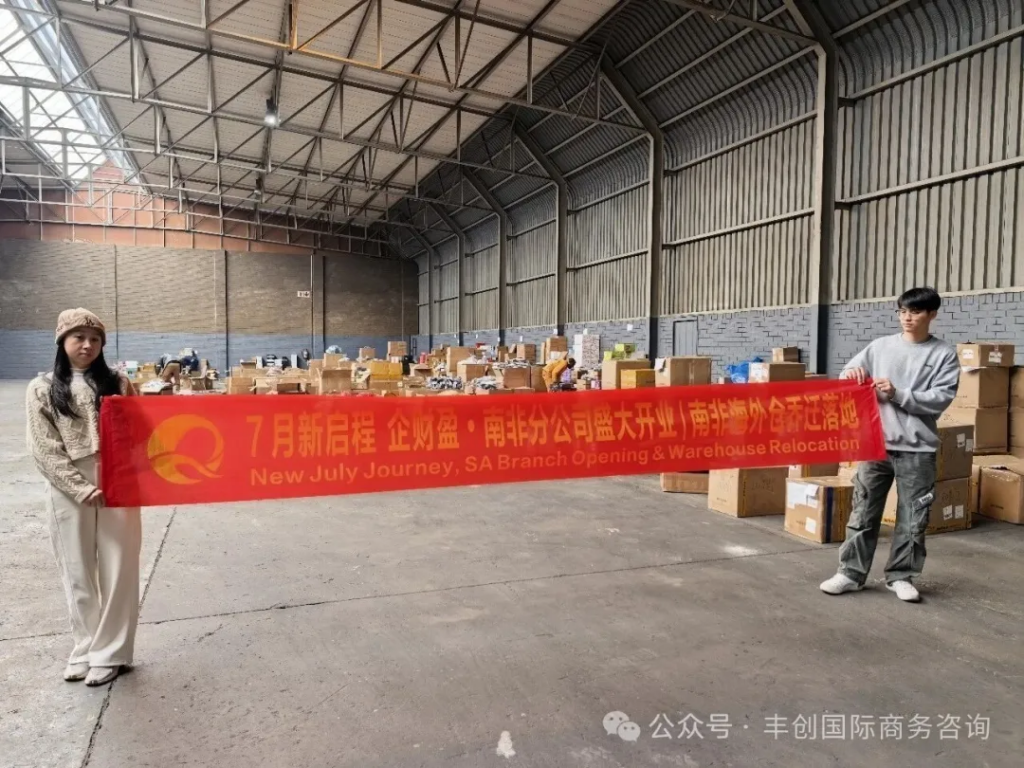
This is also one of our core competitive advantages—We have our own overseas warehouse in South Africa.. Most service providers on the market outsource their logistics operations, resulting in a lack of transparency in the supply chain; when problems arise, they pass the blame back and forth.
What are the benefits of having your own warehouse? From the initial shipment to the warehouse to the final delivery, you have full control over the entire process—sellers deal directly with the actual warehouse operator, not a ”middleman.” Transparent inventory data, controllable lead times for warehouse intake, and fast processing of returns and exchanges—these may seem like minor details, but once you’re actually running the operation, you’ll realize that if the warehousing process holds you back, it can drive you to the brink of despair (learn more about overseas warehouses + csdrc12345).
Regarding payments: Settlements are processed every Thursday, which is much faster than Amazon.
Takealot settles payments for successfully delivered orders every Thursday, with a payment cycle that is significantly shorter than Amazon’s 30-day cycle.
Regarding rand currency conversion, following the implementation of the China-Africa zero-tariff policy, some payment platforms have launched dedicated channels for China-Africa trade, and currency conversion fees are showing a downward trend. It is recommended to choose tools that support direct rand conversion to minimize losses from intermediate currency exchanges. ——
VI. How Do You Set Up Shop? These Details Determine How Fast or Slow the Process Will Be
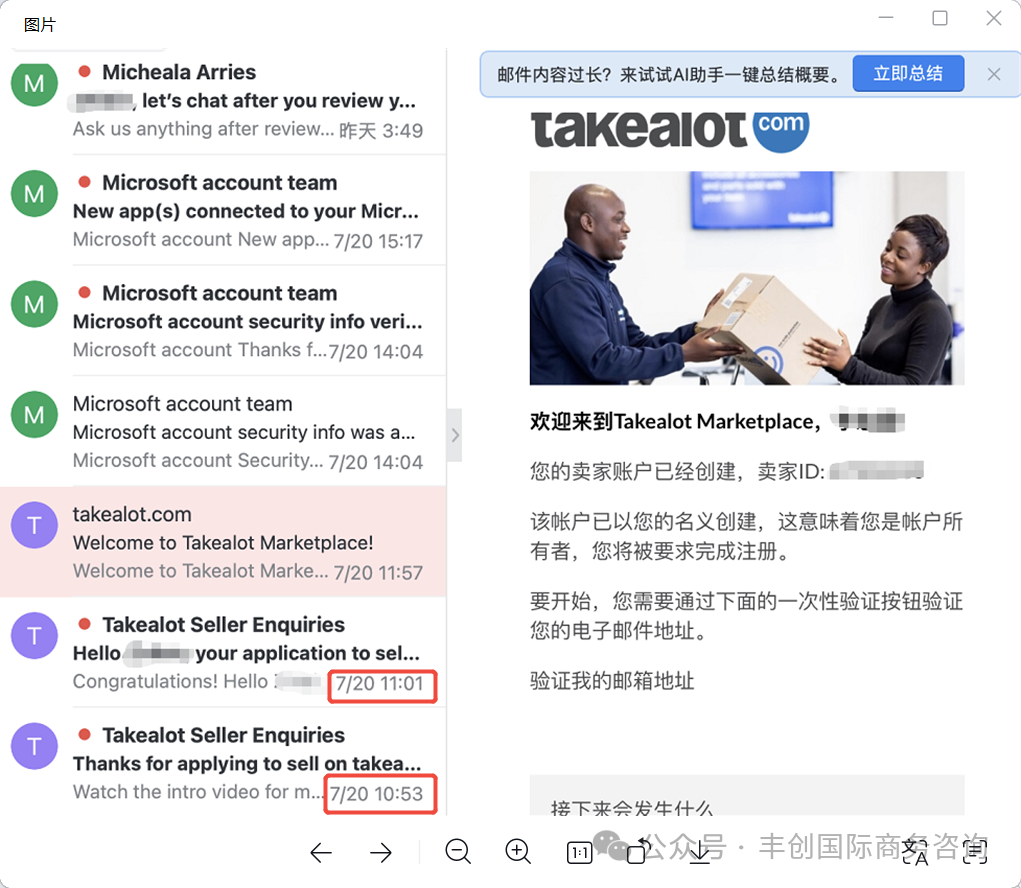
Let's start with the most important point:Chinese sellers cannot submit applications directly on the Takealot website; their applications will be rejected 100% of the time.. Furthermore, if the registration fails, the same set of documents cannot be used again.
You must obtain access to the application portal through an officially recognized cross-border investment promotion channel; this is the first step and the key factor that determines the pace of all subsequent procedures.
List of Basic Materials:
Business License (registered in either China or South Africa; local stores must have a South African business license)
Front and back of the legal representative’s ID card + a photo of the legal representative holding the ID card
Overseas Email Accounts (Outlook/Gmail)
cell phone number
Third-party bank statement (not required, but providing one will speed up the review process)
A few common pitfalls that can cause your submission to get held up during review:
The company name, the name on the payment account, and the email address used for registration must all match. If they don’t match, the application will be rejected and sent back for re-verification, wasting one to two weeks.
Don’t leave your product catalog empty. Many people fill out their profile information but leave the product section blank—the platform doesn’t just look at whether you have a company; it also wants to know what you’re selling. Prepare a selection of products in advance, including clear images, English descriptions, specifications, and reasonable pricing.
Plan your fulfillment method in advance. Don’t wait until the review stage to realize you haven’t figured out how to ship the items.
Our own local store strategy,Once all the documents are in order, the store can be set up in just a few minutes.. The barriers to entry for cross-border stores have now been raised—requiring a business license that has been valid for at least six months, a minimum registered capital, and, in some cases, Amazon sales records—butThe barriers to entry for brick-and-mortar stores are actually more stable.The
With all the required documents, you can open a store in just a few minutes—
VII. The Final Sentence
Working on Takealot in South Africa right now isn’t about ”betting on whether a new platform will succeed.” Takealot is already profitable, has 7 million monthly active users, and holds a market share of 55%—it’s no longer a new platform; it’s part of South Africa’s infrastructure.
Your bet is this: within the 60-day window after the zero-tariff policy has just taken effect—and while Chinese sellers have yet to reach the 5% threshold—are you willing to take the time to figure out the rules of this market and then leverage your supply chain advantages there?
Taobao in 2013, Amazon in 2016, Shopee in 2019—Each platform has a limited window of opportunity. If you miss it, it’s not that you can’t do it, but the cost will be much higher.The
If you’ve already set up your supply chain, or if you’re looking for a new market where competition isn’t quite as fierce, now is the time to assess the situation and make a decision.
If you’d like to learn more about the details of setting up a store on Takealot, feel free to reach out to us anytime. We’re actively running our own store there—we have a warehouse in South Africa, and products are listed on local stores within 1–2 days. We don’t make empty promises; we just solve real problems (Inquiries: csdrcc12345).
Tags:
Take-A-Lot stores in South Africa
South Africa takealot
Takealot Operations
Local Stores in South Africa
Takealot Platform
Recommended
Cross-border e-commerce B2B must see! Registered Hong Kong company stationed in the Ali International Station, really fragrant!
In today's globalized business environment, the cross-border e-commerce B2B model is rapidly emerging with its unique advantages. For many enterprises engaged in cross-border trade, choosing a suitable platform and registering an advantageous company are undoubtedly the key keys to open the door to the international market.
2024 Hong Kong Company Account Opening Tips! How to choose the right Hong Kong bank account?
Global anti-money laundering regulations are becoming more and more stringent, the banks to maintain an account of the sunk cost is getting higher and higher, not moving hundreds of millions of dollars in fines, so that the major banks to open an account threshold as well as the audit process high up, already have a Hong Kong company bosses, how to choose the Hong Kong bank to open a public account? How much does it cost and how to operate? Today to give you a detailed introduction to the Hong Kong company account how to choose, as well as the approximate costs required and other content.
Hong Kong company registration advantages + registration conditions + registration process to share!
If you want to start a business and develop overseas markets, registering a Hong Kong company is undoubtedly a very forward-looking choice. With its unique geographical location, sound legal system, low tax rate and open business environment, Hong Kong company has become a "sharp weapon" for many business owners to open up overseas markets. Why is it so important to register a Hong Kong company in 2024?