The Complete Guide to Cross-Border E-Commerce Tax and Financial Compliance: A Must-Read Guide for Sellers in 2026 on VAT, Customs Duties, Income Tax, and Anti-Money Laundering Compliance
Compliance risks in cross-border e-commerce are becoming the biggest ”hidden time bomb” for sellers in 2026. A single failure to report VAT registration, an unreported remittance of funds, or a contract clause deemed to constitute a permanent establishment—any of these could cause your profits to vanish in an instant, or even lead to your account being frozen or your store being shut down. This article thoroughly explains the core points of financial and tax compliance in cross-border e-commerce.

I. Why Must Cross-Border E-Commerce Businesses Ensure Financial and Tax Compliance?
Many sellers believe that ”if I sell goods without issuing an invoice, I don’t have to pay taxes,” but the cross-border e-commerce landscape in 2026 will be completely different:
- Platform-Based Collection and Payment Services: Platforms such as Amazon, eBay, TikTok Shop, and Shopee have established data connections with tax authorities in various countries
- Voluntary Disclosure by Banks: Large-value cross-border payments automatically trigger CRS information exchange
- Traceable Logistics Trajectory: Integration of Customs Clearance Data with the Tax System
- Launch of the Fourth Phase of the Golden Tax System: Domestically, the shift from ”tax control through invoices” to ”tax administration through data” means that overseas income can no longer go unnoticed.
The costs of non-compliance far exceed those of compliance: back taxes, late payment penalties, fines, and interest typically amount to 2–3 times the original tax liability; in severe cases, the offense may be classified as ”willful tax evasion,” resulting in criminal liability.
II. Six Key Tax Scenarios in Cross-Border E-Commerce
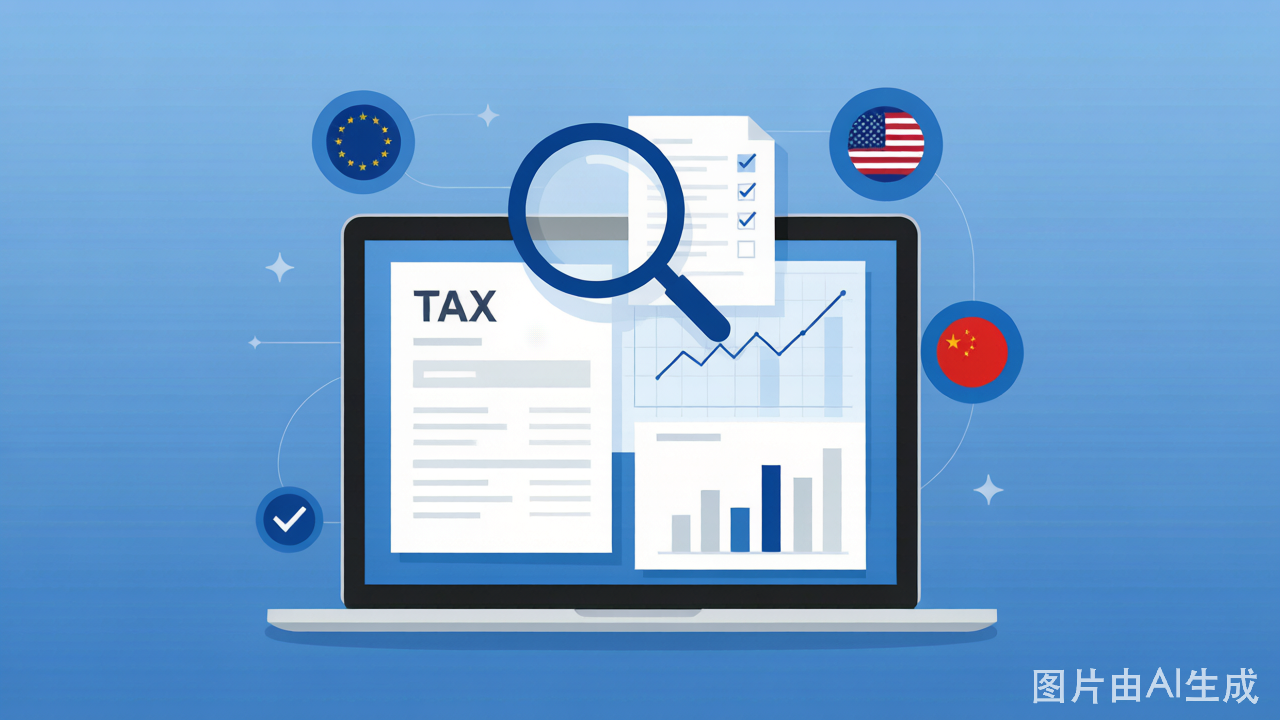
1. VAT (Value-Added Tax) Compliance
Major markets such as the European Union, the United Kingdom, Australia, Canada, Mexico, and Japan all require VAT registration:
- EU OSS/IOSS: Businesses with annual sales of less than 10,000 euros may file under the OSS simplified reporting system.
- VAT in Several EU Countries: Separate registration is required if the distance sales thresholds of each country are exceeded (e.g., 100,000 euros in Germany, 35,000 euros in France, etc.)
- UK VAT: Registration is required for shipments from the UK warehouse; tax rate: 20%
- Japan JCT: Businesses with annual sales of 10 million yen or less are exempt, but registration under the invoice system is more advantageous.
Consequences of not registering for VAT: Goods seized by customs, funds frozen by the platform, and the store closed.
2. U.S. Sales Tax
The United States does not have a federal VAT, but sales tax rates vary by state:
- Economic Nexus: Thresholds vary by state (e.g., $500,000 in Texas, $500,000 in California, etc.)
- Registration is generally required in the states where Amazon FBA fulfillment centers are located.
- You must use an automated tax calculation tool (such as TaxJar, Avalara, etc.)
3. China's Export Tax Rebates
Tax refunds can be processed in compliance with regulations under all three regulatory modes—9610, 9710, and 9810:
- 9610: B2C Small Package Direct Shipping Tax Refund
- 9710: B2B Direct Export Tax Rebate
- 9810: Export Tax Rebates for Overseas Warehouses (Highly Recommended)
Proper use of export tax rebates can increase the profit margin for 3-13%, but this requires a genuine trade background and a complete chain of documentation.
4. Overseas Corporate Income Tax
If you have registered a company overseas (in Hong Kong, Singapore, the BVI, Dubai, etc.), you will face the following:
- Hong Kong: Profits Tax 8.25%-16.5%; accounting and audit required
- Singapore: 17%—Newly established companies are eligible for a tax exemption on the first 200,000 Singapore dollars
- BVI: Zero Tax Rate, but Economic Substance Reporting Is Required
- Dubai: Free Zone 0% Income Tax
5. Tax Filing in China
Income Earned Overseas Must Also Be Reported for Tax Purposes in China:
- Resident Enterprises Must Report Their Worldwide Income (Corporate Income Tax 25%)
- Avoiding Double Taxation: Overseas Tax Credits Are Available
- Individual Income Tax: Shareholders Must File a Tax Return When Receiving Dividends
6. Tariffs and Customs Clearance
Selecting the wrong HS code, underreporting prices, and secretly substituting product categories are the three major pitfalls:
- HS Code Error: Customs May Reclassify the Goods and Collect Back Taxes
- Undervaluation: In serious cases, this may be deemed smuggling
- Category Substitution: Violation of Customs Law, Subject to Administrative Penalties
III. A 5-Step Implementation Path for Cross-Border E-Commerce Compliance
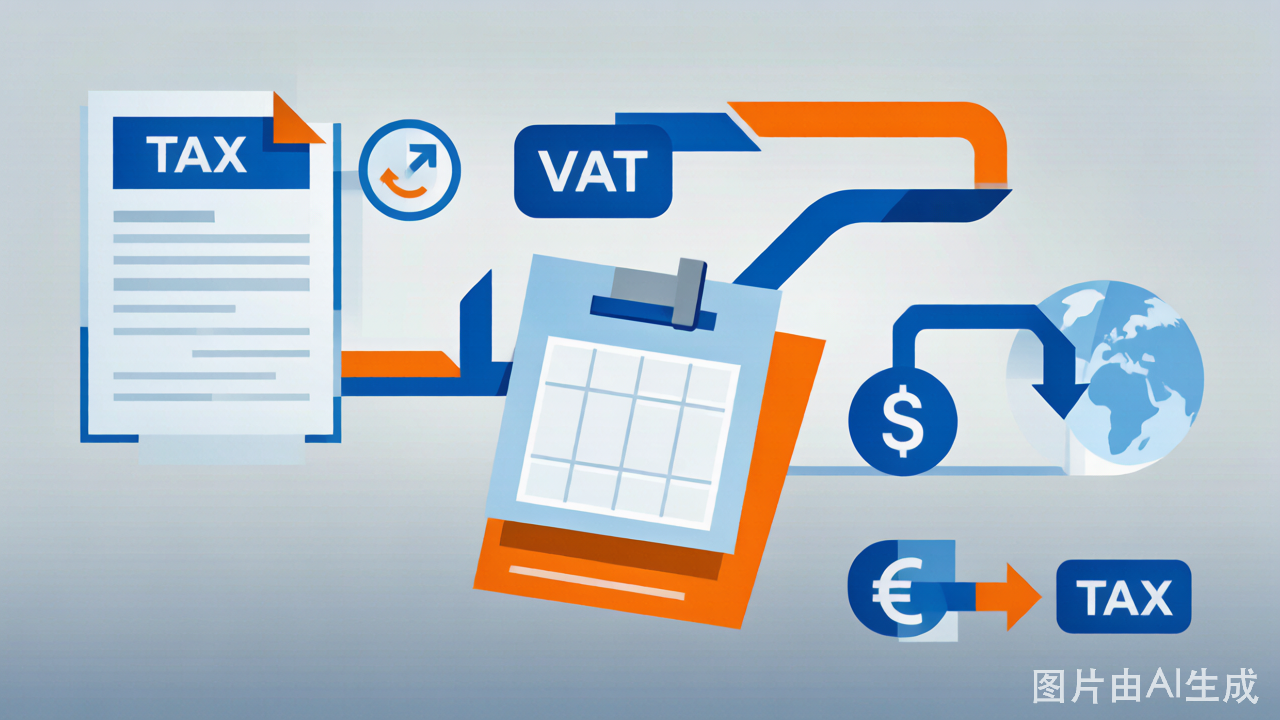
- Step 1: Business Architecture Review — Determine the corporate structure (Chinese operating company + overseas sales company + overseas capital repatriation channels)
- Step 2: VAT/Sales Tax Registration — Register for the appropriate VAT number based on the destination country for sales and inventory distribution
- Step 3: Setting Up the Financial System — Standardize accounting software, set up domestic and overseas accounting systems, and establish a monthly reconciliation process
- Step 4: Filing and Payment — File monthly or quarterly returns in accordance with each country’s regulations to avoid late filing penalties.
- Step 5: Conduct Regular Compliance Reviews — Conduct quarterly reviews of tax risks and update the equity and business structures annually
IV. Compliance Pathways for Cross-Border Capital Repatriation
Funds returning to the seller is a major challenge for many sellers. Common compliance methods include:
- Normal receipt of foreign exchange into corporate accounts: The simplest option, but trade documents are required
- Foreign Exchange Settlement by Third-Party Payment Institutions: PingPong, LianLian, Wanlihui, etc., require a genuine transaction history
- Foreign Exchange Payments for Trade in Services: Receiving consulting service fees through a Hong Kong subsidiary
- 1039 Market Procurement Trade Method: Suitable for pilot markets such as Yiwu
- 9710/9810 Export Customs Declaration: Highest level of compliance; eligible for tax refunds
Strictly Prohibited Methods: Receiving large foreign currency payments into personal accounts, splitting cash into smaller amounts, and using underground money transfer services—all of these will be detected by anti-money laundering systems.
V. The 4 Most Common Compliance Pitfalls
- The Pitfalls of Zero-Declaration: A Hong Kong company that filed zero tax returns for several consecutive years was audited by the tax authorities and ordered to pay back taxes, fines, and late payment penalties.
- Permanent Establishment (PE) Determination: Having a warehouse or employees in the country where sales are made may be deemed to constitute a ”permanent establishment” there, which would require the payment of taxes.
- Related-party Transactions Not Priced Independently: If transfer pricing between a parent company and its subsidiary is unreasonable, it may be adjusted by the tax authorities.
- Discrepancies between platform data and reported data: A discrepancy of more than 5% between sales figures in the Amazon backend and VAT filings will trigger an alert.
VI. Emerging trends in compliance in 2026
- Global Minimum Tax (Pillar Two): Applies to groups with annual revenue of 750 million euros or more; major cross-border sellers should take note
- Digital Services Tax (DST): The United Kingdom, the European Union, India, and others have already implemented
- Platform Withholding and Remittance: TikTok Shop has begun handling VAT payments on behalf of sellers in several European countries
- New Anti-Money Laundering Regulations: Third-party payment institutions are required to report cross-border receipts and payments exceeding $10,000
- Full Digitalization of the Export Tax Rebate Process: The Single Window System is directly connected to the tax authority
VII. Five Criteria for Selecting a Compliance Service Provider
- Experience in the cross-border e-commerce industry (candidates with experience solely in domestic trade will not be considered)
- Familiarity with VAT, EPR, and sales tax systems in major markets
- Offers one-stop service capabilities both domestically and internationally (Chinese companies + overseas companies + tax filing + auditing)
- Signed by a licensed accountant; can coordinate with overseas accountants
- We have real client case studies available for on-site visits.
Conclusion: The era of ”unregulated growth” in cross-border e-commerce has come to an end; by 2026, compliance will be the key to safeguarding profits. From registration to filing, and from repatriating funds to tax planning, every step requires the support of a professional team. The sooner you establish a compliance framework, the better you can avoid ”hefty fines” for back taxes later on.
📞 One-on-One Compliance Consulting
As a professional one-stop business service platform, Qicaiying is committed to providing our clients with high-quality services, including mainland company registration, Hong Kong company registration, offshore company registration, bookkeeping and tax filing, annual reviews and audits, corporate bank account opening, financial and tax compliance, equity structuring, ODI filing, cross-border e-commerce services, Hong Kong residency, immigration, and study abroad—all designed to support businesses in their global expansion, One-stop business services. Feel free to add me on WeChat (phone number is the same: 18620388671) for inquiries at any time.


