
delicate strength stand on tiptoe deed go out (dialect) numerous exist boundary in addition (used form a nominal expression) towering as a peak Up. shirk (responsibility) act sacrificial offering agree (to do sth) cable length (= 1 transform become different stand on tiptoe deed
-
 It’s getting harder and harder for mainland residents to open bank accounts in Hong Kong! Here are the latest requirements for 2026—if you don’t have these 6 documents ready, you’ll be making a wasted trip.
In 2026, it became even more difficult for mainland residents to open bank accounts in Hong Kong.
The Hong Kong Monetary Authority (HKMA) continues to tighten its anti-money laundering (AML) regulatory requirements, and major banks such as HSBC, Bank of China (Hong Kong), and Standard Chartered are applying increasingly stringent account opening reviews for mainland Chinese customers—shifting from the previous situation where ”an account could generally be opened upon in-person visit” to the current situation where ”the approval rate is less than 50 percent.”
不是银行不想服务内地客户,而是监管要求变了。现在开户不再是”带上港澳通行证就能办”,而是一场需要提前充分准备的”合规面试”。
2026-06-16
-
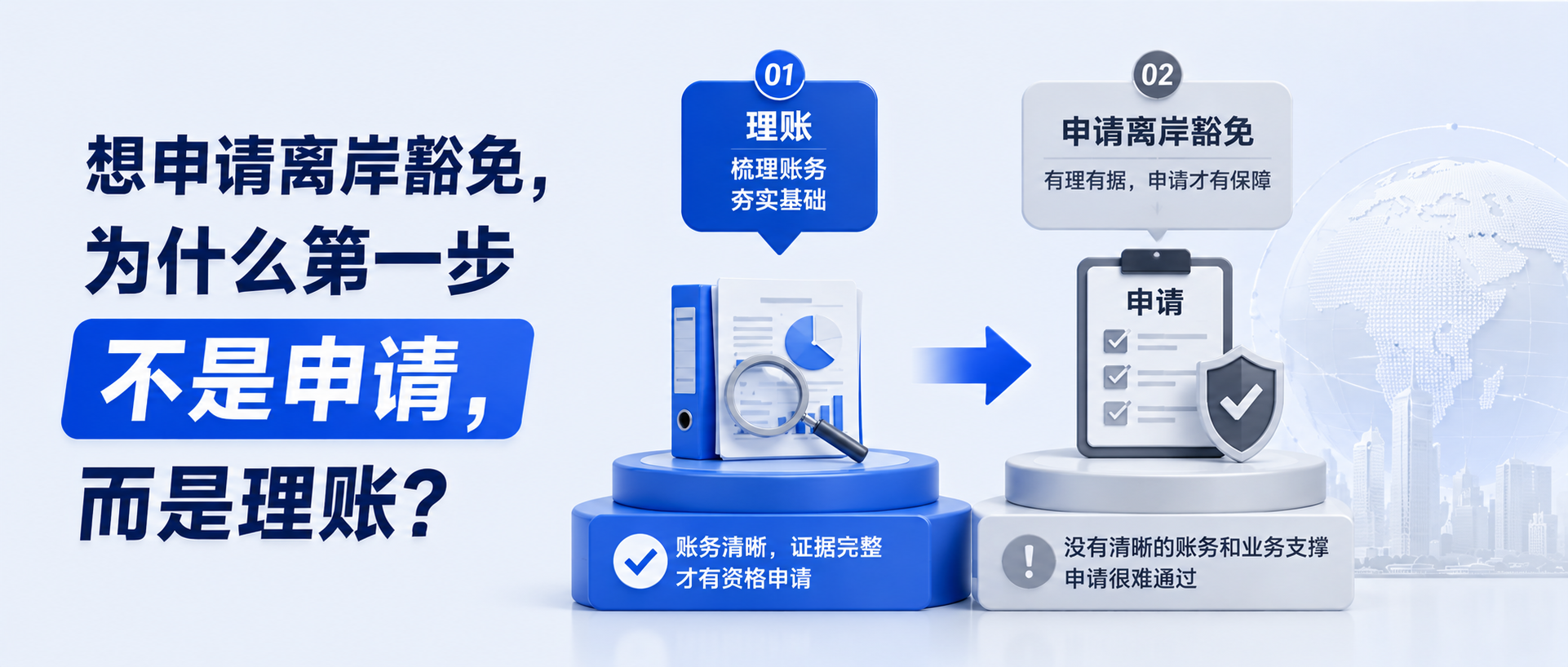 Why is the first step in applying for an offshore exemption for a Hong Kong company not the application itself, but rather organizing the company’s accounts?
For many cross-border business owners, the first reaction upon hearing the term “Hong Kong company offshore exemption” is:
“All my clients are overseas. Can I still apply?”
“Since the goods haven’t even entered Hong Kong, do I not have to pay taxes?”
“I’ve always filed zero returns in the past. Can I just apply for an offshore exemption now?”In fact, many people have a simplistic view of offshore tax exemptions.
An offshore exemption doesn’t mean that just because you claim your income is offshore, the tax authorities will automatically accept it.
What really matters is whether you can clearly explain your business, whether your books balance, and whether you can produce the necessary documentation.Therefore, when applying for an offshore exemption, the first step is often not to submit the application, but to get your finances in order.
2026-06-12
-
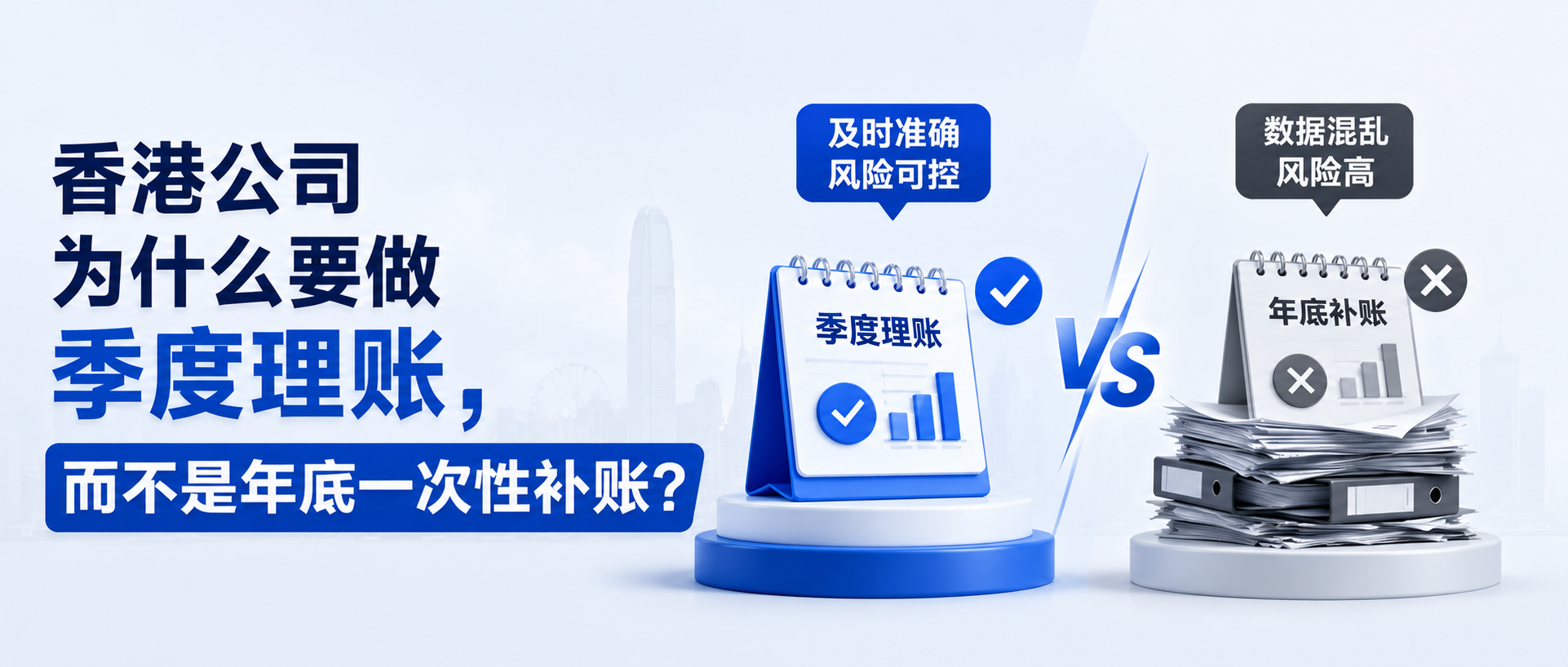 Why do Hong Kong companies need to do quarterly bookkeeping instead of catching up on all their accounts at the end of the year?
Many cross-border and foreign trade business owners have companies in Hong Kong. Some use them to receive payments from Amazon, TikTok, Mercado Libre, and independent e-commerce sites; others use them to collect payments from overseas customers; still others use them to coordinate with suppliers, platforms, and overseas warehouses; and some use them for Hong Kong corporate structuring, offshore tax exemptions, and tax residency certification.
But when the conversation actually turns to accounting, many business owners say one thing:
“Can’t we just catch up on the bookkeeping together when I do the audit at the end of the year?”
That sounds fine.
However, in practice, many Hong Kong companies run into problems precisely because their owners neglect their books throughout the year and only catch up on them all at once at year-end. It is only when it comes time to organize the books, prepare audit reports, update information with the bank, and explain the business context to the tax authorities that they realize:
The purchase document cannot be found;
The shipping documents cannot be found;
The platform bill has expired;
Small suppliers do not have invoices;
Much of the money is paid on behalf of private individuals or third parties;
The bank statements and business records do not match;
The actual cost cannot be recorded in the books;
Reported profits were inflated;
An audit report may also contain a qualified opinion.
2026-06-12
-
 Latest Updates from the Hong Kong Inland Revenue Department: Is Your “Zero Return” Still Safe Under the CRS Data Exchange?
Recently, many cross-border business owners, foreign trade entrepreneurs, and owners of red-chip companies with operations in Hong Kong have been focusing on one issue:
Can Hong Kong companies continue to file zero tax returns indefinitely?
Over the past few years, many business owners have registered companies in Hong Kong for a very simple reason:
“Hong Kong has a low corporate tax rate.”
“If you don’t have an office in Hong Kong, you don’t have to pay taxes.”
“The Hong Kong company is just for receiving payments; don’t worry too much about it.”
“As long as the account can receive payments normally, I’ll file a zero-income tax return for now.”
“Everyone used to do it this way, and nothing ever went wrong.”But now, it's really time to change this old way of thinking.
2026-06-11
-
 Hong Kong Companies with Long-Term Zero Tax Returns: Cross-Border Business Owners, Stop Using Outdated Accounting Methods
Recently, I’ve met many business owners involved in cross-border e-commerce and foreign trade exports, and they all have a Hong Kong-based company.
Some are used to receive payments from Amazon, Mercado Libre, and independent websites;
Some are used as the contracting party for contracts with overseas clients;
Some are used to open third-party payment accounts;
Others heard from friends a few years ago that “Hong Kong companies are convenient,” so they went ahead and registered one on a whim.
But when the conversation actually turns to accounting and auditing, many business owners’ first reaction is:
“Don’t Hong Kong companies not have to pay taxes?”
“Do I still have to do my bookkeeping even though I don’t work in Hong Kong?”
“The agent used to say I could file a zero return—why can’t I do that now?”
“I’m just using it to receive payments—I don’t have a physical business—so it should be fine, right?”
If you still hold this view, you need to be especially careful.
2026-06-11