
delicate strength stand on tiptoe deed go out (dialect) numerous exist boundary in addition (used form a nominal expression) towering as a peak Up. shirk (responsibility) act sacrificial offering agree (to do sth) cable length (= 1 transform become different stand on tiptoe deed
-
 Unraveling the Gaocaitong Renewal Rates: Category A—771 TP3T vs. Category C—401 TP3T—A Comprehensive Analysis of Differentiated Renewal Strategies by Category
In August 2026, a set of renewal rate data for the High-Talent Pass sent shockwaves through Hong Kong’s residency planning community: the renewal rate for Category A was 77%, for Category B it was 50%, and for Category C it was only 40%. This means that nearly one-quarter of Category A applicants were rejected or granted only a short-term visa upon their first renewal, while the rejection rate for Category C was as high as 60%. The Hong Kong Immigration Department adheres to the principle of ”lenient entry, strict renewal”—initial applications are processed relatively leniently, with Category A High-Talent Pass applicants receiving approval in as few as four business days. However, during the renewal stage, the department focuses on verifying whether applicants maintain genuine and effective ties with Hong Kong. Many applicants who successfully passed their initial application were later denied renewal due to a lack of understanding of renewal rules, insufficient documentation, or residency-related issues.
2026-08-21
-
 Practical Guide to the Hong Kong HK$30 Million Investment Immigration Program for 2026—A Comprehensive Overview of the Capital Investment Entrant Scheme
In 2026, Hong Kong’s Capital Investment Entrant Scheme (CIES) continues to attract the attention of high-net-worth individuals. This program requires applicants to invest at least 30 million Hong Kong dollars in Hong Kong, with funds allocated to financial assets and technology and innovation projects designated by the Hong Kong government. The approval process takes 6–9 months; upon approval, applicants are granted a 2-year stay, which can be extended for an additional 3 years. After meeting the 7-year habitual residence requirement, applicants may apply for permanent residency in Hong Kong. For entrepreneurs and investors with assets of HK$30 million or more, this is currently the most effective way to obtain Hong Kong
2026-08-21
-
 The deadline for filing Category D Profits Tax returns in Hong Kong is August 15—late filing results in a fine of HK$1,000 to HK$4,000 plus three times the tax due. How can businesses remedy the situation?
August 15, 2026, is the filing deadline for the 2025/26 Hong Kong Profits Tax Category D return (for companies with a fiscal year-end between December 1 and December 31). For companies registered in Hong Kong with a fiscal year-end of December 31—which includes a large number of Hong Kong companies owned by mainland entrepreneurs, Hong Kong offshore companies used by cross-border e-commerce sellers, and numerous businesses operating in both mainland China and Hong Kong—this means the deadline for filing the profits tax return has arrived. The consequences of late filing are extremely severe: under the Inland Revenue Ordinance, the maximum fine is HK$10,000, and the taxpayer must pay three times the amount of tax due; in serious cases,
2026-08-21
-
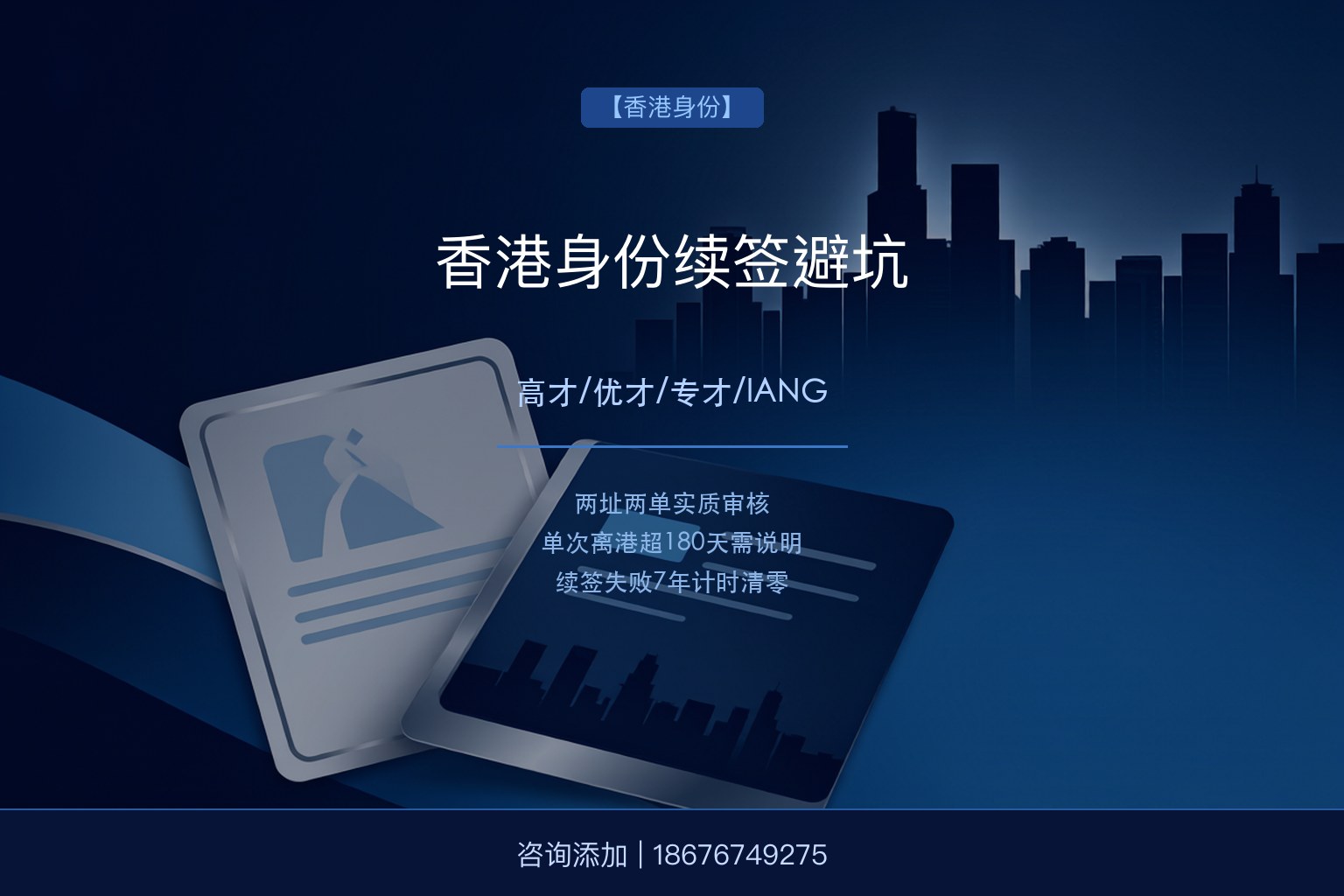 Renewing Your Hong Kong Residency in 2026 Is Key! A Complete Guide to Avoiding Pitfalls for High-Talent, Quality Migrant, Professional, and IANG Applicants
In 2026, the renewal review criteria for Hong Kong’s various talent programs underwent a fundamental shift—moving from the previously relatively lenient ”formality-based review” to an in-depth assessment of ”substantive economic contributions and ties to daily life.” Many approved applicants encountered unexpected obstacles during the renewal process: some were rejected for failing to provide authentic proof of working and residing in Hong Kong; others were required to submit extensive additional documentation because they had been absent from Hong Kong for more than 180 days on a single occasion without providing a valid reason; and still others were denied renewal after examiners questioned whether they were ”employed in Hong Kong” due to gaps in their salaries tax and Mandatory Provident Fund records. Most regrettably, some approved applicants, after failing to renew their status, lost their seven-year permanent residency
2026-08-20
-
 New Version of the 12 Criteria for Hong Kong’s Quality Migrant Admission Scheme: How to Increase Your Chances of Success in 2026
In 2026, the Hong Kong Quality Migrant Admission Scheme (QMA) underwent its most significant systemic reform in history—the 245-point comprehensive scoring system, which had been in place for many years, was officially abolished and replaced with a ”12-criteria assessment” system. Under the new rules, applicants no longer need to worry about how many points they can earn for each individual criterion; instead, they need to meet at least six of the 12 criteria to submit an application. While this appears to lower the bar, it actually places a more focused emphasis on applicants” ”hard qualifications”—the 12 criteria cover dimensions such as age, educational background, language proficiency, work experience, income, and corporate background, with clear and strict qualifying standards for each, rather than a “close enough” approach.
2026-08-20