Save money or fine? Under the new tax policy, 2026 cross-border e-commerce tax compliance strategy, read the collection and forward!
Published: 2026-01-12
Enterprise Caiying Group provides Shenzhen company / Guangzhou company / Shanghai company / Hangzhou company / Beijing company / Hong Kong company / Hainan company and other domestic company registration of the relevant business tax services, but also to provide U.S. companies / Canadian companies / Mexican companies / Brazilian companies / United Kingdom companies / France companies / New Zealand companies / Japanese companies / Singapore companies / Thailand companies / Vietnam companies / Malaysia companies and other foreign companies Company registration related business tax services, there is a need or interest at any time drop me (phone and WeChat consulting: 13045886252).
Corporate financial holes could burn more money than rising freight rates
On January 1, 2026, China's tax system will usher in a historic moment - the official implementation of the Value-Added Tax (VAT) Law, which marks the elevation of VAT from a temporary regulation to a law and a new era in cross-border tax compliance.
"The draft regulations for the implementation of the VAT law have been audited and passed, and the full text is expected to be officially released next week." A senior tax expert close to the policy-making level revealed. For us cross-border e-commerce players, this tax change will directly affect pricing strategies, supply chain costs and profit margins.
What has changed in the VAT law? Three must-know points for cross-border sellers
I. Taxation is more standardized, and there is no more "grey area" in cross-border business.
The new law fixes the mature practices in cross-border e-commerce tax practice in recent years. Sellers who relied on local policy concessions in the past need to pay special attention: tax compliance will become the bottom line of survival.
"The most immediate impact is that all cross-border transactions must have a full VAT chain." The senior consultant for Amazon Global Store noted that "input invoice management, which may have been overlooked before, is now directly related to cash flow and cost control for businesses."
Second, tax retention and refund policy normalization, cross-border sellers ushered in favorable
With the implementation of the new law, the tax credit refund will change from an irregular policy to a statutory system. For cross-border e-commerce companies, this means that VAT paid at the procurement stage can be refunded in a more timely manner, significantly easing capital pressure.
As an example: a cross-border seller of electronic products in Shenzhen, with a monthly procurement cost of 3 million yuan, generates 390,000 yuan of input tax per month at the 13% tax rate. Under the new law, this part of the funds can be returned to the business account more quickly to improve the capital turnover rate.
Third, B2C export tax rebate process optimization, small sellers also benefit
The new law has simplified the process of B2C export tax refund for cross-border e-commerce. The requirement for complete documentation, which used to plague small and medium-sized sellers, has been relaxed, and the degree of electronic filing has been increased. "This is particularly favorable for Shopify independent site sellers." An accountant specializing in cross-border taxation said.
If you need to register Shenzhen company / Guangzhou company / Shanghai company / Hangzhou company / Beijing company / Hong Kong company / Hainan company and other domestic company registration of the relevant business tax services, but also to provide U.S. companies / Canadian companies / Mexican companies / Brazilian companies / United Kingdom companies / French companies / New Zealand companies / Japanese companies / / Singapore companies / Thai companies / Vietnamese companies / Malaysian companies, foreign companies, such as Company registration related business tax services, company annual review / bookkeeping tax / payment of MPF / change of information / bank account / ODI filing / cross-border e-commerce accompanied by running on behalf of the operation of the enterprise one-stop service, you can add my WeChat (phone with V: 13045886252) at any time to consult the ↓↓↓↓
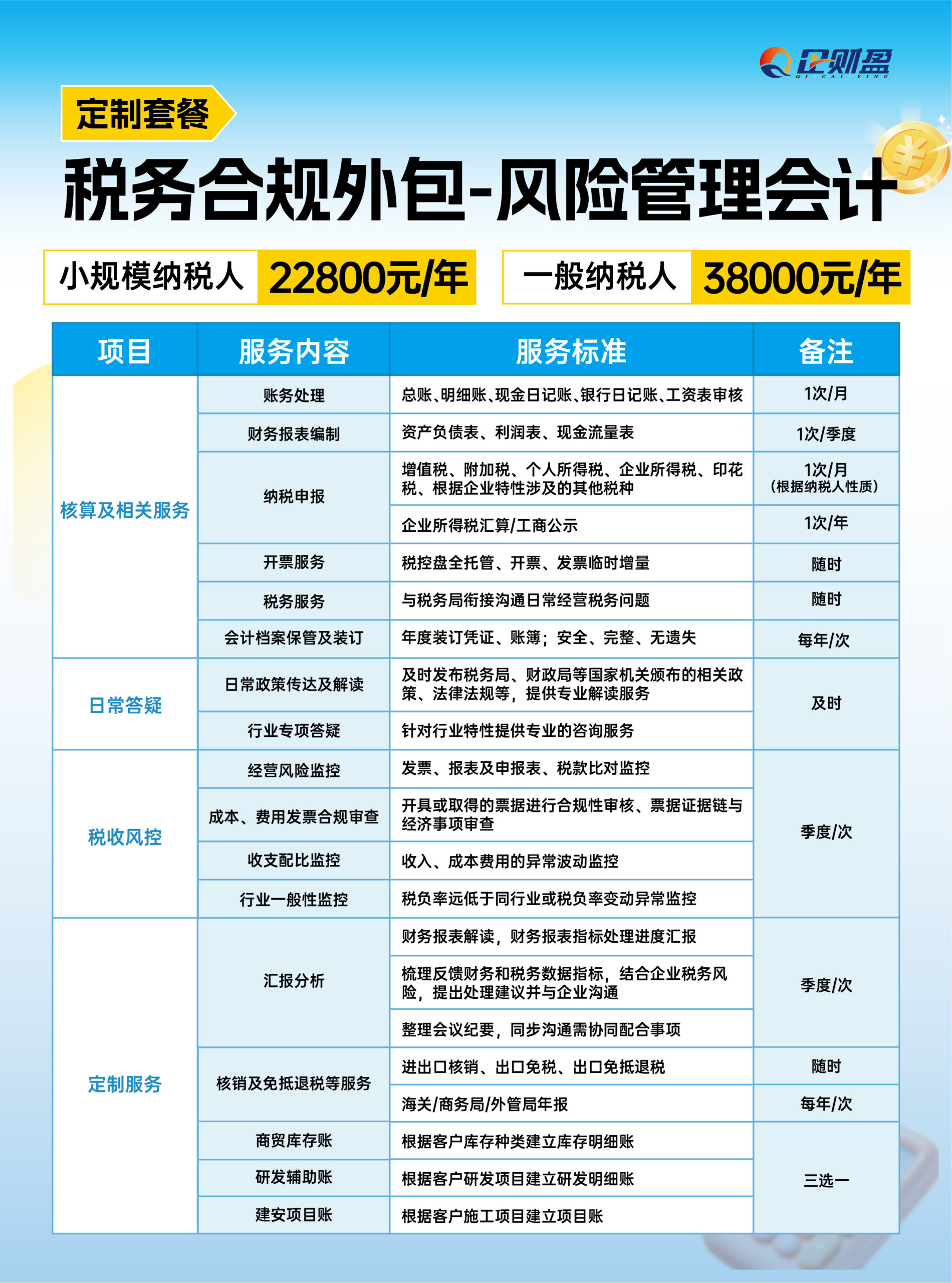
Enterprise Finance Group's Tax Compliance Product Package I
01 Cross-Border Tax Compliance: 2026 Survival Guide for Cross-Border Sellers
1) Supply chain reshaping: from price-oriented to tax-health-oriented
The financial director of a cross-border apparel company in Guangzhou has made a calculation: if you only consider the purchase unit price and ignore the tax compliance of the supplier, you may not be able to obtain a compliant input invoice and pay more VAT, and the actual cost will be higher by 3-5 percentage points.
After 2026, supplier selection criteria will have to be weighted towards "tax compliance". Sellers are advised to initiate supplier screening immediately to ensure that all purchases can be invoiced with VAT compliance.
2) Pricing strategy adjustment: tax costs must be internalized
Hangzhou, a home furnishing category hypermarket has adjusted its pricing model in advance: "We have fully internalized the cost of VAT into our product pricing, which may affect competitiveness in the short term, but avoids tax risks in the long term."
With the new law in place, price wars will have to consider tax compliance costs. Business models that appear to be low-priced but fail to provide tax compliance credentials will be unsustainable.
3) Overseas warehouse tax treatment needs to be clarified to avoid double taxation
Mr. W, a seller on the European site, shared his experience, "We have re-planned our logistic path to ensure that the tax treatment in each step meets the requirements of the new law. Especially the movement of goods in overseas warehouses now requires clearer documentation on tax handling."
There is also a children's clothing e-commerce enterprise that moved to Guangzhou from a mainland city, which is a real customer case of our Enterprise Caiying, selling through Amazon and TIKTOK platforms, with an annual turnover in the order of ten million dollars.
Although the enterprise is profitable, there are hidden problems in fiscal compliance for a long time - the store operates as a domestic individual household, borrowing the name of another person to register, and it is difficult for the actual operator to dock the tax verification, while there is a large number of lack of cost tickets in the business, and the tax risk is increasingly prominent.
Despite the busy business and cross-regional operation, the core decision makers of enterprises have a clear understanding of compliance and tax security. They are eager to systematically avoid risks and control tax burden, and look forward to a professional and efficient team to help cope with all kinds of unexpected financial and tax problems, so they find us to cooperate with Enterprise Caiying.
This cooperation not only solves the momentary needs, but also reflects the deeper needs of cross-border e-commerce enterprises for professional financial and tax accompaniment in the new economic environment - what they need is not only the program, but also the reliable experts and the support that can be landed, which is exactly the value of the service that we, Enterprise Caiyin Group, continue to build.
If you need to register Shenzhen company / Guangzhou company / Shanghai company / Hangzhou company / Beijing company / Hong Kong company / Hainan company and other domestic company registration of the relevant business tax services, but also to provide U.S. companies / Canadian companies / Mexican companies / Brazilian companies / United Kingdom companies / French companies / New Zealand companies / Japanese companies / / Singapore companies / Thai companies / Vietnamese companies / Malaysian companies, foreign companies, such as Company registration related business tax services, company annual review / bookkeeping tax / payment of MPF / change of information / bank account / ODI filing / cross-border e-commerce accompanied by running on behalf of the operation of the enterprise one-stop service, you can add my WeChat (phone with V: 13045886252) at any time to consult the ↓↓↓↓
02 Three Pain Points in Cross-Border E-Commerce Tax Compliance
Pain point 1: Downstream can't get tickets, costs can't be deducted
This is by far the most prevalent and almost insoluble dilemma.
status quo::The vast majority of suppliers, small factories and individual sellers are unable to provide compliant invoices, especially VAT invoices. In order to get the goods, e-commerce companies often need to accept "no invoice price".
dilemma::
Tax Points: You offer to take on the tax point to allow downstream invoicing, but this amounts to a tax burden shift and the cost is ultimately absorbed by you.
For individual sellers: If the downstream is an individual, even if you are willing to bear the tax points, the other party can not issue an invoice. Unless the other party specifically goes to register an individual with an authorized levy, but this is usually only possible with a general invoice.Failure to address the core VAT input credit issue. The VAT chain is essentially broken here.
Pain point 2: High advertising and marketing costs, far exceeding pre-tax deduction limits
This is a permanent pain in the heart of platform e-commerce and store group model players.
realism::In today's high cost of traffic, almost no e-commerce business with a sizable revenue can keep advertising costs (platform promotion, live stream casting, etc.) within 15% of revenue. Especially merchants who rely on the store group model to rush volume, paid traffic is the lifeline to maintain exposure.
policy contradiction::The tax law stipulates that the advertising and business promotion expenses incurred by general enterprises are allowed to be deducted up to 15% of the sales (business) income of the year; the excess is allowed to be carried forward for deduction in the subsequent tax year. However, for e-commerce companies whose advertising expenses often account for 20%, 30% or even higher, theSignificant excess is not deductible in the current year, which directly pushes up the current taxable incomeThis is equivalent to paying an additional tax for "buying traffic" itself.
Pain point 3: High return rates erode revenue and complicated tax treatment
This is a characteristic challenge for consumer goods e-commerce, especially in industries such as apparel and footwear.
industry practice: "seven days no reason to return" has become the standard, clothing and other categories of return rate as high as 30%-50% is not uncommon.
Financial and tax implicationsA high return rate means that a large portion of the recognized revenue will eventually flow back. Although it can be handled by "sales return" in accounting and tax, frequent returns bring huge workload to the practical aspects such as invoicing, offsetting, cost transfer, etc., and if it is not handled in a timely manner or in a standardized manner, it will lead to a loss of revenue.Over-recognition of income and over-payment of tax in prior periodsThe funds are unreasonably tied up.
If you need to register Shenzhen company / Guangzhou company / Shanghai company / Hangzhou company / Beijing company / Hong Kong company / Hainan company and other domestic company registration of the relevant business tax services, but also to provide U.S. companies / Canadian companies / Mexican companies / Brazilian companies / United Kingdom companies / French companies / New Zealand companies / Japanese companies / / Singapore companies / Thai companies / Vietnamese companies / Malaysian companies, foreign companies, such as Company registration related business tax services, company annual review / bookkeeping tax / payment of MPF / change of information / bank account / ODI filing / cross-border e-commerce accompanied by running on behalf of the operation of the enterprise one-stop service, you can add my WeChat (phone with V: 13045886252) at any time to consult the ↓↓↓↓
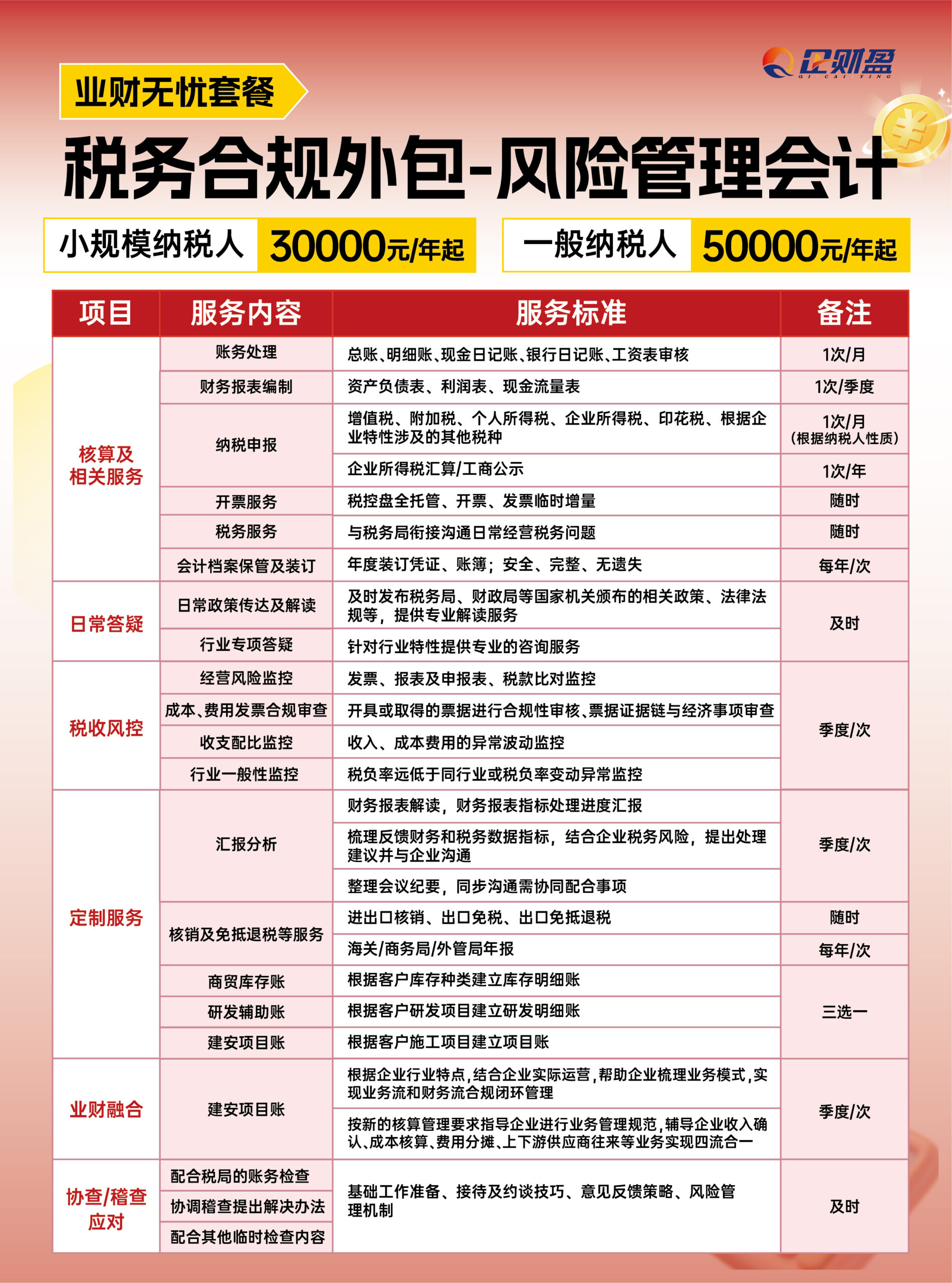
Enterprise Finance Group's Tax Compliance Product Package II
03 The Compliance Dilemma: Where are the profits after regulation?
These three pain points stack up to create a harsh reality:Once tax compliance is strictly enforced, many e-commerce companies will have to pay high taxes on the portion of their profits that is "not their true profit".
Let's take an e-commerce company with a pure store model as an example of a short account:
Assume that its merchandise gross margin is only 15% (which is not uncommon in competitive platform e-commerce).
value-added tax (VAT): At the rate of 13%, if there is a significant shortfall in input votes, VAT will be payable on almost 13% of sales.
surplus after tax: 15% of gross profit, after deducting 13% of VAT, leaves only 2%.
corporate income taxThe "gross profit" of $2% has to be deducted from operating expenses (of which a large number of non-billable expenses and over-limit advertising costs are not deductible), and the final book profit may be minimal or even negative, but after tax adjustments, the taxable income may still be very high.
Therefore, e-commerce tax compliance is not as simple as simply making the accounts "beautiful" and importing the water into the bookkeeping software. Rough "standardization" may lead to an embarrassing end: the account is standardized, but the company has lost its ability to survive due to excessive tax burden. This is particularly fatal for owners of store clusters where margins are already thin and turnover is based on scale.
If you need to register Shenzhen company / Guangzhou company / Shanghai company / Hangzhou company / Beijing company / Hong Kong company / Hainan company and other domestic company registration of the relevant business tax services, but also to provide U.S. companies / Canadian companies / Mexican companies / Brazilian companies / United Kingdom companies / French companies / New Zealand companies / Japanese companies / / Singapore companies / Thai companies / Vietnamese companies / Malaysian companies, foreign companies, such as Company registration related business tax services, company annual review / bookkeeping tax / payment of MPF / change of information / bank account / ODI filing / cross-border e-commerce accompanied by running on behalf of the operation of the enterprise one-stop service, you can add my WeChat (phone with V: 13045886252) at any time to consult the ↓↓↓↓
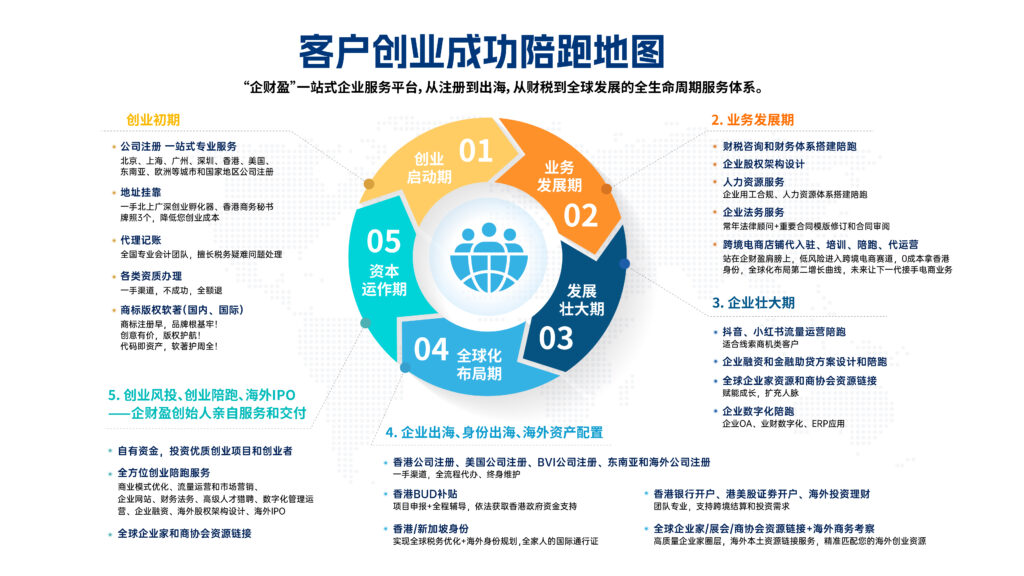
Enterprise Finance Group's Tax Compliance Product Package III
04 Breakthrough Ideas: Finding a Balance Between Compliance and Survival
Since tax-related information reporting is a major trend and the road to compliance must be traveled, the key is:How do you find a solution that meets regulatory requirements while allowing e-commerce businesses to pay taxes and retain profits?
This requires planning and optimization at an integrated level of business model, tax structure and financial management:
1)Business Re-engineering and Supply Chain Sorting::
Revisit the upstream supply chain to find a new balance between price and compliance. Gradually replace key suppliers with partners who can provide compliant tickets, even if the cost of purchasing goes up slightly, but obtaining deductible input tickets can recover from the overall tax burden.
2) Main design and tax planning::
According to the segmentation of business segments (e.g. cross-border platforms, store groups, live streaming with goods, offline sourcing, etc.), rationally utilize the tax policies of different market players (e.g. preferential policies for small and micro enterprises, individual businessmen and women), and carry out a conglomerate or matrix layout. For segments with high non-invoiced expenses such as Darren Carrying Goods, explore modes such as settlement through compliant platforms to convert labor remuneration into purchasing costs that can be invoiced.
3) Accurate accounting and account management::
Establish a financial accounting system that is highly compatible with the e-commerce business. Especially for the characteristic items such as return, promotion fee, platform fee, etc., carry out refined account processing and tax preparation to ensure the data is accurate and avoid overpayment of unjust tax.
4) Policy Research and Compliance Innovation::
Pay close attention to and study tax policies and local financial support policies for new businesses such as e-commerce and live broadcasting. Under the premise of legal compliance, make good use of various tax incentives and approved levies and other tools.
If you plan to register Shenzhen company / Guangzhou company / Shanghai company / Hangzhou company / Beijing company / Hong Kong company / Hainan company and other domestic company registration of the relevant business tax services, but also to provide the United States company / Canadian company / Mexican company / Brazilian company / United Kingdom company / French company / New Zealand company / Japanese company / / Singapore company / Thai company / Vietnamese company / Malaysian company, and other foreign companies Company registration related business tax services, company annual review / bookkeeping tax / payment of MPF / change information / bank account / ODI filing / cross-border e-commerce accompanied by running on behalf of the operation of the enterprise one-stop services, etc. can be found in the enterprise CaiYing Group for, welcome to consult me (WeChat with the same number: 13045886252), or [Scan the following two-dimensional code] to match your needs, there will be a professional tax consultant with you in detail! Communication ↓↓↓
05 Why choose Enterprise Caiying Group?
🏆 Why choose Enterprise Finance? --Professional strength, global trust
Enterprise Caiying Group, since its establishment in 2015, has always been adhering to the mission of "empowering every entrepreneurial dream", focusing on providing one-stop globalized industry, commerce, finance and tax and business services for enterprises.
Our bottom line, from the deep precipitation and authoritative certification:
✅ Service Scale Witnesses Reputation: Accumulated services for more than 300,000+ enterprises, long-term cooperation with more than 50,000+ customers.
✅ Global Network Local Support: Branches are set up in Beijing, Guangzhou, Shenzhen, Hong Kong, Southeast Asia, and the United States, with services covering Asia, Europe, and the Americas.
✅ Official certification qualification escort: with 3 Hong Kong government certified licensed secretarial firms, a U.S. branch and a self-employed Hong Kong accounting firm, and at the same time is the vice president of the Shenzhen Agency Bookkeeping Association, etc., to ensure that the service is fully compliant and reliable.
The four core advantages of Enterprise Caiying's overseas company registration service:
🔹 1. A team of experts to guide you throughout the process
Our team of nearly 400 professionals consists of senior lawyers, accountants, tax accountants and cross-border business consultants. They are well versed in international regulations, handle thousands of high-end cases annually, and can provide optimal customized solutions from structural design to on-the-ground implementation.
🔹 2. digitally empowered, smart and efficient
We have spent 20 million RMB to research and develop our own digital system "Echobo", which realizes process standardization and progress visualization. The integration of AI intelligent analysis can provide quick insight into demand and assist in generating solutions, making complex affairs clear, transparent and efficient.
🔹 3. Eco-links, extra value
We connect over 500,000+ entrepreneurs with domestic and international associations. By regularly organizing cross-border salons, tax law seminars and other activities, we not only solve registration problems, but are also committed to linking resources and creating business opportunities for you.
🔹 4. Full-cycle accompaniment for worry-free sailing
Our services go beyond "successful registration". We provide a full life cycle of services from early consultation, mid-term implementation, to late financial and tax declaration, annual audit and maintenance, and compliance consulting, to become your long-term and stable partner for overseas expansion.
statement denying or limiting responsibility
Image source: some of the image material in this article from the network, such as copyright issues, please contact us to replace the deletion of processing.
Information reference: The content of this article is synthesized from the internal materials of Enterprise Caiying and relevant public network information.
Content Editor: This article was edited and designed by the Operations Department of the Enterprise Caiying Group.
Warm reminder: The relevant policies, conditions, time limits, fees and other information described in this article may be subject to dynamic adjustments, please refer to the latest official announcements or the actual application of the specific circumstances prevail.
Tags:
2026 VAT
Taxation
Tax compliance
Financial and Tax Compliance
cross-border e-commerce
Recommended
Cross-border e-commerce B2B must see! Registered Hong Kong company stationed in the Ali International Station, really fragrant!
In today's globalized business environment, the cross-border e-commerce B2B model is rapidly emerging with its unique advantages. For many enterprises engaged in cross-border trade, choosing a suitable platform and registering an advantageous company are undoubtedly the key keys to open the door to the international market.
2024 Hong Kong Company Account Opening Tips! How to choose the right Hong Kong bank account?
Global anti-money laundering regulations are becoming more and more stringent, the banks to maintain an account of the sunk cost is getting higher and higher, not moving hundreds of millions of dollars in fines, so that the major banks to open an account threshold as well as the audit process high up, already have a Hong Kong company bosses, how to choose the Hong Kong bank to open a public account? How much does it cost and how to operate? Today to give you a detailed introduction to the Hong Kong company account how to choose, as well as the approximate costs required and other content.
Hong Kong company registration advantages + registration conditions + registration process to share!
If you want to start a business and develop overseas markets, registering a Hong Kong company is undoubtedly a very forward-looking choice. With its unique geographical location, sound legal system, low tax rate and open business environment, Hong Kong company has become a "sharp weapon" for many business owners to open up overseas markets. Why is it so important to register a Hong Kong company in 2024?