TikTok's U.S. Joint Venture has finally landed successfully, a new paradigm for Chinese companies to register U.S. companies or go to the U.S. from TikTok U.S. Joint Venture!
Published: 2026-01-29
Enterprise Caiying Group provides the United States companies / Singapore companies / Japan companies / Thailand companies / Malaysia companies / Canada companies / Mexico companies / Brazil companies / British companies / France companies / New Zealand companies / Vietnam companies / Indonesia companies / Philippine companies / Dubai companies and other foreign companies registered in the relevant business tax services, but also to provide the Hong Kong company / Shenzhen company / Guangzhou company / Shanghai company / Hangzhou company / Beijing company / Hainan company and other domestic companies registered corporate services, company annual audit audit / bookkeeping and tax returns / payment of MPF / change information / bank account opening / ODI filing / BVI registration / tax compliance / cross-border e-commerce accompanied by running on behalf of the operation of the enterprise one-stop service, you have the need or interested in any time to drop me (phone and WeChat consulting: 13045886252).
After six years of pulling, TikTok in the United States, finally "have a say".
TikTok's parent company, ByteDance, has signed an agreement to set up a U.S. joint venture company controlled by U.S. investors, thus advancing the plan to divest the U.S. business of TikTok, according to foreign media reports.
The deal, led by Oracle, Silver Lake Capital, and Abu Dhabi investment firm MGX, closed on January 22, 2026, according to an internal memo disclosure. According to the disclosure, the joint venture will operate as a separate entity and will be primarily responsible for TikTok's data protection, algorithmic security, content review and software assurance in the US market.
This is a solution similar to Apple's "Guizhou on the Cloud" solution in China.
TikTok announced that it has formed TikTok USDS Joint Venture LLC (TikTok USDS Joint Venture LLC).
TikTok CEO Zhou Shouzi had released an internal letter saying that ByteDance would continue to own the intellectual property rights of TikTok's algorithms and authorize the joint venture to use them.
The announcement also mentioned that TikTok USA will be responsible for commercial activities such as e-commerce, advertising, marketing and the interconnection of TikTok's global products. It is understood that the company is wholly owned by ByteDance.
Simply put, the U.S. government and big capital are going to get the appropriate benefits, as well as ensure U.S. data security, and TikTok gets to continue to operate in the U.S. It's a win-win corporate structure.
Its board structure: 7-member board, with Shouzhi Zhou on board TikTok USDS Joint Venture LLC will be governed by a 7-member board TikTok CEO Shouzhi Zhou is still on the board. The shareholding structure is clear. In terms of shareholding arrangements, the joint venture is shared by three managing investors: Oracle: 15% Silver Lake: 15% TMGX (Abu Dhabi Investment Company): 15% In addition, some of ByteDance's existing investors and their affiliates hold a total of 30.1% shares, while ByteDance itself retains 19.9% shares. 19.9% of shares. ByteDance remains the largest single shareholder in the joint venture.
The dust has settled on TikTok USA and signals the next golden period of growth for TikTok Shop in the US and throughout the Americas.
Multi-platform layout of cross-border sellers, can now rest assured that forward! Sellers who need to directly drop my phone and WeChat consulting: 13045886252, there are questions and answers!
01 Algorithms in Bytes, Security in America
From the information disclosed, the architectural design of TikTok USDS is not unfamiliar, and can even be said to be quite "restrained".
The joint venture will be co-led by CEO Adam Presser and Chief Security Officer Will Farrell. Presser previously led TikTok's U.S. efforts to protect U.S. user data in the U.S., while Farrell led the privacy and security aspects of the effort, which is a "hands-on" rather than an outside takeover.
In terms of governance structure, USDS will act asindependent entityThe operation is run by a seven-member board of directors with a majority of U.S.-based members, with TikTok CEO Shouzhi Zhou at the top of the list.
The overall model is highly consistent with the program previously disclosed by the domestic media, and there are no unexpected provisions for "temporary increases".
At the equity level.Approximately 50% of equity is held by an investment consortium:
Technology company Oracle, private equity firm Silver Lake Capital and UAE-backed investment firm MGX comprise 151 TP3T each;
Other investors include Vastmere Strategic Investments, LLC, an affiliate of Haina International Group, Alpha Wave Partners, and a number of other companies.
It is worth noting thatByteHopper retains a 19.9% stake and remains the largest single shareholder in the joint venture.
This is an extremely delicate set of figures: not controlling, but not out of the game; not dominant, but with veto power; seemingly "de-Chinaized", but still retaining key influence in substance.
More critical is the division of business.
The joint venture is responsible for the most sensitive parts of U.S. regulation: data, algorithmic security, content review, and software assurance.But the intellectual property of the algorithm itself remains firmly in the hands of ByteDance.
Third parties, such as Oracle, can only review the algorithms in byte-controlled "transparency centers" and any form of copying or photographic documentation is strictly prohibited.
At the same time, in order to maintain the consistency of the product experience, byte jumping wholly owned by TikTok U.S. company will continue to assume the core function of "global interconnectivity": the content network is not cut off, the user can still interact with the global community; e-commerce, advertising, marketing operations and other commercialization of the core business, is still dominated by byte to promote.
That's where the real value of this package lies.
For bytes, there are at least three levels of significance:
First, algorithmic sovereignty has not been lost.TikTok's core recommendation mechanism is still an asset within the byte system, rather than being "localized and disassembled".
Secondly, the global network is not broken.TikTok has not been forcibly sliced into a "U.S. version of the island", the product and the community are still a whole.
Third, cash flow in hand.E-commerce, advertising, and marketing operations are still handled by Byte Wholly Owned, and the revenue structure has not been drained.
As a result, the deal is "virtually senseless" to the average user, and TikTok has made it clear that the user experience in the U.S. will not change and advertisers' business will not be affected.
However, the industry is not completely free of hidden worries. Some analysts believe that the algorithms are "retrained" by the U.S. mainland, which may shift the tone and preferences of content recommendations to a greater or lesser extent. Such changes may be gradual and imperceptible, but in the long term.may reshape users' information consumption habits.If you need to register a U.S. company or start an overseas business on a cross-border platform, feel free to inquire (WeChat: 13045886252)▼▼▼
02 See what Tik Tok learned from setting up a U.S. joint venture
TikTok uses the structure of "data security joint venture + separation of commercial entities" to cut off algorithms, revenue and data sovereignty, which not only preserves core intellectual property rights, but also meets U.S. regulatory requirements.
There are at least six replicable takeaways from this "Texas on the Cloud" paradigm for any Chinese company planning to incorporate in the U.S. or move there:
1. Advance design of the "twin subjects"
The sensitive modules involving data collection, content review, and algorithm operation and maintenance will be divested to independent U.S. entities, and the profitability of commercial realizations and branding will continue to be controlled by Chinese entities, thus reducing the probability of being recognized as "under the control of a foreign counterparty".
2. Keep equity below the 20 % red line.
PAFACA uses 20 % shares as the "control" standard; ByteDance locks in 19.9 % in its new JV, maintaining its position as the largest single shareholder while avoiding the ban trigger. Chinese companies coming to the U.S. can follow the "<20 % + board seat" combination, which not only retains the right to speak, but also complies with the legal safety distance.
3. Replacing "technology transfer" with "technology authorization"
Algorithms, source code and other export-restricted technologies remain in the domestic parent company, through paid authorization + source code hosting for the U.S. side to use, and complete the record of technology export in the Chinese business sector, not only to comply with the law but also not to lose the core assets.
4. Introducing "white knight" local investors
Oracle, Silver Lake, MGX, such as government lobbying capabilities and data center resources of U.S. capital / neutral capital, on the one hand, can buffer the CFIUS doubts, on the other hand, can provide local cloud services and compliance endorsement to reduce the risk of being "across-the-board" shutdown .
5. Data localization + third-party audits
U.S. user data must remain on servers in the U.S. and be subject to 24-hour security audits by partners (e.g., Oracle); at the same time, a "data security committee" is established to report regularly to U.S. regulators, forming a verifiable closed loop of compliance.
6. "Splitting" commercial profitability from compliance costs
TikTok allows profit-making entities responsible for advertising and e-commerce to pay a reasonable service fee to a non-profit "data security joint venture," internalizing compliance costs and avoiding high-premium acquisitions or forced sales of core assets.
Finally summarize one sentence: the future of Chinese enterprises registered in the United States or go to the United States to develop is no longer "wholly-owned holding + headquarters direct management" of the old idea, but "equity downgrade, business dismantling dimensions, technology control dimensions, data on the ground, capital merger"! --Use joint venture for access, use authorization for security, use local partners for long-term tickets.
Seeing this information, some domestic cross-border sellers may feel that it is difficult to register a U.S. company and do not know where to start.
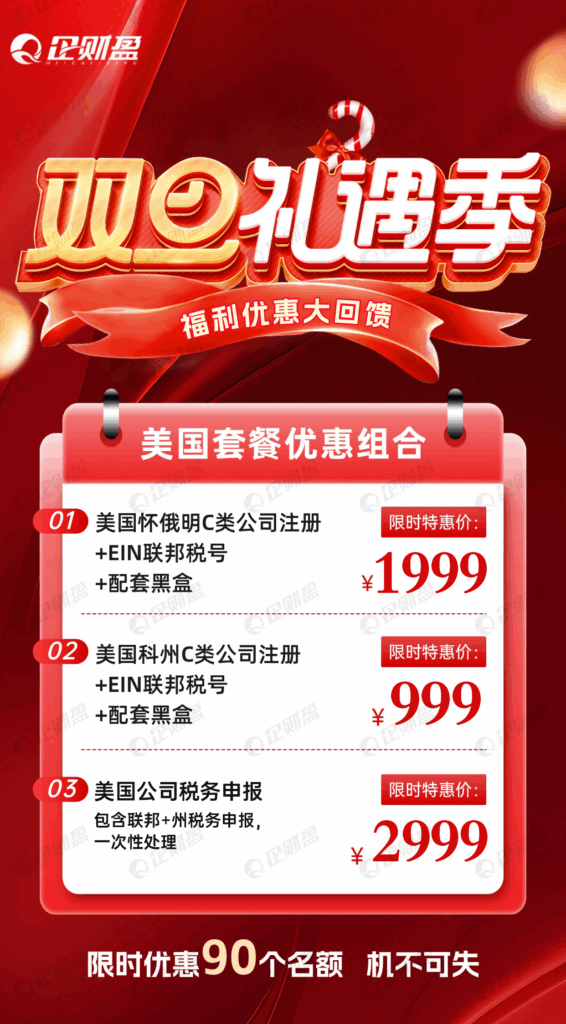
As long as you find the right business service provider, it's a breeze, such as looking for Enterprise Caiying Group entrusted with the registration of U.S. companies, not only professional, but also very efficient, and there are professional follow-up maintenance(math.) genusDecember Enterprise Caiying Group launched the Double Day gift season has expired, immediately telephone or WeChat: 13045886252 consultation for re-quotation.
03 Changes coming to cross-border e-commerce
All the controversy surrounding TikTok ultimately comes down to two words: algorithm.Algorithms, on the other hand, are the lifeblood of cross-border e-commerce sellers.
As of 2025, TikTok Shop active consumers are approximately400 million, platform GMV is close tohundred billion dollars, which ranks fifth among global e-commerce platforms, buttop growth rateThe
That's why, every time there's a "ban in the wind", it's always the sellers who are the first to be anxious, and TikTok's US program is officially on the ground, which brings at least one certainty:Ban risk phased out.
In the past few years, the U.S. policy towards TikTok has wavered, so that a large number of U.S. sellers do not dare to place heavy bets: inventory does not dare to press, advertising does not dare to invest heavily, and the layout of the team is conservative.
With the establishment of the USDS, policy uncertainty has been significantly reduced and the North American market has regained its "long term business" fundamentals.
But beyond certainty, it also means tighter rules. usds dominates algorithmic security and content vetting, and the u.s. side will adopt stricter compliance standards.
What does that mean?
Scrub content, exaggerated publicity, pseudo-assessments, and false efficacy will be more easily identified and limited; account penalties may have lower thresholds and higher costs for limiting and banning; and traffic distribution will be more skewed toward local compliant content and brand-based sellers.
For sellers with strong capital, supply chain and compliance capabilities, this is a "reshuffling favor".
But for small and medium-sized sellers who have long relied on sloppy play, price wars and content speculation, the pressure will only get worse: advertising costs are rising, conversion efficiency is falling, and capital turnover is becoming tighter.
In other words.The TikTok US program is not the "return of the seller's dividend", but the official opening of the screening era.
The window of barbaric growth is closing, and the real test is: who can live longer under a system where algorithms are still bytes and regulation is already in place. If you need to register a U.S. company or start an overseas business on a cross-border platform, feel free to inquire (WeChat same number: 13045886252)▼▼▼▼
04 What are the advantages of registering a U.S. corporation?
1) High international credibility, recognition and legal status
A company registered in the United States has a high degree of international credibility and recognition and can open corporate accounts with banks worldwide. The company's international legal status is also high, protected by the U.S. government, and highly recognized.
2) Flexibility in case of exchange rate fluctuations
In the United States after the registration of the company, there is a public account is not subject to domestic foreign exchange control, foreign exchange freely in and out.
3) Have more avenues for reasonable tax avoidance
We can utilize overseas companies to arrange tax properly and do tax planning reasonably and legally. All foreign companies in our country have a policy of reducing or exempting taxes and utilizing international transfer prices to distribute profits and expenses. If you do not operate business in the U.S. mainland, you can be exempted from corporate income tax, corporate share tax and personal income tax, and only deliver the normal annual fee.
4) Immigration and Visa Facilities
After registering a U.S. company for 1 year, you can apply for a resident card from the U.S. official by your lawyer for immigration purpose; many Chinese entrepreneurs have also obtained a U.S. green card by opening a branch in the U.S. This is the L1 visa.The L1 visa is an open work visa from the U.S. Immigration Service.
5) Sales Advantage
Company information is available to buyers on many e-commerce platforms, such as Amazon. At the initial stage without a brand, buyers are inclined to choose US-based companies, so US companies are more dominant in terms of sales.
Especially for cross-border e-commerce, the advantages of registering a U.S. company are even more obvious.
(6) Policy concessions
You can get policy care on local platforms, such as lower commissions, risk of blocking, and category restrictions.
7) Platform on-boarding
You can enter the cross-border e-commerce platforms (Walmart, Overstock, Sears, etc.) that are restricted to only U.S. companies; you can open the services that are restricted to only U.S. companies that can apply for them: the American Gift Association ASI and SAGE;Cross-border e-commerce sellers who do small commodity trade can call or wechat if interested:13045886252Find out.
8) Low risk
The audit is easy to pass, and more trust from local consumers, low closure rate, and the U.S. company for the U.S. bank account, the collection of low foreign exchange losses.
Other, the current U.S. companies relative to the Amazon global open store faster time, but also can do some Chinese companies can not do the category (class such as: jewelry, etc.).
If you plan to register a Shenzhen company / Guangzhou company / Shanghai company / Hangzhou company / Beijing company / Hong Kong company and other domestic company registration related corporate services, also providesU.S.A. Inc./ Canadian companies / Mexican companies / British companies / New Zealand / Singapore companies / Vietnamese companies / Malaysian companies and other foreign companies registered in the relevant business services, the company's annual review / bookkeeping and tax reporting / payment of MPF / change of information / bank account opening / ODI filing / cross-border e-commerce accompanied by running on behalf of the operation of the enterprise one-stop service, etc. can look for enterprises to deal with the CaiYing Group, welcome to consult me (WeChat with the same number.): 13045886252), or [scan the QR code below] to match your needs, there will be a professional tax consultant to communicate with you in detail ↓↓↓↓
05 Documents Required to Register a U.S. Corporation
The U.S. is known for its robust and transparent system of business laws and tax codes, which provide a vibrant environment and abundant opportunities for business growth.
However, when it comes to company registration, many people tend to first think of places like Hong Kong, China, Singapore or the British Virgin Islands (BVI).
A common image of the United States may be of a complex tax system and high tax rates.
However, in reality, after the United States underwent tax reform, its tax system became much more streamlined and its corporate tax rates were drastically lowered, which became very favorable to non-U.S. residents.
Today, maintaining a company in the United States is as easy and affordable as registering a company in Hong Kong.
This makes the United States an attractive business destination, not only because of its strong market potential, but also because of the more business-friendly environment it now offers.
If you are optimistic about the U.S. business environment plans to register a U.S. company, you can prepare these materials in advance to find us to deal with the enterprise financial surplus.You can call or WeChat: 13045886252 at any time to consult theThe
①English company name and state of incorporation (company name without punctuation as much as possible, before confirming to the verification of the name).
②Corporate registered capital (default 1,000 shares, one share of one U.S. dollar).
③ business scope of the company (not limited to the number of words, business scope is more to provide its main business products or services can be).
④Over 18 years of age shareholder director ID card front and back or passport, if the shareholder is a company, you also need to provide the business license of the shareholder company.
⑤ If the customer's own U.S. address, it is required; if not, it is ignored.
(6) Shareholder and director e-mail and contact number.
⑦ Shareholder director blank A4 paper signature (or group information confirmation is sufficient).
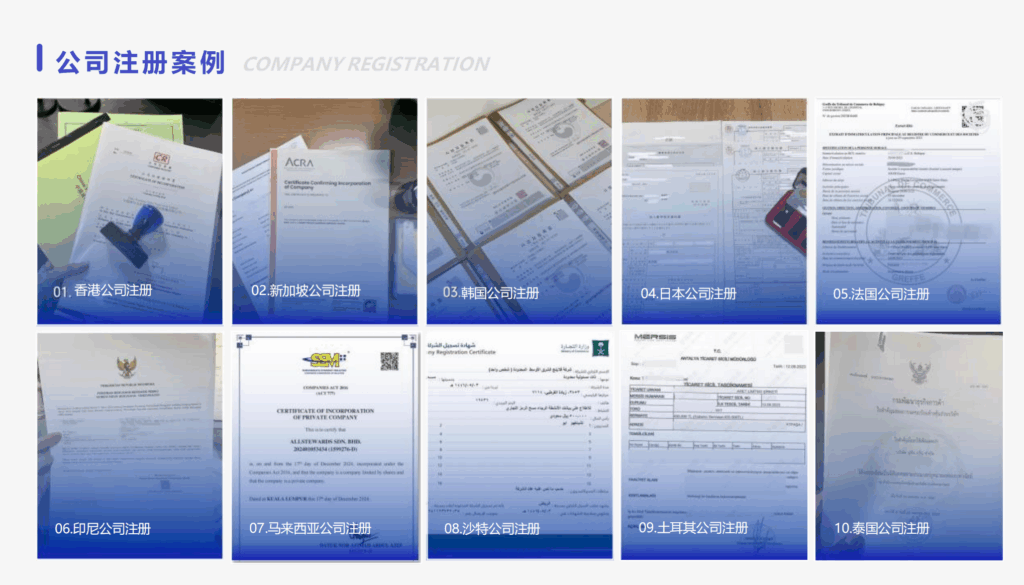
Once you've registered, you'll get a registration certificate similar to the one below.
06 How do I maintain my U.S. company at a later stage?
1) Annual Audit
An annual review includes confirming or updating the basic business information of the company, such as registered address, agent information, and director information.
The timing and requirements for annual audits vary from state to state; for example, Delaware regular corporations are required to complete an annual audit by March 1, while LLCs are required to do so by June.
Other states, such as New York, have biennial annual audits, while California and Nevada have natural annual audits, i.e., one audit per year.
Failure to keep annual audits on time may result in fines or other legal consequences.
2) Tax Returns
Tax returns for U.S. corporations include both state and federal taxes.
For federal taxes, companies are required to file a tax return at the rate of 21% if there is a business profit, and not if there is no profit.
State taxes vary from state to state; some states such as Nevada, Texas, and Washington do not have a state income tax, while others may have a franchise tax that needs to be paid even if the company does not operate locally, such as California and New York.
When filing taxes, companies are required to file the appropriate tax forms and reports and pay the appropriate taxes based on their type (e.g., C-Corporation or LLC) and operations.
Be careful: even if there are no operations, the company is required to file a zero tax return!
If you plan to register a U.S. company, you can contact us directly, there will be a professional team to provide you with multi-one-to-one services.
Founded in 2015, Enterprise Caiying has always been adhering to the mission of "empowering every entrepreneurial dream", focusing on providing one-stop globalized industrial, commercial, taxation and business services for enterprises and individuals, covering domestic and international industrial and commercial qualifications/tax and equity/overseas identity and asset allocation/cross-border e-commerce, and other core businesses.
The company has nearly 400 employees, and the core team consists of senior lawyers, accountants, tax experts and business consultants. At present, Enterprise Caiying has set up branches in North, Guangzhou and Shenzhen, Hong Kong, Southeast Asia and the United States. So far, it has provided services for 300,000 small and medium-sized enterprises, with more than 50,000 long-term cooperative customers.
statement denying or limiting responsibility
Image source: some of the image material in this article from the network, such as copyright issues, please contact us to replace the deletion of processing.
Information reference: The content of this article is synthesized from the internal materials of Enterprise Caiying and relevant public network information.
Content Editor: This article was edited and designed by the Operations Department of the Enterprise Caiying Group.
Warm reminder: The relevant policies, conditions, time limits, fees and other information described in this article may be subject to dynamic adjustments, please refer to the latest official announcements or the actual application of the specific circumstances prevail.
Tags:
Advantages of U.S. Company Registration
TikTok
Incorporate a U.S. Company
U.S.A. Inc.
U.S. Company Registration
Recommended
Cross-border e-commerce B2B must see! Registered Hong Kong company stationed in the Ali International Station, really fragrant!
In today's globalized business environment, the cross-border e-commerce B2B model is rapidly emerging with its unique advantages. For many enterprises engaged in cross-border trade, choosing a suitable platform and registering an advantageous company are undoubtedly the key keys to open the door to the international market.
2024 Hong Kong Company Account Opening Tips! How to choose the right Hong Kong bank account?
Global anti-money laundering regulations are becoming more and more stringent, the banks to maintain an account of the sunk cost is getting higher and higher, not moving hundreds of millions of dollars in fines, so that the major banks to open an account threshold as well as the audit process high up, already have a Hong Kong company bosses, how to choose the Hong Kong bank to open a public account? How much does it cost and how to operate? Today to give you a detailed introduction to the Hong Kong company account how to choose, as well as the approximate costs required and other content.
Hong Kong company registration advantages + registration conditions + registration process to share!
If you want to start a business and develop overseas markets, registering a Hong Kong company is undoubtedly a very forward-looking choice. With its unique geographical location, sound legal system, low tax rate and open business environment, Hong Kong company has become a "sharp weapon" for many business owners to open up overseas markets. Why is it so important to register a Hong Kong company in 2024?